
Turning an idea into a thriving startup is one of the most challenging—and rewarding—entrepreneurial journeys. While inspiration strikes daily, only a fraction of ideas evolve into viable businesses. Success hinges not on luck, but on disciplined execution, market validation, and relentless iteration. This guide breaks down the entire process from ideation to launch, offering practical steps, expert-backed strategies, and real-world lessons that separate sustainable startups from fleeting ventures.
Validate Your Idea Before Building Anything
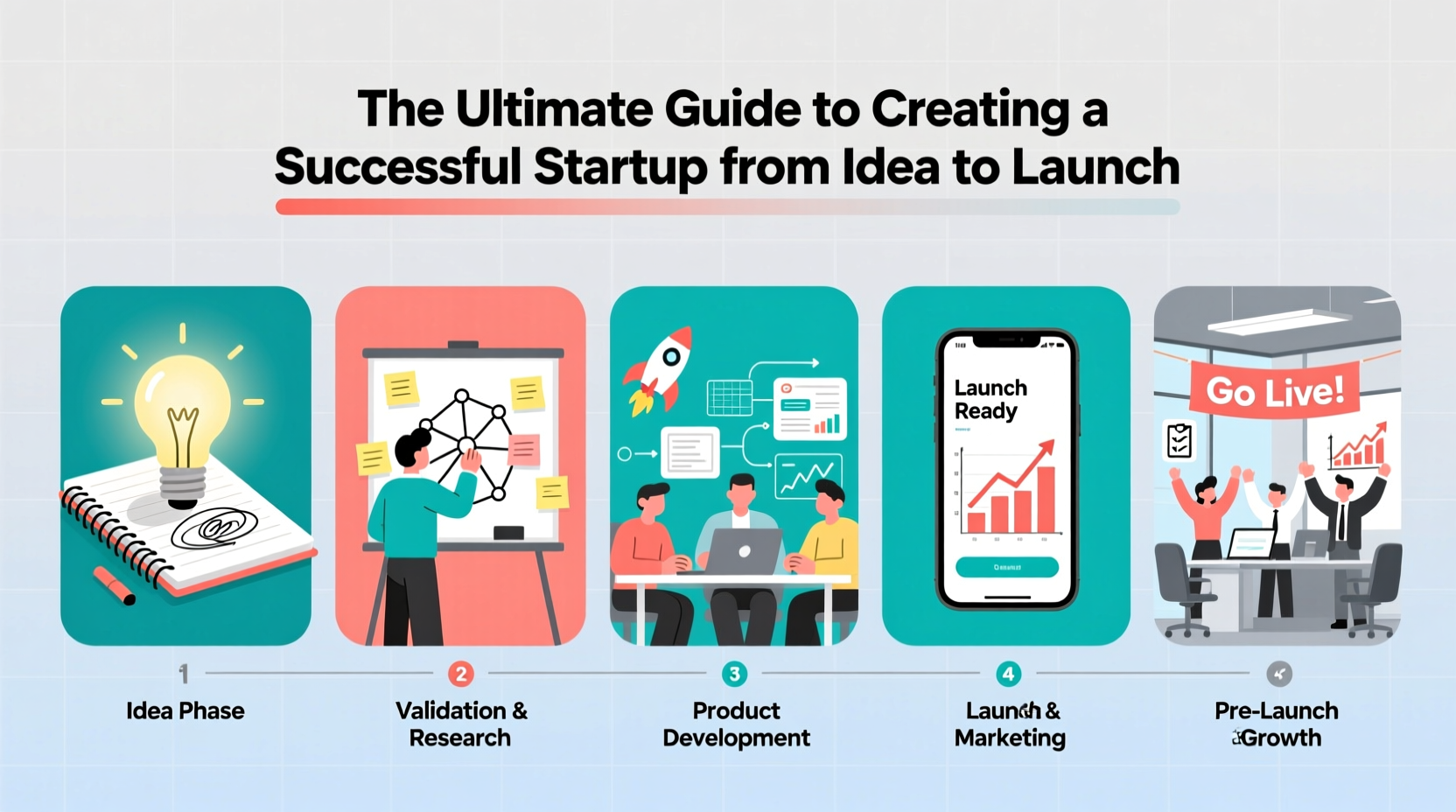
The foundation of every successful startup is a problem worth solving. Too many entrepreneurs begin by building a product, only to discover later that no one actually needs it. Instead, start with deep customer discovery. Talk to at least 50 potential users. Ask open-ended questions about their pain points, current solutions, and frustrations.
Use tools like surveys, interviews, and observational research to gather qualitative data. Look for patterns: Are multiple people expressing the same challenge? Is there an emotional or financial cost tied to the problem? The stronger the pain, the higher the likelihood of market demand.
“We didn’t build Airbnb because we had a brilliant idea. We built it because we couldn’t afford rent and saw others struggling with the same issue.” — Joe Gebbia, Co-founder of Airbnb
Build a Lean Business Model
Once you’ve validated demand, map out your business model using the Lean Canvas framework. Unlike traditional business plans, this approach focuses on speed, assumptions, and testable hypotheses. Key components include:
- Problem: Clearly define the top 1–3 problems you’re solving.
- Customer Segments: Identify who experiences these problems most acutely.
- Unique Value Proposition: What makes your solution different and compelling?
- Channels: How will customers find you?
- Revenue Streams: Will you charge per use, subscription, freemium, etc.?
Keep your canvas visible and update it weekly as new information emerges. Every assumption should be treated as a hypothesis until proven otherwise through real-world testing.
Develop an MVP That Tests Core Assumptions
Your Minimum Viable Product (MVP) isn’t a half-built version of your dream app—it’s a strategic experiment designed to test whether customers will engage with your core value proposition. Focus on delivering one key feature exceptionally well.
For example, Dropbox started with a simple explainer video demonstrating file syncing. They used it to gauge sign-up interest before writing a single line of code. When over 70,000 people joined the waitlist overnight, they knew they had traction.
| MVP Type | Purpose | Example |
|---|---|---|
| Landing Page + Waitlist | Test demand and collect emails | Buffer’s early landing page explaining social scheduling |
| Concierge MVP | Manually deliver service to test willingness to pay | Food delivery tested via phone orders and personal deliveries |
| Wizard of Oz MVP | Simulate automation while operating behind the scenes | Zappos taking photos of shoes in stores and fulfilling orders manually |
Step-by-Step Timeline: From Idea to Launch (0–6 Months)
A structured timeline keeps momentum high and prevents paralysis by analysis. Follow this six-month roadmap to go from concept to market-ready launch:
- Weeks 1–4: Conduct 50+ customer interviews. Document recurring problems and behaviors.
- Weeks 5–8: Define your lean canvas. Identify top risks (e.g., pricing, adoption).
- Weeks 9–12: Build and test an MVP. Measure engagement, retention, and conversion.
- Months 4–5: Iterate based on feedback. Refine messaging, UX, and pricing.
- Month 6: Prepare for public launch: finalize branding, set up analytics, onboard early adopters.
This timeline assumes part-time effort. Full-time teams can accelerate each phase with parallel workflows.
Assemble the Right Founding Team
No founder succeeds alone. A balanced team increases survival rates significantly. Look for co-founders who complement your skills—not mirror them. If you’re technical, partner with someone strong in sales or operations. Trust, shared vision, and conflict resolution matter more than pedigree.
Equity should be split fairly and vested over time (typically 4 years). Use founder agreements to outline roles, decision-making processes, and exit clauses. Tools like Founder’s Pocket or CoFoundersLab can help structure these conversations.
Real Example: How Notion Started Small and Scaled Smart
Notion began as a side project by Ivan Zhao and Simon Last in 2013. Rather than aiming to disrupt enterprise software immediately, they focused on building a tool they personally needed—a unified workspace for notes, tasks, and databases.
They launched a bare-bones beta to a small group of designers and developers, gathering feedback for over a year. Early users loved the flexibility but found the interface confusing. In response, the team simplified navigation and introduced templates.
By prioritizing user experience over rapid growth, Notion gained organic traction through word-of-mouth. It wasn’t until 2016—three years post-conception—that they raised seed funding. Today, it’s valued at over $10 billion.
The lesson? Solve a real problem deeply for a niche audience first. Scalability follows sustainability.
Launch Strategy: Go Beyond “Building It”
Too many startups assume that launching means flipping a switch. In reality, a successful launch is a campaign, not an event. Begin outreach 4–6 weeks before launch.
- Build anticipation via email newsletters and social media teasers.
- Secure early testimonials from beta users.
- Submit to platforms like Product Hunt, BetaList, or Hacker News on launch day.
- Offer limited-time incentives (e.g., lifetime discounts) to drive initial conversions.
Track key metrics from day one: activation rate, churn, referral rate, and customer acquisition cost. These numbers will guide your next moves far more than vanity metrics like website visits.
Pre-Launch Checklist
Ensure nothing critical slips through the cracks before launch:
- ✅ Finalize brand name, logo, and domain
- ✅ Set up essential legal structure (LLC or C-Corp)
- ✅ Secure trademarks and privacy policy
- ✅ Test MVP with at least 100 real users
- ✅ Implement analytics (Google Analytics, Mixpanel, or Amplitude)
- ✅ Create onboarding flow and support resources
- ✅ Draft press release and media outreach list
- ✅ Plan post-launch feedback collection system
Frequently Asked Questions
How much funding do I need to start a startup?
You don’t need external funding to begin. Most early-stage startups are bootstrapped using personal savings, freelance income, or pre-sales. Focus on reaching product-market fit first. Raise money only when you have traction and a clear use case for capital—such as scaling infrastructure or expanding the team.
Should I quit my job to work on my startup full-time?
Only if you’ve validated demand and have enough runway (6–12 months of living expenses). Until then, treat your startup as a side project. The majority of successful founders didn’t quit their jobs until they had paying customers or a clear path to revenue.
What if my idea gets stolen?
Ideas are common; execution is rare. Sharing your concept widely helps you gather feedback and refine it. Non-disclosure agreements (NDAs) are rarely enforceable in early stages and often deter honest collaboration. Focus on moving fast—speed is your best defense against copycats.
Final Thoughts: Start Now, Perfect Later
The journey from idea to launch is less about perfection and more about progress. The most successful startups weren’t the first or flashiest—they were the ones that listened closely, adapted quickly, and stayed committed through uncertainty. You don’t need a flawless plan. You need a problem worth solving, a willingness to learn, and the courage to ship something real.




 浙公网安备
33010002000092号
浙公网安备
33010002000092号 浙B2-20120091-4
Comments
No comments yet. Why don't you start the discussion?