
Coral reefs in Minecraft are more than just colorful underwater scenery—they're vibrant biomes teeming with life, resources, and hidden challenges. Found exclusively in warm ocean variants, these biomes offer unique building opportunities, rare fish spawns, and dynamic lighting effects from living coral blocks. Whether you're a seasoned explorer or a new player diving into aquatic adventures for the first time, understanding how to locate, navigate, and interact with coral reefs is essential for mastering the game’s oceanic frontiers.
Understanding Coral Reef Biomes
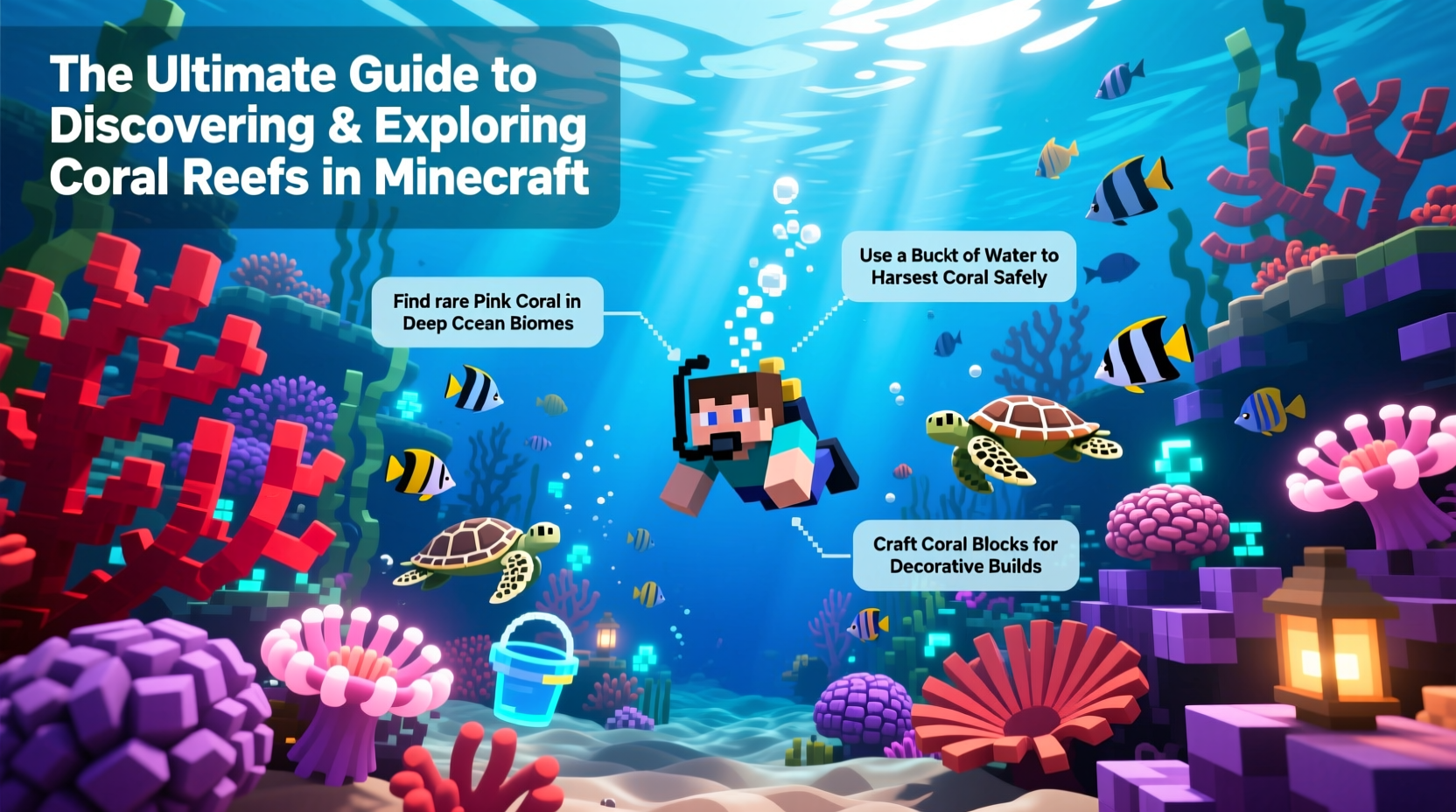
In Minecraft, coral reefs generate naturally within Warm Ocean biomes, typically adjacent to beaches or along shallow continental shelves. These biomes are visually distinct: turquoise water, bright sand, and clusters of colorful coral structures breaking the surface or lining the seabed. Unlike other ocean types, warm oceans maintain a consistent temperature value that allows coral to thrive—and crucially, prevents ice formation even at high altitudes.
Coral comes in five varieties—tube, brain, bubble, fire, and horn—each available in multiple colors (pink, yellow, blue, purple, and red). While they appear decorative, live coral blocks have specific mechanics: they require direct contact with water and will die (turn into dead coral blocks) if exposed to air or not adjacent to waterlogged blocks.
“Coral reefs aren’t just aesthetic—they’re ecological indicators. Their presence means you’ve found a stable warm ocean zone ideal for shipwrecks, buried treasure, and tropical fish.” — Dr. Lin Mei, Minecraft Biome Analyst & Content Creator
How to Locate Coral Reefs Efficiently
Finding coral reefs begins with targeting the correct biome. Use one of the following methods to increase your chances of discovery:
- Seed Selection: Choose world seeds known for spawning near warm oceans. Seeds like
49783562or-1294948105often place players close to coral-rich zones. - Map Exploration: Travel parallel to coastlines until the water turns light blue. Use boats to cover distance quickly while scanning beneath the surface.
- Brightness Clues: Coral reefs emit subtle ambient light due to their pigmentation. At dusk or night, look for faint glows along shallow seabeds.
- Fish Behavior: Tropical fish spawn only in warm oceans. If you see brightly colored fish swimming in schools, you're likely near a reef.
Essential Gear Checklist for Reef Exploration
Surviving and thriving in coral reef environments requires preparation. Below is a checklist of must-have items before descending into the depths:
- A fully enchanted Turtle Shell or helmet with Respiration III and Aqua Affinity
- Potion of Night Vision (3:00 minimum) or a Golden Carrot for crafting
- Boots enchanted with Depth Strider III for faster movement
- Sugar cane or kelp for making sugar (used in brewing)
- An empty bucket (to collect water or pick up live coral)
- Diamond or Netherite sword with Impaling V for defending against guardians
- Shears (to harvest dead coral without destroying it)
- Compass or cartography table to create an Explorer Map (optional but helpful)
Navigating and Preserving Coral Structures
While exploring, remember that live coral behaves differently than most blocks. It cannot be mined directly using tools; instead, it drops nothing unless collected with a Silk Touch pickaxe. However, placing a water source block next to dead coral can revive it—provided it's submerged and has access to flowing water on all sides.
To build sustainably around reefs or transplant coral safely:
- Always carry a water bucket when relocating live coral.
- Never break coral with non-Silk Touch tools—it becomes useless debris.
- Recreate reef aesthetics above water by using concrete powders dyed to match coral hues.
| Coral Type | Harvest Method | Revival Possible? | Best For Building |
|---|---|---|---|
| Live Tube Coral | Silk Touch Pickaxe | Yes (with water) | Vertical accents |
| Dead Brain Coral | Any Tool | No | Surface textures |
| Live Fire Coral | Silk Touch + Water Bucket | Yes | Dynamic lighting setups |
| Dead Horn Coral | Shears | No | Landscaping borders |
Step-by-Step: Mapping a Coral Reef Zone
Conducting a thorough exploration involves more than sightseeing. Follow this timeline to document and utilize a reef effectively:
- Day 1 – Approach and Survey: Arrive during daylight in a boat. Circle the perimeter to identify depth changes, cave entrances, and surface-breaking coral clusters.
- Day 2 – Initial Dive: Enter the water equipped with Night Vision and Respiration. Mark key points with glowstone or sea lanterns placed on weighted pressure plates.
- Day 3 – Resource Collection: Use Silk Touch to gather live coral samples. Collect bone meal from stray skeletons (if near ruins) and mine prismarine shards from nearby ocean monuments.
- Day 4 – Base Setup: Construct an underwater outpost using glass panes and magma blocks (for guardian deterrence). Include an airlock system with doors.
- Day 5 – Expansion: Begin cultivating coral farms inside enclosed water chambers. Connect to natural reef systems via tunnels.
Real Example: The Lost Atoll Discovery
In a multiplayer survival server, player Kira navigated over 800 blocks south of spawn searching for warm waters. After spotting a school of pufferfish weaving through pink coral towers, she anchored her boat and dove down. Using torches to mark paths, she uncovered a sprawling reef network hiding a buried treasure chest beneath a brain coral mound. With careful excavation, she retrieved a Heart of the Sea and two Nautilus Shells—resources critical for crafting conduits later in the game. Her methodical approach turned a random dive into a strategic asset for the entire team.
Frequently Asked Questions
Can I farm coral above water?
No, live coral requires constant submersion in waterlogged blocks. However, you can simulate coral aesthetics using dyed terracotta, concrete, or coral fans placed in water-filled planters.
Why did my harvested coral turn gray?
If coral loses contact with water—even briefly—it dies and becomes a dead coral block. Always keep it in a water bucket immediately after collection or use Silk Touch while underwater.
Do guardians spawn in coral reefs?
Guardians primarily spawn in ocean monuments, not coral reefs. However, elder guardians may occasionally patrol nearby if an monument lies within 50–70 blocks. Exercise caution when mining deep near reef edges.
Conclusion: Dive Deeper, Build Smarter
Coral reefs in Minecraft are gateways to richer gameplay—from resource gathering to architectural inspiration. By learning where they form, how to interact with them responsibly, and how to integrate their beauty into larger builds, players unlock new dimensions of creativity and strategy. These ecosystems reward patience, preparation, and respect for environmental mechanics.




 浙公网安备
33010002000092号
浙公网安备
33010002000092号 浙B2-20120091-4
Comments
No comments yet. Why don't you start the discussion?