
Platform sandals are a summer staple—offering height, style, and breathability. But their exposed soles, straps, and frequent use in harsh conditions mean they often wear out faster than other footwear. The good news? With proper care, even budget-friendly pairs can last multiple seasons. Whether you're wearing sleek leather thongs or sporty rubber slides, small habits make a big difference. This guide delivers actionable strategies to preserve comfort, structure, and appearance—so your favorite sandals stay supportive and stylish longer.
Understand Your Sandal Materials
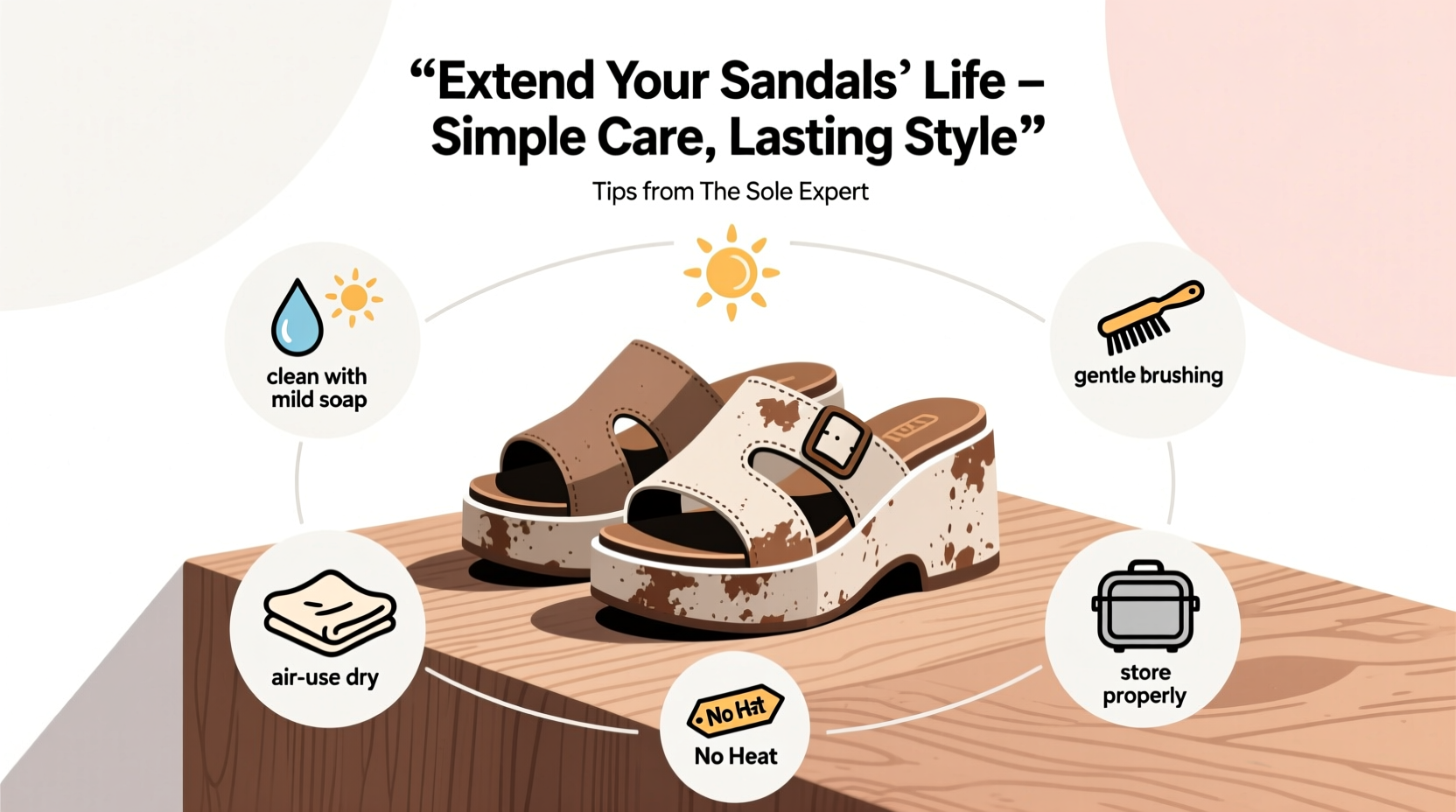
Not all platform sandals are built the same. The materials used dictate how they respond to moisture, heat, friction, and cleaning. Knowing what your sandals are made from helps you choose the right care method.
- Leather: Durable and molds to your foot over time, but sensitive to water and direct sunlight.
- Synthetic (PU, PVC): Often more affordable and water-resistant, but prone to cracking when exposed to UV light.
- Rubber & EVA Foam: Lightweight and ideal for beachwear; excellent traction but can compress or degrade over time.
- Fabric & Textile Straps: Breathable and soft, yet vulnerable to stains, odor, and fraying.
- Cork Footbeds: Provide natural cushioning and mold to your arches—but absorb moisture and need drying.
Step-by-Step Daily and Weekly Care Routine
Maintenance doesn’t have to be time-consuming. A few minutes each week prevent long-term damage. Follow this simple timeline to keep your sandals in top shape.
- After Each Wear: Shake off sand and debris. Wipe straps and soles with a dry microfiber cloth.
- Weekly Cleaning: Use a damp cloth with mild soap (like dish soap) to gently clean surfaces. Avoid submerging the sandals.
- Drying Protocol: If wet, air-dry at room temperature away from radiators or direct sun. Never use a hairdryer.
- Odor Control: Sprinkle baking soda on cork footbeds overnight, then brush off. For fabric straps, lightly mist with vinegar-water solution (1:3 ratio).
- Monthly Inspection: Check for loose straps, sole separation, or worn tread. Address minor issues before they become major failures.
| Care Step | Frequency | Tools Needed |
|---|---|---|
| Debris Removal | After every wear | Dry cloth, soft brush |
| Surface Cleaning | Weekly | Damp cloth, mild soap |
| Deep Clean | Every 2–3 months | Soft brush, specialized cleaner |
| Structural Check | Monthly | Visual inspection, finger test |
Avoid These Common Sandal-Killing Mistakes
Even well-intentioned owners accidentally shorten their sandals’ lifespan. Recognize these pitfalls to protect your investment.
- Hosing them down: Excess water weakens adhesives and causes warping, especially in layered soles.
- Storing while damp: Leads to mold, odor, and breakdown of foam or cork layers.
- Leaving them in hot cars: Heat accelerates plastic degradation and deforms flexible soles.
- Walking on rough terrain: Platforms aren’t designed for hiking—gravel and sharp rocks tear straps and erode tread.
- Ignoring early signs of wear: A loose strap today can lead to an unrepairable break tomorrow.
“Most sandal failures I see come from neglect, not poor quality. A five-minute wipe-down after beach use can add two full summers to their life.” — Lena Torres, Footwear Restoration Specialist
Proper Storage: What to Do and What to Skip
How you store your sandals when not in use is just as important as how you wear them. Poor storage leads to warped shapes, brittle materials, and unpleasant smells.
Do’s and Don’ts of Sandal Storage
| Do’s | Don’ts |
|---|---|
| Store in a cool, dry closet away from sunlight | Leave them outside or on a sunny porch |
| Use breathable cotton bags or original boxes | Keep them in sealed plastic bags (traps moisture) |
| Stuff straps with tissue paper to maintain shape | Crush them under other shoes or in tight spaces |
| Rotate between multiple pairs during peak season | Wear the same pair seven days a week without rest |
Real Example: How Sarah Doubled Her Sandals’ Lifespan
Sarah, a travel blogger based in Miami, owns several pairs of designer platform sandals. In the past, she replaced them every summer due to cracked soles and stained straps. After adopting a structured care routine, her current favorite pair has lasted three full seasons—nearly double the average.
She began wiping them down after beach outings, storing them in labeled canvas boxes, and applying a leather conditioner every six weeks. She also rotates between three pairs during vacation months, giving each time to air out. “I thought it was normal for nice sandals to fall apart by August,” she said. “Now I realize most of the damage was preventable.”
When and How to Repair Instead of Replace
Minor damage doesn’t mean retirement. Many issues can be fixed affordably.
- Loose Straps: Reattach with shoe-safe adhesive (like Barge All-Purpose Cement) or take to a cobbler.
- Scratched Soles: Light scuffs on rubber can be buffed with fine-grit sandpaper and cleaned with soapy water.
- Frayed Fabric: Trim loose threads carefully and apply a fabric sealant to prevent further unraveling.
- Odorous Footbeds: Deodorize with activated charcoal sachets or UV sanitizing devices designed for shoes.
For structural repairs—like delaminating soles or broken buckles—a professional cobbler is worth the cost. Repairs typically range from $15 to $40, far less than buying new high-end sandals.
Essential Sandal Care Checklist
Your Sandal Longevity Checklist:
- ✔ Wipe down after each use
- ✔ Clean weekly with mild soap
- ✔ Air-dry completely before storing
- ✔ Inspect monthly for damage
- ✔ Store in breathable containers
- ✔ Rotate between multiple pairs
- ✔ Condition leather straps every 4–6 weeks
- ✔ Repair minor issues promptly
FAQ: Quick Answers to Common Concerns
Can I wash my platform sandals in the washing machine?
No. The agitation and detergent can destroy adhesives, warp soles, and discolor materials. Always hand-clean using gentle methods.
How do I remove salt stains from beach wear?
Mix one part white vinegar with three parts water. Dab onto the stain with a cloth, then wipe with clean water and air-dry. Avoid scrubbing to prevent spreading.
Is it safe to use waterproof sprays on platform sandals?
Only if specifically designed for the material. Use suede protector on fabric straps and rubber guard on synthetic soles. Test on a small area first. Avoid spraying near glue seams.
Conclusion: Make Every Step Count
Your platform sandals don’t have to be disposable fashion. With mindful use and consistent care, they can remain comfortable, supportive, and stylish for years. The key lies in prevention—addressing dirt, moisture, and stress before they compromise the structure. Think of your sandals like any valuable item: regular attention pays off in longevity and performance.




 浙公网安备
33010002000092号
浙公网安备
33010002000092号 浙B2-20120091-4
Comments
No comments yet. Why don't you start the discussion?