
Moroccan poufs—also known as ottomans or footstools—are more than just decorative accents. They serve as versatile seating, footrests, and even small tables in bohemian, eclectic, and minimalist interiors. However, their true potential is unlocked only when they are filled correctly. A poorly filled pouf can collapse under pressure, lose shape within weeks, or feel uncomfortably firm. On the other hand, a well-filled Moroccan puff offers lasting support, maintains its structure, and enhances both comfort and room aesthetics.
This comprehensive guide walks through every aspect of filling a Moroccan puff, from selecting the right materials to long-term maintenance. Whether you’ve just purchased a new leather pouf or are reviving an old one that’s gone flat, these insights will ensure your piece remains functional, beautiful, and durable for years.
Why Proper Filling Matters
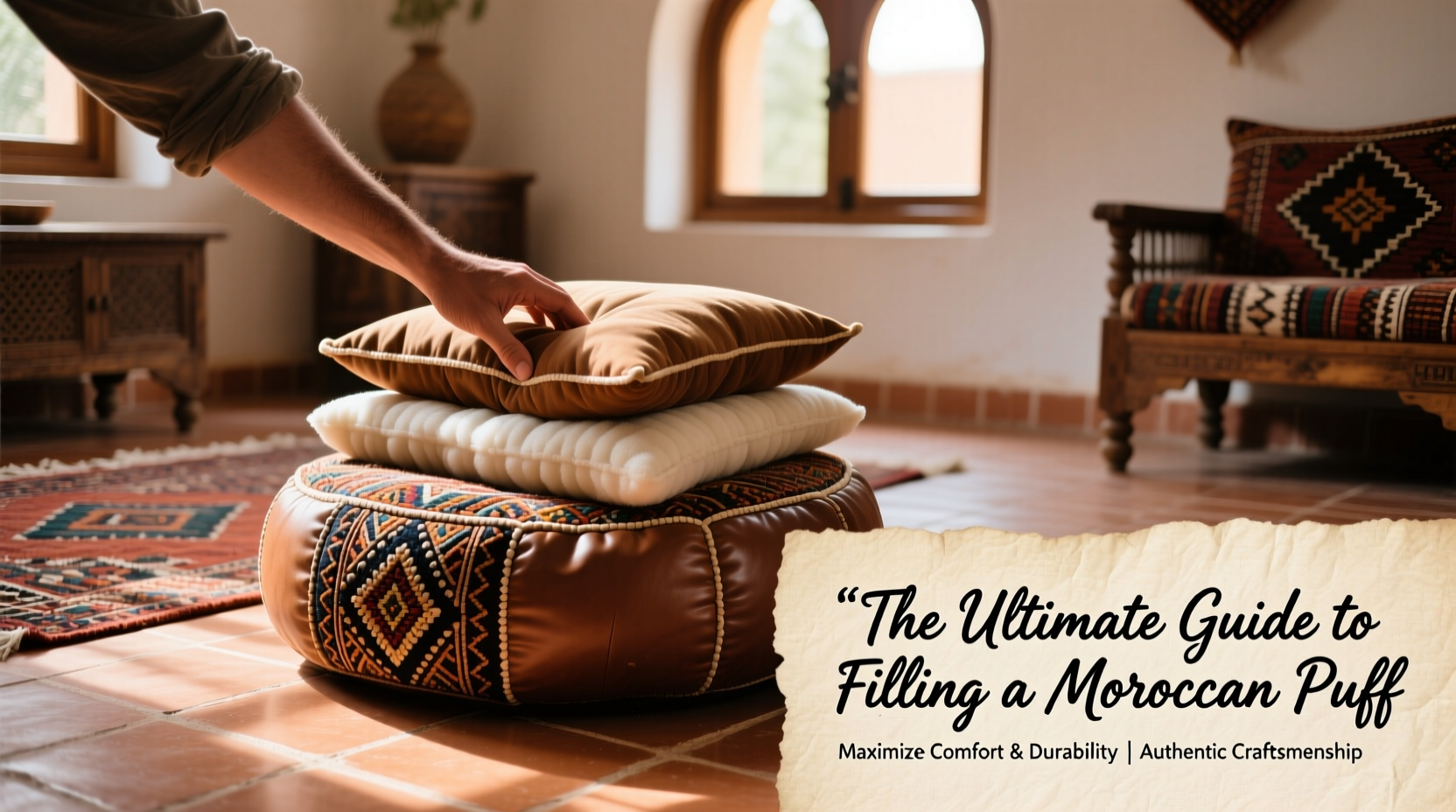
The base material inside a Moroccan puff determines how it feels, performs, and ages. Unlike solid furniture, poufs rely on internal fill to provide resilience and adaptability. Over time, low-quality or improperly packed fill shifts, compacts, or clumps, leading to uneven surfaces and structural failure.
A correctly filled pouf should:
- Support up to 250–300 pounds without deforming
- Retain its rounded silhouette after daily use
- Offer soft yet supportive cushioning
- Be easy to adjust or refill as needed
Filling isn’t a one-time task—it's part of ongoing maintenance. Understanding this sets the foundation for longevity.
Choosing the Right Filling Material
Not all fillings are created equal. The ideal choice balances weight, resilience, cost, and ease of handling. Below is a comparison of common options:
| Filling Type | Pros | Cons | Best For |
|---|---|---|---|
| Polyester Fiberfill | Inexpensive, lightweight, hypoallergenic | Flattens quickly, compacts over time | Decorative use, light sitting |
| Expanded Polystyrene (EPS) Beads | Durable, moldable, retains shape | Noisy when shifted, heavier than fiberfill | Heavy-duty seating, high-traffic areas |
| Memory Foam Scraps | Supportive, conforms to pressure | Expensive, hard to source in bulk | Luxury poufs, therapeutic use |
| Cotton Batting + EPS Mix | Soft surface with structural core | Requires careful layering | Balanced comfort and durability |
For most users, a hybrid approach works best: a core of EPS beads surrounded by a layer of polyester or cotton batting. This combines structural integrity with plush comfort.
“Poufs filled solely with fiberfill may look full at first, but they degrade rapidly. A dual-layer system with EPS beads at the center extends lifespan by 3–5 years.” — Lena Moreau, Sustainable Furniture Designer
Step-by-Step Guide to Filling Your Moroccan Puff
Filling a pouf properly requires patience and attention to detail. Follow this timeline to achieve optimal results:
- Prepare Your Workspace: Choose a clean, dry area with enough floor space. Lay down a tarp or large cloth to contain any spills.
- Open the Inner Liner: Most poufs have a zippered inner lining. If yours doesn’t, consider sewing one in before filling. This allows future adjustments.
- Add the Structural Core (EPS Beads): Pour in expanded polystyrene beads until the pouf is about 60% full. Shake gently to distribute evenly. Do not overfill—this restricts flexibility.
- Layer with Soft Fill: Add polyester fiberfill or cotton batting in handfuls, fluffing each portion before insertion. This creates a cushioned exterior while maintaining support underneath.
- Check Firmness: Sit on the pouf lightly. It should compress slightly but rebound fully. If too firm, remove some beads. If too soft, add more in small increments.
- Seal and Test: Close the inner liner securely. Place the pouf in its intended location and test under regular use for 24 hours. Adjust fill as needed.
Real-World Example: Reviving a Family Room Pouf
Sarah from Portland bought a handmade leather Moroccan puff three years ago. Initially firm and inviting, it gradually flattened and developed a sag on one side. After researching refills, she decided to recondition it using a mix of recycled EPS beads from an old bean bag and organic cotton batting.
She followed the layered method: 40% beads for structure, 60% cotton for softness. Within an hour, the pouf regained its original plumpness. Two months later, it still supports her toddler’s playtime and serves as a coffee table during movie nights. “I didn’t realize how much difference the fill made,” she said. “It feels brand new—and safer for my kids.”
Maintenance Checklist for Longevity
To keep your pouf performing well, follow this monthly and annual maintenance routine:
- ✅ Monthly: Rotate the pouf to prevent uneven wear.
- ✅ Every 3 Months: Open the liner and fluff the inner fill to restore loft.
- ✅ Biannually: Top off with additional fiberfill if compression is noticeable.
- ✅ Annually: Inspect the inner liner for tears; repair or replace if necessary.
- ✅ As Needed: Spot-clean the exterior with pH-balanced leather or fabric cleaner.
Frequently Asked Questions
Can I wash the filling?
No. Polyester fiberfill and EPS beads should never be washed. Moisture causes clumping and mildew. Always keep fill dry. Clean only the outer cover according to manufacturer instructions.
How do I know when it’s time to refill?
If the pouf sinks more than 2 inches under light pressure, loses its round shape, or feels lumpy, it’s time to adjust the fill. Early intervention prevents permanent deformation.
Is it safe for children and pets?
Yes, provided the inner liner is tightly sealed. EPS beads and fiberfill are non-toxic, but ingestion poses a choking hazard. Regularly check zippers and seams for damage.
Final Thoughts: Invest in Comfort That Lasts
A Moroccan puff is more than a trend—it’s a functional piece of art that bridges culture and comfort. But its beauty fades quickly without proper care from within. By choosing the right filling, applying a thoughtful layering technique, and committing to simple maintenance, you transform a fleeting decor item into a lasting home essential.
Don’t settle for a flat, lifeless pouf. Take the time to fill it with intention. Your back, your guests, and your living space will thank you.




 浙公网安备
33010002000092号
浙公网安备
33010002000092号 浙B2-20120091-4
Comments
No comments yet. Why don't you start the discussion?