
In an age where communication is instant but anonymity is common, knowing who’s behind a phone number can be critical. Whether it's a missed call from an unknown local number, a suspicious text message, or a potential scam attempt, the ability to trace and verify phone numbers empowers individuals to protect their privacy, avoid fraud, and reconnect with lost contacts. But not all tools deliver trustworthy results—and some may even violate privacy laws. This guide provides a comprehensive, ethical approach to extracting accurate information from any phone number using legitimate methods, trusted platforms, and smart verification techniques.
Understanding Phone Number Types and Their Traceability
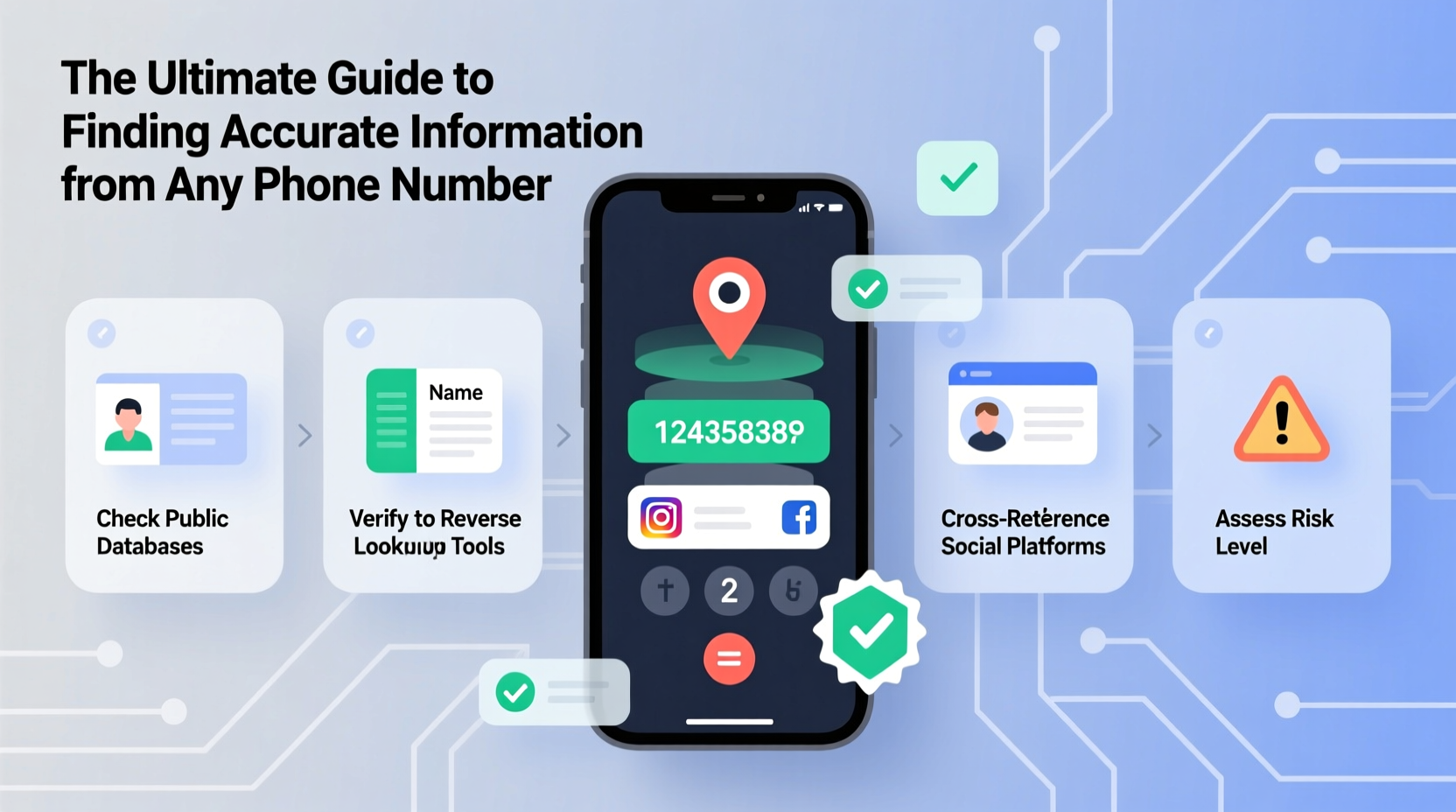
Not all phone numbers are created equal when it comes to traceability. The type of number significantly influences how much information you can legally and accurately retrieve.
- Landline Numbers: Typically tied to a physical address and registered under a person or business name. These are the easiest to trace through public directories.
- Mobile Numbers: More private due to wireless carrier protections, but still searchable via reverse lookup services—though often limited to carrier identification and general location.
- Voice over IP (VoIP): Numbers from apps like Skype, Google Voice, or messaging platforms. Often untraceable to real identities as they’re not linked to physical SIMs.
- Toll-Free Numbers: Such as 800 or 888 prefixes. Usually associated with businesses and easier to identify through public databases.
Knowing the category helps set realistic expectations. For example, a VoIP number used by a scammer might only reveal the service provider—not the user.
Step-by-Step Guide to Verifying a Phone Number
Finding reliable details requires more than typing a number into a search engine. Follow this structured process to maximize accuracy while respecting legal boundaries.
- Start with a Reverse Phone Lookup Service
Use reputable platforms like Whitepages, Truecaller, or Spokeo. Enter the full 10-digit number. Look for matches that include name, location, carrier, and user-reported tags (e.g., “scam,” “telemarketer”). - Cross-Check with Search Engines
Paste the number in quotes into Google (e.g., “555-123-4567”). This reveals if it’s been mentioned on forums, scam lists, or business pages. - Analyze Carrier Information
Determine whether it’s a mobile, landline, or VoIP line. Sites like NumberGuru or OpenCelliD provide free carrier lookups. - Check Social Media Profiles
Search the number on Facebook, Instagram, LinkedIn, or WhatsApp. Some platforms allow users to sync contacts, making previously hidden numbers visible. - Verify Through Official Channels
If the number claims to represent a company, call the official customer service line to confirm legitimacy.
This multi-source strategy reduces reliance on any single database and improves accuracy.
Top Tools and Platforms Compared
Different tools offer varying levels of detail, cost, and reliability. Here’s a comparison of leading options:
| Service | Free Features | Paid Features | Best For |
|---|---|---|---|
| Truecaller | Spam detection, basic caller ID | Full name, location, contact history | Real-time caller identification |
| Whitepages | Carrier info, possible name match | Address history, background checks | U.S.-based landlines and mobiles |
| Spokeo | Limited preview | Full profile, social media links, relatives | Deep personal data aggregation |
| NumLookup | Free reverse lookup, no registration | None – fully free | Quick, anonymous checks |
| OpenCelliD | Cell tower data, approximate location | Advanced geolocation APIs | Technical or investigative use |
Choose based on your needs: casual lookup, safety screening, or professional investigation.
Legal and Ethical Considerations
While the desire to identify unknown callers is understandable, accessing private information without consent can cross legal lines. The U.S. Fair Credit Reporting Act (FCRA) and Telephone Consumer Protection Act (TCPA) regulate how personal data—including phone records—can be used.
“Using reverse lookup tools for personal safety or verifying business communications is acceptable. Using them to stalk, harass, or conduct unauthorized background checks is not only unethical—it can lead to legal consequences.” — Sarah Lin, Digital Privacy Attorney
Always ensure your purpose aligns with fair use. Avoid sharing sensitive findings publicly or using data for employment, tenant, or credit screening unless compliant with FCRA regulations.
Do’s and Don’ts of Phone Number Research
| Do’s | Don’ts |
|---|---|
| Use lookups to block spam or verify delivery drivers | Attempt to locate someone avoiding contact |
| Report scam numbers to the FTC or FCC | Sell or distribute obtained personal data |
| Confirm business legitimacy before sending money | Assume all information is 100% accurate |
Real Example: Identifying a Suspicious Delivery Call
Jamal received a call from a local number claiming to be a courier holding his package. The caller asked for a $5 fee via gift card to release the delivery—a red flag. Instead of complying, Jamal searched the number on Google and found forum posts linking it to a known scam. He checked Truecaller, which labeled it “Fraud Risk.” He then reported the number to the Federal Trade Commission and warned his neighbors. His methodical approach prevented financial loss and helped others avoid the same trap.
This case illustrates how combining quick tools with skepticism yields powerful protection.
Essential Checklist for Safe Number Verification
Before acting on any phone number information, run through this checklist:
- ✅ Confirm the number format is correct (include area code)
- ✅ Perform a reverse lookup on at least two platforms
- ✅ Search the number in Google with quotation marks
- ✅ Check if it’s flagged as spam or fraud
- ✅ Verify business claims through official websites
- ✅ Never share personal details in response to unsolicited calls
- ✅ Report confirmed scams to national databases
FAQ
Can I find someone’s name from a cell phone number for free?
Occasionally, yes—if the number is listed in public directories or linked to a social media profile. However, most mobile numbers are private by default. Free tools may show carrier and location, but full names usually require paid access or prior contact syncing.
Are reverse phone lookup services accurate?
Accuracy varies. Services like Whitepages aggregate public records and user-submitted data, which can be outdated. Truecaller relies on crowd-sourced information, so frequently reported numbers are more reliable. Always cross-reference findings.
Is it illegal to look up a phone number?
No, searching a number using public or commercial tools is legal. However, using the information for harassment, stalking, or fraudulent purposes is illegal. Intent and usage determine legality, not the act of searching itself.
Conclusion: Stay Informed, Stay Protected
Accessing accurate information from a phone number isn’t about invading privacy—it’s about staying safe in a connected world. With the right tools, disciplined verification habits, and respect for legal limits, anyone can turn an unknown ring into actionable insight. Scammers evolve, but so can your defenses. Equip yourself with knowledge, use trusted resources wisely, and never assume a caller is legitimate without checking.




 浙公网安备
33010002000092号
浙公网安备
33010002000092号 浙B2-20120091-4
Comments
No comments yet. Why don't you start the discussion?