
Tungsten is one of the most valuable resources in Astroneer, essential for crafting high-tier technology such as Quantum Processors, Advanced Wiring, and critical components for space exploration. Unlike common elements like copper or aluminum, tungsten doesn’t appear everywhere—and when it does, extracting it efficiently requires strategy, preparation, and smart logistics. This guide breaks down exactly where to find tungsten, how to mine it sustainably, and how to integrate it into your base operations without wasting time or energy.
Why Tungsten Matters in Late-Game Progression
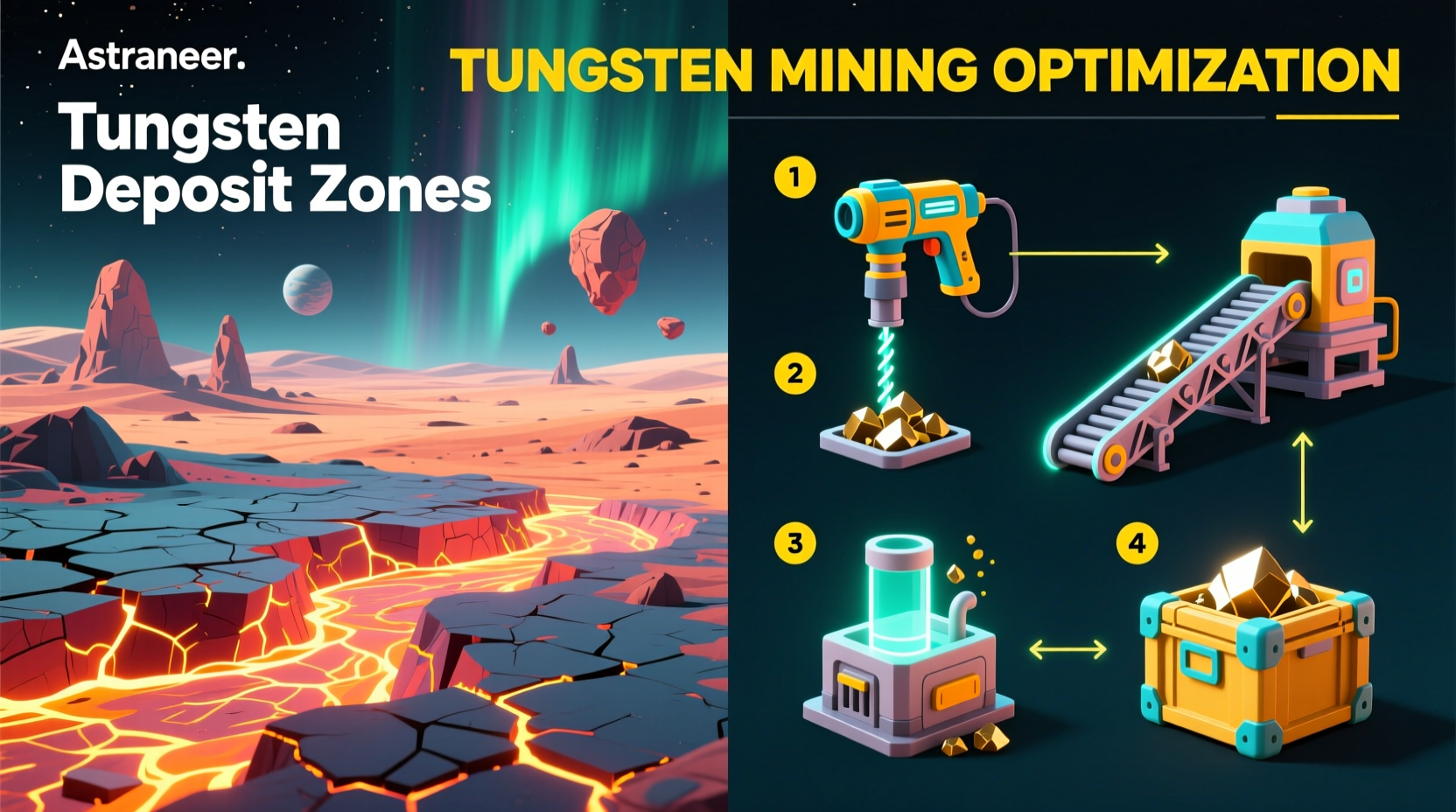
In Astroneer’s tech tree, tungsten serves as a cornerstone for endgame advancement. It's required for:
- Quantum Processors (used in teleporters and research modules)
- Advanced Composites (for rover upgrades and habitat expansions)
- High-efficiency power systems and signal boosters
- Deep-space exploration gear on Glacio and Vesania
Without a reliable tungsten supply, players often stall at mid-to-late game. Unlike organic or silicate-based resources, tungsten cannot be synthesized through recycling or soil enrichment—it must be mined directly from deposits. This makes location scouting and extraction efficiency paramount.
Where to Find Tungsten: Planet-by-Planet Breakdown
Tungsten spawns across multiple planets, but its concentration varies significantly. Below is a detailed overview of viable sources by celestial body.
| Planet | Biome Frequency | Deposit Depth | Accessibility |
|---|---|---|---|
| Sylva | Rare (mountain ridges) | Surface to 15m | Easy – early-game viable |
| Calidor | Moderate (crater interiors) | 10m–30m | Medium – heat hazard |
| Vesania | Common (rocky plateaus) | Surface to 20m | Medium – low oxygen |
| Norma | Frequent (canyon walls) | 5m–25m | Hard – gravity challenges |
| Glacio | Very Rare (under ice shelves) | 30m+ beneath ice | Very Hard – freezing temps |
Sylva offers the earliest opportunity to locate tungsten, though deposits are sparse. Calidor’s volcanic zones yield better results but require heat-resistant gear. Vesania and Norma provide the best balance of availability and safety, making them ideal for establishing dedicated mining outposts.
“Tungsten isn’t just another resource—it’s the bottleneck between surviving and thriving in Astroneer’s deep systems.” — Marcus R., veteran player with 700+ hours
Step-by-Step: Efficient Mining Workflow
To maximize output and minimize downtime, follow this proven extraction sequence:
- Scout with a Terrain Analyzer: Scan elevated or rocky biomes. Orange specks indicate metallic ores—tungsten appears as a bright orange-yellow highlight.
- Mark the Site: Place a beacon or small habitat to mark the deposit zone. Use flags to outline boundaries.
- Deploy a Medium or Large Rover: Equip it with a drill attachment and storage module. Bring spare batteries.
- Dig in Layers: Excavate downward in 5-meter increments. Tungsten veins often cluster in narrow bands rather than spreading uniformly.
- Use an Auto-Smelter: Set up near the site to convert raw ore into ingots immediately. Connect to a power source via cables or wireless transmitters.
- Store or Transport: Load processed ingots into containers or send them home via shuttle or rover convoy.
Repeat this process at multiple sites to create redundancy. A single vein will deplete quickly under heavy mining.
Optimizing Extraction: Tools and Automation
Manual mining works early on, but scaling requires automation. Here’s how to build a self-sustaining tungsten pipeline:
- Auto-Smelters + Power: Run smelters off wind turbines (Vesania/Norma) or solar arrays (Sylva/Calidor). Each smelter processes 1 tungsten ore every 10 seconds.
- Storage Solutions: Use Research Chambers or Storage Units to stockpile ingots. Label containers clearly.
- Conveyor Systems: On larger bases, link drills to sorters and conveyors that route tungsten directly into processing units.
- Power Management: Install Batteries or use Nuclear Generators on Glacio where renewables fail.
Checklist: Setting Up a Tungsten Mining Outpost
- ✅ Survey target biome with Terrain Analyzer
- ✅ Mark deposit location with beacon
- ✅ Deploy Medium Habitat or Shelter
- ✅ Install Medium Rover with Drill Module
- ✅ Place 2–3 Auto-Smelters near excavation site
- ✅ Connect to stable power source (solar/wind/nuclear)
- ✅ Add Storage Unit or Research Chamber for overflow
- ✅ Establish shuttle route or rover delivery path to main base
Real Example: Building a Tungsten Hub on Vesania
Jamie, an intermediate player, struggled to progress past Calidor due to inconsistent tungsten access. After landing on Vesania, she noticed frequent orange signals along a cliffside plateau. Using her Terrain Analyzer, she confirmed three dense clusters within 50 meters of each other.
She deployed a Medium Habitat powered by four Wind Turbines, placed two Auto-Smelters connected to a Splitter, and assigned a Medium Rover with a Drill Module to cycle between the sites. Within two in-game days, she was producing 18 ingots per hour—enough to fuel daily research and craft two Quantum Processors weekly. The outpost paid for itself in under 48 hours of gameplay.
This setup became her primary materials hub, later expanded to include titanium and lithium mining—all coordinated from a central command base.
Common Mistakes to Avoid
New miners often waste time and resources due to preventable errors. Steer clear of these pitfalls:
- Over-mining a single node: Tungsten deposits regenerate slowly. Allow 24–48 in-game hours before revisiting.
- Ignoring power stability: Smelters stop during blackouts. Always oversupply power by 30%.
- Mining manually long-term: Hand-collecting ore is inefficient beyond early Sylva missions.
- Storing raw ore instead of ingots: Raw tungsten takes more space and cannot be used directly in crafting.
- Skipping site marking: It’s easy to lose track of deposits in vast terrains. Use beacons religiously.
Frequently Asked Questions
Can tungsten be found on all planets?
No. While most planets have some presence, Glacio has extremely rare deposits buried under thick ice, and Exo Planets (Desh, Fost, etc.) do not contain natural tungsten. Stick to Sylva, Calidor, Vesania, and Norma for consistent sourcing.
How fast does tungsten respawn?
Tungsten nodes regenerate approximately every 24–48 in-game hours (about 20–40 minutes real-time). Avoid setting up permanent automated miners on a single spot—rotate between multiple deposits instead.
Is it better to mine tungsten or trade for it?
Mining is almost always more efficient. Trading at the Gateway Engine yields limited quantities and requires rare artifacts. With a proper setup, you’ll generate more tungsten in a day than trading could provide in a week.
Conclusion: Master Your Resource Chain
Finding and mining tungsten efficiently transforms your late-game experience in Astroneer. It removes bottlenecks, accelerates technological growth, and enables deeper exploration of the galaxy. By combining smart scouting, strategic base placement, and automated processing, you turn a scarce resource into a sustainable advantage.




 浙公网安备
33010002000092号
浙公网安备
33010002000092号 浙B2-20120091-4
Comments
No comments yet. Why don't you start the discussion?