
In the vast, blocky world of Minecraft, personalization and control over your environment are key to an immersive experience. One of the most subtle yet powerful tools at a player’s disposal is the name tag. Though small in size, this item plays a crucial role in taming, organizing, and protecting your in-game companions. Whether you're managing a bustling farm of animals or leading a pack of loyal wolves into battle, understanding how to find and effectively use name tags can transform your gameplay.
Name tags allow players to give custom names to mobs, preventing them from despawning and enabling deeper interaction with the game's creatures. Despite their utility, many players overlook them or struggle to locate them. This guide breaks down everything you need to know—from where to find name tags to advanced strategies for integrating them into your survival or creative playthroughs.
How Name Tags Work in Minecraft
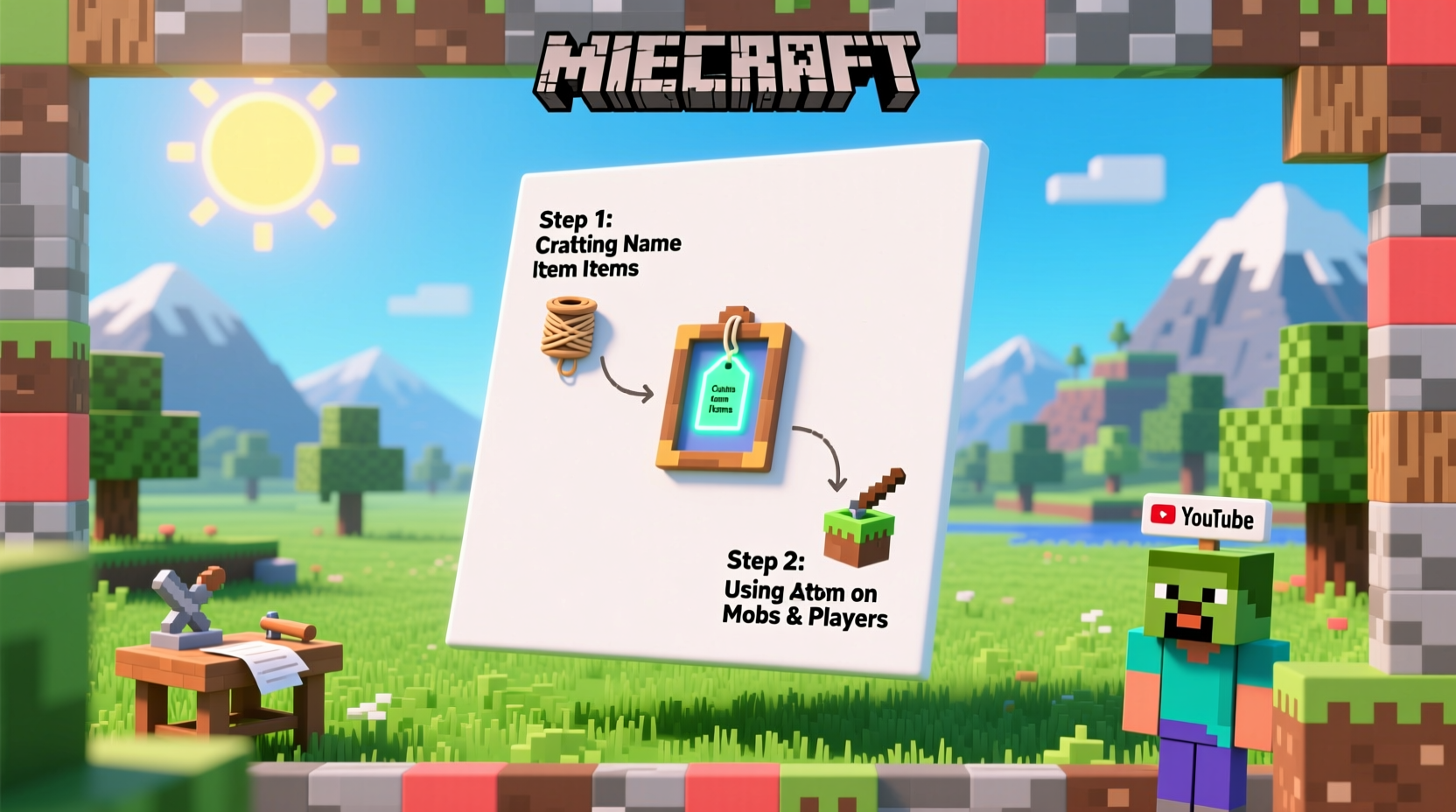
A name tag is a rare item that, when used on a mob, assigns it a unique name. Once named, the mob becomes permanently tied to the world and will no longer despawn—even if you log out or travel far away. This feature is invaluable for pet owners, breeders, and adventure map creators who rely on consistent entities.
To use a name tag, it must first be renamed in an anvil. You cannot apply a blank name tag directly. After naming it (e.g., “Shadow” or “Daisy”), equip the customized tag and right-click on the desired mob. The mob will emit a brief particle effect, confirming the name has been applied.
It's important to note that only certain mobs can be named. These include:
- Wolves, cats, and parrots (commonly tamed pets)
- Cows, pigs, sheep, chickens (farm animals)
- Donkeys, mules, horses, llamas
- Zombies, skeletons, and other undead (if kept alive via potion effects)
- Ender dragons (yes, really—though they can’t be tamed)
Naming hostile mobs doesn't make them friendly, but it does prevent despawning, which can be useful for trap designs or mob grinders.
Where to Find Name Tags
Name tags cannot be crafted. They must be obtained through exploration, trading, or looting. Here are the primary ways to acquire them:
- Buried Treasure Chests: One of the most reliable sources. Coastal excavation sites often contain treasure maps leading to sunken chests, which have a 24% chance to hold a single name tag.
- Shipwrecks: Both warm and cold ocean shipwrecks may contain chests with loot tables that include name tags at a 13% drop rate.
- Dungeons and Mineshafts: Rarely, chest loot in spider spawner rooms or abandoned mine corridors includes name tags (8.5% chance).
- Jungle Temples: Trapped chests inside these structures offer a small chance (9%) to contain a name tag.
- Fishing: While uncommon, name tags can appear as \"treasure\" items when fishing, with a base probability of 1.4% per catch.
- Villager Trading: Expert-level librarian villagers occasionally offer enchanted books in exchange for emeralds, but name tags are not tradeable—this method is not viable.
The best strategy combines exploration with preparation. Bring a Fortune-enchanted shovel or pickaxe to increase double drops from chests, and carry a mending-fished rod for efficient treasure hunting.
Step-by-Step Guide to Using a Name Tag
Applying a name tag requires careful steps. Follow this sequence to ensure success:
- Gather a name tag from a chest, buried treasure, or fishing.
- Locate an anvil and repair it if damaged (costs experience points).
- Place the name tag in the first anvil slot and enter the desired name in the text field.
- Remove the renamed tag (e.g., “Fluffy”)—this consumes one unit of durability on the anvil.
- Approach the target mob. For passive animals, approach slowly to avoid scaring them.
- Right-click the mob with the renamed tag in hand.
- Observe the naming animation—a small puff of particles confirms success.
Once named, the mob’s name appears above its head and persists across game sessions. If the name is too long or contains special characters, the game will truncate or sanitize it automatically.
| Action | Required Item | Cost (XP) | Success Indicator |
|---|---|---|---|
| Rename tag | Anvil + Name Tag | 1–3 levels | Custom name appears on tag |
| Apply to mob | Renamed tag | None | Particle effect + visible name |
| Fail to rename first | Blank tag | None | No effect on mob |
Advanced Uses and Creative Applications
Beyond basic pet ownership, name tags unlock creative possibilities. Server administrators and map makers use them to script events, label quest NPCs, or build interactive zoos. In survival mode, strategic naming enhances animal husbandry and transportation systems.
For example, naming each horse in a stable allows quick identification of speed, jump strength, or temperament. Llamas can be labeled by cargo capacity, making caravan logistics easier. Even minecarts and boats can be named (in Java Edition), letting players designate routes or functions.
“Name tags are underrated. I once built a rescue dog squad named after real-life service animals. Each had a role—scout, guard, swimmer—and never despawned during long expeditions.” — Jordan Reyes, Minecraft Adventure Map Designer
In multiplayer servers, naming can also deter theft. A clearly labeled pet is less likely to be led away by another player, especially if rules prohibit stealing named animals.
Common Mistakes and What to Avoid
Many players waste name tags due to simple errors. Awareness of these pitfalls ensures maximum efficiency:
- Using a blank tag: It does nothing. Always rename it first.
- Naming unintended mobs: Accidentally naming a zombie instead of your wolf can lead to confusion—or danger.
- Over-naming: While fun, giving every chicken a unique name clutters the screen and adds unnecessary data to your world file.
- Ignoring anvil costs: Frequent renaming drains XP. Plan ahead and batch-renames when possible.
“Consistency in naming and smart storage of spare tags can save hours of frustration later.” — Lena Park, Minecraft Educator & Mod Developer
FAQ
Can name tags be duplicated with commands?
Yes, in creative mode or using commands like /give @p minecraft:name_tag{display:{Name:'{\\\"text\\\":\\\"Ace\\\"}'}}, you can generate pre-named tags without an anvil.
Do name tags work on baby mobs?
Absolutely. Naming a baby cow ensures it grows into a named adult. This is ideal for breeding lines or preserving rare variants like brown mushrooms cows.
Can I remove a name once applied?
Not directly. However, using a name tag with a blank name (via command) or renaming it to a space can effectively clear the display.
Checklist: Mastering Name Tags in 7 Steps
- ✅ Explore shipwrecks and buried treasure for initial name tags
- ✅ Craft or repair an anvil for renaming
- ✅ Rename the tag before use
- ✅ Apply to desired mob with a right-click
- ✅ Organize pets or livestock with meaningful names
- ✅ Avoid naming hostile mobs unless needed for builds
- ✅ Store extras in a labeled chest for future use
Conclusion
Name tags may seem like a minor detail in Minecraft’s expansive toolkit, but their impact on gameplay longevity and emotional connection to in-game creatures is profound. From ensuring your loyal wolf survives a Nether journey to maintaining a generational herd of prize-winning sheep, the ability to name and preserve mobs adds depth and continuity to your world.




 浙公网安备
33010002000092号
浙公网安备
33010002000092号 浙B2-20120091-4
Comments
No comments yet. Why don't you start the discussion?