
In an era where visual content dominates digital communication, the demand for high-quality, free-to-use images has never been higher. Public domain images offer a powerful solution—free from copyright restrictions, they can be used in websites, presentations, marketing materials, and more without legal risk. However, not all \"free\" images are truly public domain, and mislabeling or misunderstanding usage rights can lead to costly consequences. This guide provides a comprehensive roadmap to identifying authentic public domain resources, verifying their status, and applying them with confidence.
What Makes an Image Public Domain?
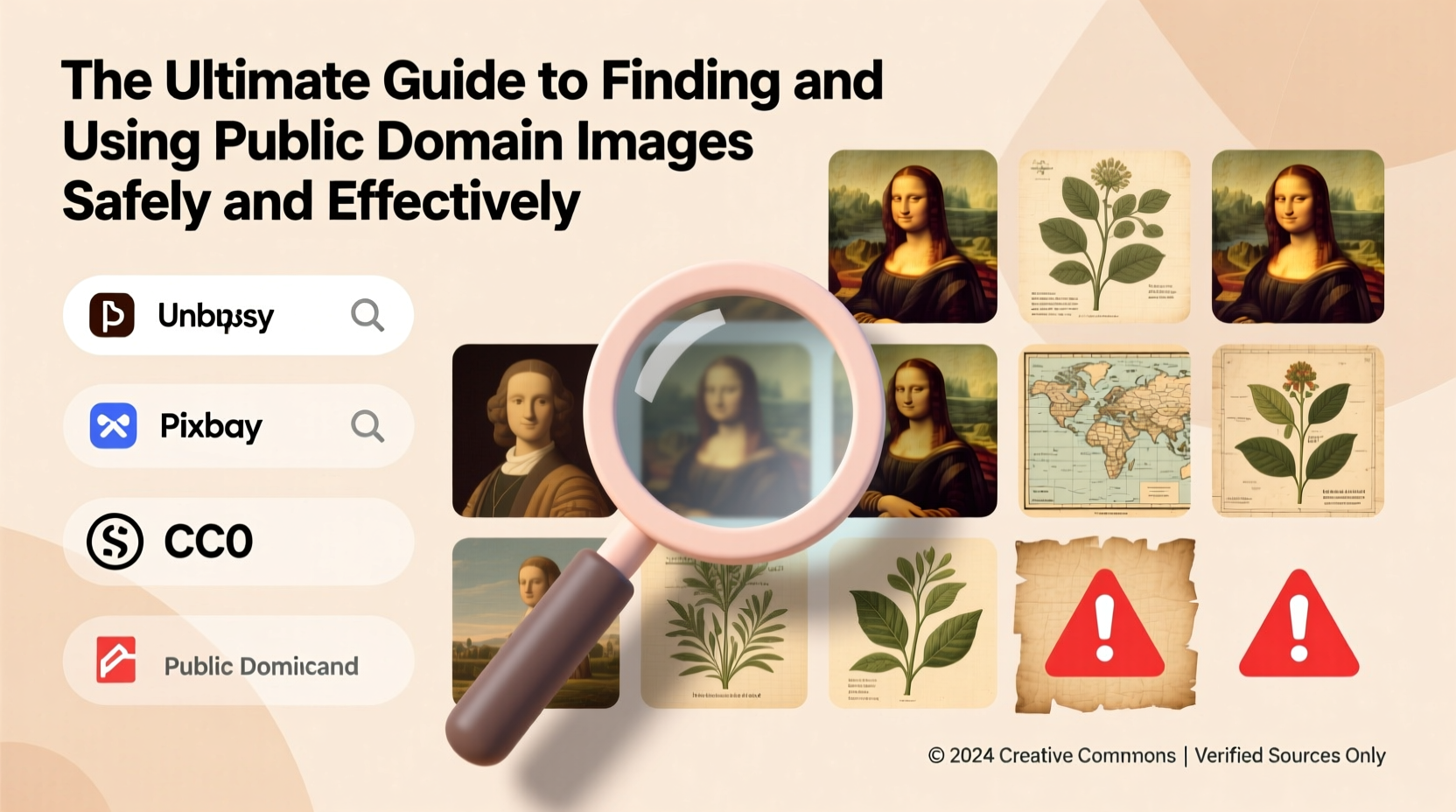
An image enters the public domain when it is no longer under copyright protection or was never protected by copyright in the first place. This typically happens under one of four conditions:
- The copyright has expired (usually 70+ years after the creator’s death, depending on jurisdiction).
- The work was created by a government employee as part of official duties (e.g., U.S. federal government works).
- The creator explicitly dedicated the work to the public domain (e.g., via CC0 license).
- The work failed to meet formalities required for copyright at the time (relevant for older works).
It's crucial to understand that “publicly available” does not mean “public domain.” A photo on social media or a blog may be visible to everyone but still fully protected by copyright.
Where to Find Authentic Public Domain Images
Several reputable platforms specialize in curating verified public domain content. These sources vet images based on legal standards and provide clear documentation of their status.
- Wikimedia Commons: One of the largest repositories of freely usable media, including historical photographs, scientific diagrams, and artwork whose copyrights have expired.
- Library of Congress (loc.gov): Offers millions of digitized items from American history, most of which are in the public domain due to age or federal origin.
- Unsplash (CC0 subset): While not entirely public domain, many contributors release photos under CC0, effectively placing them in the public domain worldwide.
- Pixabay: Aggregates CC0-licensed content, allowing commercial use without attribution (though credit is appreciated).
- National Archives (archives.gov): Houses U.S. government-produced photos, films, and documents free for reuse.
- Metropolitan Museum of Art Open Access Collection: Over 400,000 images of artworks in the public domain due to the museum’s open-access policy.
When using these sites, look for filters labeled “Public Domain,” “CC0,” or “No Copyright – United States.” Avoid third-party aggregators that don’t clearly cite original sources or licensing terms.
Step-by-Step: How to Verify Public Domain Status
Finding an image online isn't enough—you must confirm its legal status before use. Follow this verification process:
- Identify the source and creator: Trace the image back to its original host. Reputable institutions often include metadata about copyright status.
- Check creation date: For works published before 1928 in the U.S., they are likely in the public domain. Between 1928–1963, renewal records must be checked; after that, rules vary based on publication and notice.
- Confirm authorship: Was it made by a U.S. federal government employee in the course of duty? If yes, it’s automatically public domain.
- Look for explicit dedication: Does the creator state it’s released under CC0 or “no rights reserved”? Look for licenses like Creative Commons Zero (CC0).
- Cross-reference with databases: Use tools like the U.S. Copyright Office’s Public Catalog or Stanford’s Copyright Renewal Database to verify expiration.
“Just because you found it on Google doesn’t make it free to use. The burden of due diligence falls on the user.” — James Boyle, Professor of Law and Co-Director of the Center for the Study of the Public Domain
Common Pitfalls and What to Avoid
Even experienced creators fall into traps when sourcing images. Below is a comparison of best practices versus common mistakes.
| Do’s | Don’ts |
|---|---|
| Use metadata and source citations to trace image origins | Assume all \"free stock photo\" sites offer public domain content |
| Double-check country-specific copyright laws (e.g., life + 70 years vs. life + 50) | Use old-looking photos without verifying their actual status |
| Attribute even when not required—it builds credibility | Modify a public domain image and claim full copyright over the new version (you can only copyright your modifications, not the base) |
| Archive proof of public domain claims (screenshots, URLs, dates) | Repost images from Pinterest or Tumblr without tracing the original |
Real-World Example: A Blogging Mistake Turned Lesson
Sarah, a travel blogger, illustrated her article on ancient Rome with a striking black-and-white photograph of the Colosseum she found through a simple Google Images search. She credited the site she downloaded it from but didn’t investigate further. Months later, she received a cease-and-desist letter from a European photo agency claiming ownership. Upon investigation, she learned the image was taken in 1955 by a French photographer—still under copyright in Europe (life + 70 years), though potentially expired elsewhere.
Her mistake? Assuming visibility equaled freedom. After removing the image and settling a small licensing fee, Sarah now uses only Library of Congress and Wikimedia Commons for historical imagery and keeps a spreadsheet tracking each image’s source and rights status.
Checklist: Safe Public Domain Image Usage
Before publishing any project, run through this checklist:
- ✅ Confirmed the image is either pre-1928 (U.S.) or created by a U.S. federal employee
- ✅ Verified the source is authoritative (e.g., .gov, .edu, or known cultural institution)
- ✅ Checked for CC0 or explicit “public domain” designation
- ✅ Reviewed jurisdiction-specific rules if distributing internationally
- ✅ Archived documentation of the image’s license and source
- ✅ Considered adding attribution, even if not required
Frequently Asked Questions
Can I sell products featuring public domain images?
Yes. Once an image is in the public domain, you can use it commercially—including on merchandise, books, or advertisements—without permission or payment. However, if someone else has trademarked a design derived from the image, that could limit your use in branding.
Does altering a public domain image give me full copyright?
You can copyright your new, original contributions (e.g., digital enhancements, collage elements), but the underlying public domain material remains free for others to use. You cannot prevent others from using the same base image.
Are all government-created images public domain?
Not always. Only works created by employees of the U.S. federal government as part of their official duties are automatically in the public domain. Works created by contractors, state/local governments, or foreign governments may still be copyrighted.
Conclusion: Use Freely, But Use Wisely
Public domain images are a treasure trove for creators seeking legal, cost-free visual content. But their value lies not just in accessibility, but in responsible use. By understanding the nuances of copyright expiration, verifying sources rigorously, and maintaining good documentation, you protect both your reputation and your projects from legal exposure. Whether you're designing a website, teaching a class, or launching a brand, the public domain offers a foundation of creative freedom—if you build on it correctly.




 浙公网安备
33010002000092号
浙公网安备
33010002000092号 浙B2-20120091-4
Comments
No comments yet. Why don't you start the discussion?