
Finding someone by name might seem simple in an age of digital connectivity, but accuracy, privacy laws, and data fragmentation make it more complex than it appears. Whether you're reconnecting with an old friend, verifying a professional contact, or conducting due diligence, the right approach matters. This guide provides practical strategies, trusted tools, and ethical considerations to help you locate individuals efficiently and responsibly.
Why Name-Based Searches Are Tricky
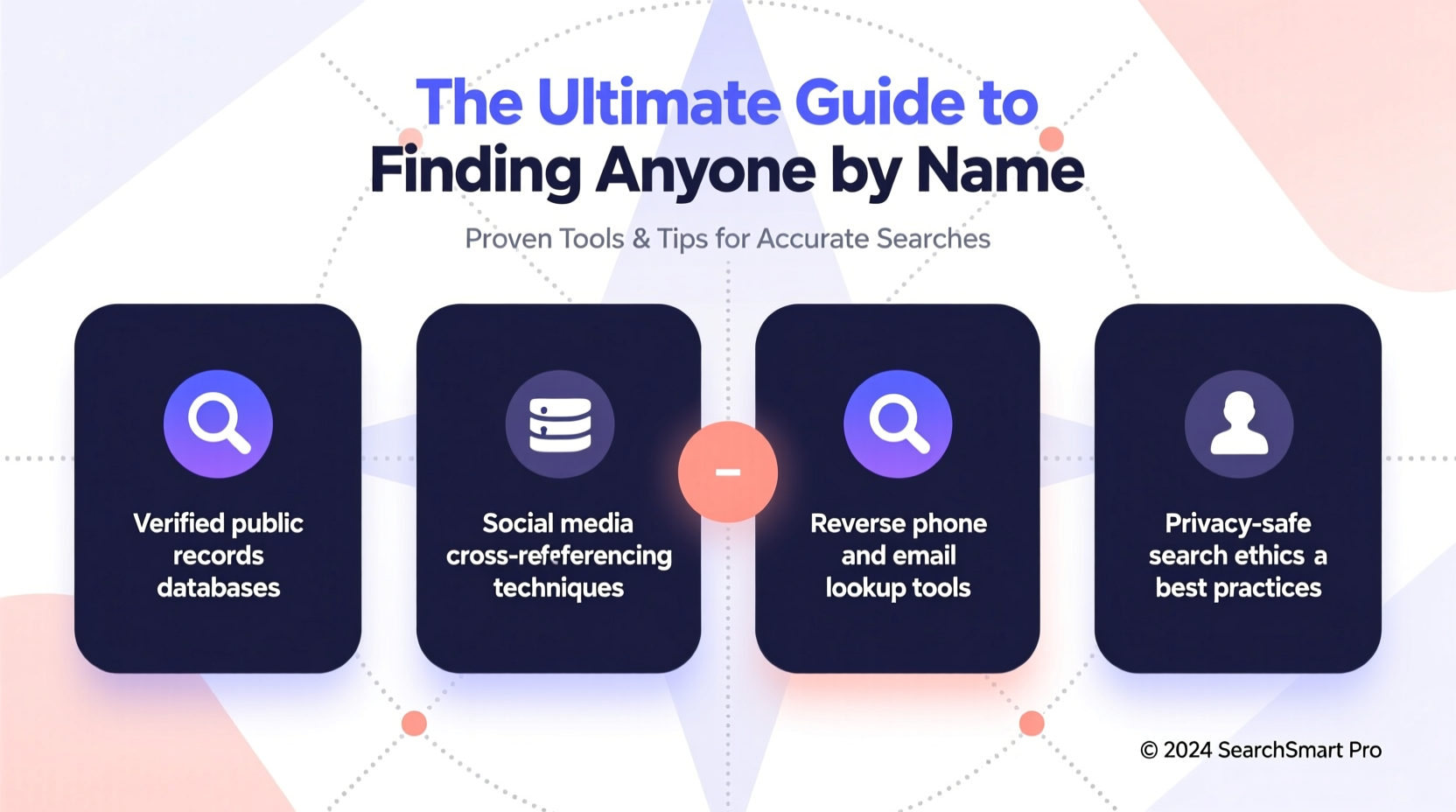
A person’s name is rarely unique. Common names like “John Smith” or “Emily Johnson” return thousands of results across social media, public records, and directories. Without additional context—such as location, age, occupation, or affiliations—it's easy to misidentify someone. Data accuracy also varies widely: outdated addresses, incomplete profiles, and unverified sources can derail your search.
Moreover, privacy regulations like GDPR and CCPA have restricted access to personal information, limiting what’s publicly available. The key isn’t just searching more—it’s searching smarter.
Step-by-Step Guide to Accurate People Searches
Follow this structured process to increase your chances of locating the right individual without violating privacy norms.
- Gather what you know. Start with basic details: full name, known locations (past or present), workplaces, schools, relatives’ names, or social media handles.
- Use reverse lookup tools. Enter the name into reputable databases that aggregate public records and online footprints.
- Cross-check social platforms. Search LinkedIn, Facebook, Instagram, and Twitter using filters like location or education to narrow results.
- Verify through secondary identifiers. Look for matching phone numbers, email addresses, or property records.
- Document findings logically. Keep notes on which sources provided consistent data to assess reliability.
Top Tools for Finding Anyone by Name
Not all search tools are created equal. Some specialize in public records, others in social discovery. Below is a comparison of leading platforms based on accuracy, depth, and ease of use.
| Tool | Type | Best For | Cost | Key Features |
|---|---|---|---|---|
| TruthFinder | Public Records & Background Checks | Comprehensive reports with criminal history, relatives, and address history | $27.82/month (billed annually) | Reverse phone/email lookup, arrest records, family connections |
| Spokeo | Data Aggregation | Social discovery and contact info | $54.89 for 7 days | Maps results, social media links, possible household members |
| Intelius | Background Checks & People Search | Detailed personal history and property ownership | $34.95/month | Address history, relatives, bankruptcy records |
| Professional Network | Finding professionals or former colleagues | Free / Premium $24–$58/month | Work history, endorsements, mutual connections | |
| FamilySearch.org | Genealogy Database | Locating distant relatives or ancestors | Free | Census records, obituaries, historical documents |
“Accuracy in people search depends less on the tool and more on how you triangulate data from multiple verified sources.” — David Lin, Digital Investigator & Privacy Consultant
Real Example: Reconnecting with a Lost Contact
Sarah hadn't seen her college roommate, Lisa Tran, in over 15 years. She remembered Lisa had moved to Portland after graduation and worked in healthcare. A quick Google search returned dozens of “Lisa Trans,” most unrelated.
Sarah used Spokeo with the filter set to Oregon and found a profile listing a middle initial “M.” and a past address near her old campus. She cross-referenced the associated phone number with a voicemail greeting on a local clinic’s website—recognizing Lisa’s voice. After confirming through a mutual friend, Sarah reconnected successfully.
This case illustrates the importance of combining partial data with contextual clues and verification steps.
Do’s and Don’ts of Ethical People Searching
While finding someone is often well-intentioned, boundaries matter. Misuse of personal data can lead to legal issues or damaged relationships.
| Do | Don't |
|---|---|
| Use information for reconnection, research, or safety checks | Stalk, harass, or threaten individuals |
| Verify identity before making contact | Share private details (addresses, phone numbers) publicly |
| Respect opt-out requests or privacy settings | Use data for fraud, impersonation, or scams |
| Check if the person has requested data removal from certain sites | Bypass paywalls or use unauthorized scraping tools |
Expert Tips for Maximizing Accuracy
- Add location and timeframe filters. Most databases allow narrowing results by city and year, reducing false matches.
- Search variations of the name. Try nicknames, maiden names, or phonetic spellings (e.g., “Jon” vs. “John”).
- Use quotation marks in search engines. Typing “Alex Rivera” in Google returns exact matches, avoiding unrelated “Alex” or “Rivera” pages.
- Leverage educational and professional networks. Alumni groups on LinkedIn or university directories often list graduates with verifiable details.
- Monitor updates. Some services offer alerts when new records appear for a person—useful for long-term tracking (with consent).
Checklist: How to Find Someone by Name Safely and Accurately
- Collect all known details (full name, locations, jobs, relatives)
- Start with free resources (Google, LinkedIn, FamilySearch)
- Use a reputable paid service for deeper public records
- Cross-verify at least two identifying details (phone, address, workplace)
- Avoid sharing sensitive information publicly
- Contact the person respectfully, explaining your purpose
- If no response, do not persist—respect privacy boundaries
FAQ
Is it legal to look up someone by name?
Yes, accessing publicly available information—such as social media profiles, voter registrations, or property records—is legal. However, using that data for harassment, fraud, or unauthorized background checks may violate laws like the FCRA or state privacy statutes.
Can I remove my own information from these sites?
Yes. Most data brokers like Spokeo, Whitepages, and Intelius offer opt-out forms. Submitting removal requests takes time and may need to be repeated, but it reduces your digital footprint.
What if I can’t find the person at all?
Some individuals limit their online presence intentionally. Consider contacting mutual friends, checking alumni associations, or posting in community forums. In rare cases, hiring a licensed private investigator may be appropriate and lawful.
Conclusion
Finding someone by name requires more than typing a few words into a search bar. It demands patience, precision, and respect for privacy. By using reliable tools, validating information across sources, and adhering to ethical standards, you can conduct effective searches without overstepping boundaries. Whether rekindling a relationship, vetting a business partner, or satisfying personal curiosity, the methods outlined here empower you to find people accurately—and responsibly.




 浙公网安备
33010002000092号
浙公网安备
33010002000092号 浙B2-20120091-4
Comments
No comments yet. Why don't you start the discussion?