
In a market flooded with fast fashion and disposable basics, finding a truly durable, heavyweight t-shirt can feel like searching for a needle in a haystack. Yet the demand for long-lasting, well-made cotton tees continues to grow. These shirts aren’t just about comfort—they’re an investment in timeless style, ethical production, and reduced environmental impact. Whether you're building a minimalist wardrobe or simply tired of replacing shirts every season, knowing how to identify genuine quality is essential. This guide cuts through the noise to show you exactly what to look for when shopping online.
Understanding What Makes a T-Shirt \"Heavyweight\"
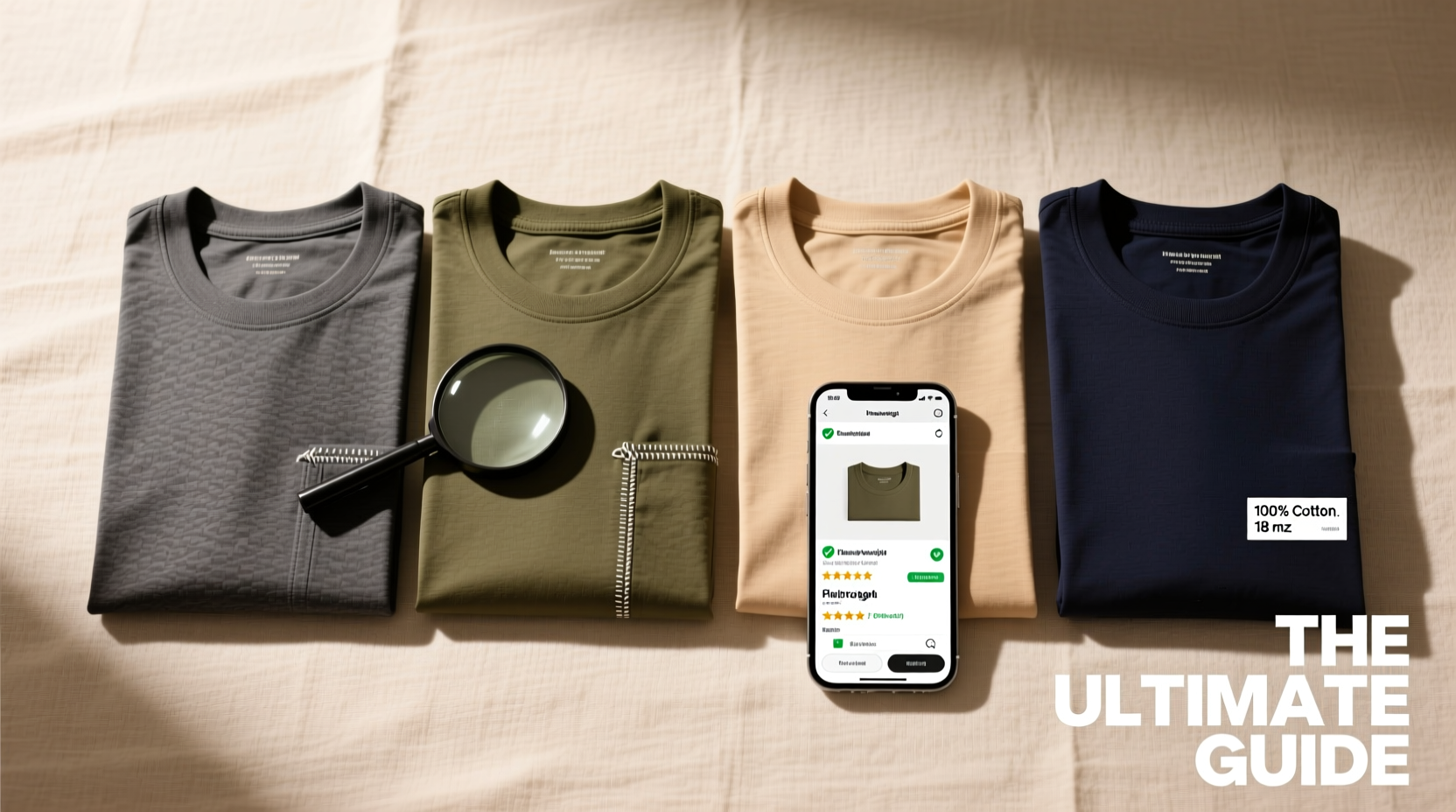
The term “heavyweight” refers to the fabric’s weight, measured in grams per square meter (GSM) or ounces per square yard. Most standard t-shirts fall between 4.0 and 5.5 oz/yd² (130–190 GSM), which feels light and sometimes flimsy. True heavyweight tees start at around 6.5 oz/yd² (220 GSM) and can go up to 8.0 oz/yd² (270 GSM) or more. This extra density provides structure, durability, and a premium hand-feel that resists stretching and pilling over time.
However, weight alone doesn’t guarantee quality. A heavy shirt made from short-staple cotton or poorly constructed stitching will still degrade quickly. The best heavyweight tees combine substantial fabric weight with superior materials and craftsmanship.
Key Factors That Define Quality
When shopping online, where you can’t touch or try on a garment, it’s crucial to evaluate quality based on measurable factors. Here are the most important ones:
- Fabric Composition: 100% combed or ring-spun cotton is ideal. Combing removes shorter fibers, resulting in a smoother, stronger yarn. Avoid blends with polyester unless specifically designed for performance wear.
- Thread Count (GSM/oz): As mentioned, aim for 6.5 oz/yd² or higher. Some luxury brands offer 7.5–8.0 oz options for a structured drape.
- Stitching Technique: Double-stitched seams, especially at shoulders and hems, significantly increase durability. Flatlock stitching reduces chafing and improves longevity.
- Neckline Reinforcement: High-quality shirts use interlocking stitching or ribbed collar binding to prevent stretching and deformation after repeated washes.
- Dye Process: Garment-dyed tees often have richer color depth and softer feel. Reactive dyes bond better with cotton, reducing fading.
“Most people underestimate how much construction affects longevity. Two shirts can use the same cotton, but if one has single-stitched hems and weak collar tape, it’ll sag within months.” — Daniel Park, Apparel Engineer & Sustainable Fashion Consultant
Top Brands Known for Heavyweight Quality
Not all brands are transparent about their materials, but several have built reputations on consistency and durability. These companies provide detailed specs, ethical manufacturing, and customer reviews that validate long-term performance:
| Brand | Fabric Weight | Material | Origin | Price Range |
|---|---|---|---|---|
| Pact | 6.1 oz | Organic Cotton | Peru | $28–$34 |
| Stanley/Stella | 7.0 oz | Organic Ring-Spun Cotton | India / Bangladesh (GOTS-certified) | $30–$38 |
| Imperial Stock Yards | 7.5 oz | Combed Cotton | USA | $40–$50 |
| EarthPositive | 6.0 oz | Organic Cotton (low-impact dye) | India | $25–$32 |
| Uniqlo U (by Christophe Lemaire) | 6.5 oz | Supima Cotton | China / Vietnam | $29.90 |
These brands consistently deliver transparency in sourcing and manufacturing. While not all are “heavyweight” by extreme standards, they prioritize durability through material quality and reinforced construction.
Step-by-Step Guide to Buying Online with Confidence
Purchasing a high-quality t-shirt without trying it on requires a strategic approach. Follow this process to minimize risk and maximize satisfaction:
- Identify Your Fit Preferences: Decide whether you prefer slim, regular, or oversized cuts. Measure a favorite existing tee and compare dimensions to size charts.
- Read Product Descriptions Thoroughly: Look for specifics: “ring-spun,” “combed cotton,” “double-stitched,” “reinforced collar.” Vague language like “soft” or “luxury” is a red flag.
- Check Fabric Weight: If not listed, contact customer service. Any brand serious about quality will provide this detail.
- Review Customer Photos and Feedback: Pay attention to comments about shrinkage, fading, and fit accuracy. Real-user images reveal true drape and texture.
- Evaluate Return Policy: Choose retailers with free returns and reasonable timeframes (at least 30 days). This allows testing fit and fabric in person.
- Start with One Sample: Order a single shirt before buying in bulk. Assess its wash performance over 3–5 cycles.
Real-World Example: Building a Capsule Wardrobe with Confidence
Mark, a software developer from Portland, wanted to reduce his clothing waste and build a versatile, low-maintenance wardrobe. He previously bought budget tees in bulk, replacing them yearly due to thinning fabric and stretched necklines. After researching, he invested $45 in two heavyweight tees from Imperial Stock Yards—each priced higher than his usual purchases.
He followed the step-by-step guide: checked measurements, reviewed fabric specs (7.5 oz combed cotton, double-stitched hems), and ordered one black and one heather gray. After six months of weekly wear and washing, the shirts showed no signs of pilling or neckline distortion. Mark now owns five of these tees and estimates he’s saved money over three years compared to his old buying pattern.
“I used to think I couldn’t afford good basics,” he said. “But when I realized I was spending the same amount annually on cheap shirts, switching made financial sense too.”
Common Pitfalls to Avoid
Even with research, buyers often fall into traps set by misleading marketing. Watch out for these common issues:
- Vanity Sizing: Some brands label larger sizes as “medium” to appeal to ego. Always rely on measurements, not size tags.
- Weight Misrepresentation: A shirt advertised as “heavy” might only be 5.5 oz. Demand precise numbers.
- Overlooking Shrinkage: 100% cotton can shrink 5–7% if not pre-shrunk. Check whether the brand accounts for this in cutting.
- Ignoring Care Instructions: Even the best shirt degrades with improper washing. Follow guidelines for temperature, drying, and ironing.
FAQ
Do heavyweight t-shirts shrink more than lightweight ones?
Not necessarily. Shrinkage depends on whether the fabric is pre-shrunk and how it’s washed. Heavyweight cotton that’s been properly treated often holds its shape better than lighter, less stable knits.
Are heavyweight tees suitable for warm climates?
Yes, especially if made from breathable, combed cotton. The denser fabric can actually wick moisture better and resist odor longer than thin, sheer tees that cling when sweaty.
How many heavyweight t-shirts should I own for a minimalist wardrobe?
Five to seven well-chosen colors (black, white, gray, navy, olive) can form the foundation of a versatile rotation. With proper care, each can last 3–5 years or more.
Final Checklist Before You Buy
- ✅ Fabric weight is 6.5 oz/yd² or higher
- ✅ Made from 100% combed or ring-spun cotton
- ✅ Double-stitched seams and reinforced collar
- ✅ Transparent origin and ethical certifications (e.g., GOTS, Fair Trade)
- ✅ Accurate size chart with flat measurements
- ✅ Positive long-term customer reviews mentioning durability
- ✅ Flexible return policy
Conclusion
Finding durable, high-quality heavyweight t-shirts online isn’t guesswork—it’s a matter of knowing what to look for and trusting verified signals over flashy claims. By focusing on fabric weight, construction details, and reputable brands, you can build a collection of tees that look better with age and reduce the need for constant replacement. In a world of excess, choosing fewer, better things is both practical and powerful.




 浙公网安备
33010002000092号
浙公网安备
33010002000092号 浙B2-20120091-4
Comments
No comments yet. Why don't you start the discussion?