
A midi gown—falling between the knee and ankle—is one of the most versatile pieces in modern fashion. Whether you're attending a wedding, cocktail party, or formal dinner, its elegant length strikes a balance between sophistication and ease. Yet, no two bodies are alike, and what looks stunning on one person may not complement another. The secret isn’t just in choosing a beautiful dress—it’s in selecting a silhouette that harmonizes with your unique shape. Understanding proportions, waist placement, neckline options, and fabric behavior transforms the way a midi gown drapes and defines your figure.
Understanding Body Types and Proportion
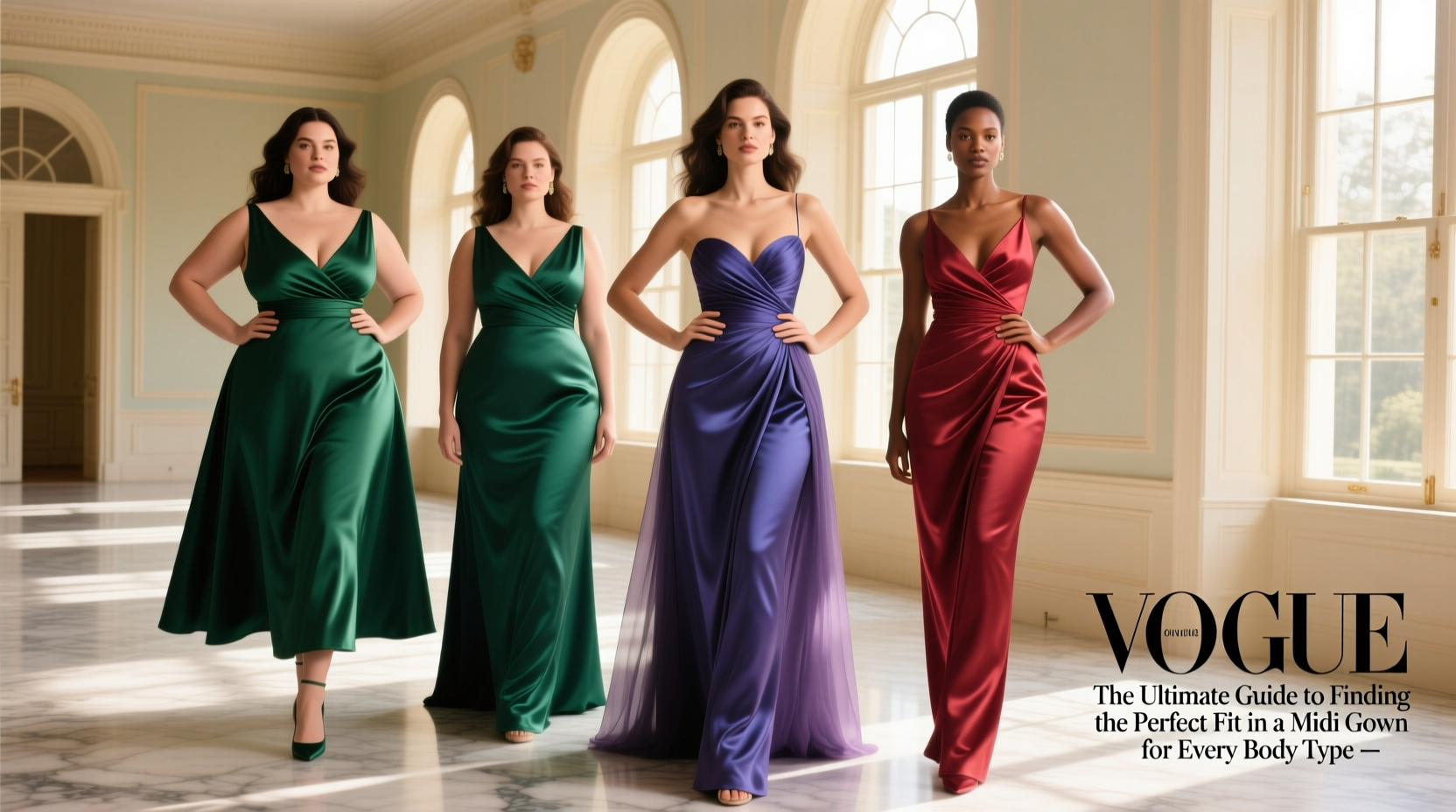
Before selecting a gown, it's essential to recognize your body shape. While classifications aren't rigid, they offer a helpful starting point for identifying which silhouettes enhance your natural structure. Common categories include:
- Hourglass: Balanced bust and hips with a well-defined waist.
- Pear (or Triangle): Hips wider than shoulders, often with a narrower upper body.
- Apple (or Round): Broader through the midsection, with slimmer legs.
- Inverted Triangle: Broad shoulders and bust, tapering to narrower hips.
- Rectangle (or Straight): Minimal waist definition, balanced top and bottom.
Each shape benefits from specific design elements. For example, an hourglass thrives in form-fitting styles that highlight the waist, while a pear shape gains balance from A-line skirts that draw attention upward. Recognizing your proportions allows you to make intentional choices rather than relying on trends alone.
Key Fit Elements in Midi Gowns
The magic of a well-fitted midi gown lies in five critical components: waistline, neckline, sleeve style, fabric, and hemline. Each plays a role in shaping perception and comfort.
Waistline Placement
The position of the waist seam dramatically alters silhouette. Empire waists (just below the bust) elongate the torso and flatter petite frames or apple shapes. Natural waistlines emphasize curves and suit hourglass figures. High-waisted or dropped-waist designs can disrupt proportion if not tailored correctly, so proceed with caution unless recommended by a stylist.
Neckline & Sleeve Design
V-necks open up the chest and draw the eye vertically—ideal for fuller busts or shorter torsos. Boat necks broaden shoulders, balancing pear shapes. Halter necks lift and support, offering structure for larger busts. Cap sleeves add softness to narrow shoulders, while off-the-shoulder styles romanticize collarbones and arms.
Fabric Behavior
Stretch crepe molds to curves without clinging; chiffon flows gracefully but may add volume; satin reflects light and emphasizes shape; structured mikado holds form and supports architectural cuts. Choose based on both aesthetic preference and body contour goals.
“Fit is not about shrinking into a size—it’s about amplifying what already works. A gown should move with you, not against you.” — Lena Moreau, Bridal Stylist & Founder of Silhouette Atelier
Styling by Body Type: What Works and Why
Let’s break down optimal choices for each common body shape, combining real-world functionality with fashion intelligence.
| Body Type | Best Silhouettes | Recommended Necklines | Fabrics to Choose |
|---|---|---|---|
| Hourglass | Fitted sheath, mermaid, wrap | V-neck, sweetheart, square | Stretch crepe, jersey, silk blends |
| Pear | A-line, ballgown, high-low | Off-shoulder, halter, boat | Tulle, faille, lightweight satin |
| Apple | Empire waist, V-neck sheath, drape-front | V-neck, deep scoop, asymmetrical | Fluid rayon, viscose, georgette |
| Inverted Triangle | A-line, fit-and-flare, tiered skirt | Scoop, jewel, cold shoulder | Cotton-silk blend, soft taffeta |
| Rectangle | Belted sheath, ruched side, peplum | Strapless, plunging, square | Ponte knit, double-faced satin |
Real Example: Maria’s Wedding Guest Dress Dilemma
Maria, 5'4\" with a pear-shaped figure, struggled to find a midi gown that didn’t overwhelm her frame. She tried several tight-bottom styles that emphasized her hips. After consulting a stylist, she chose a navy A-line midi with an off-the-shoulder neckline and soft ruching at the bodice. The top created volume across her shoulders, balancing her lower half, while the flowing skirt allowed movement and breathability. “I finally felt put together instead of hidden,” she said. “The right cut made me feel taller and more confident.”
Step-by-Step Guide to Finding Your Perfect Fit
Follow this methodical process to ensure your next midi gown purchase feels tailor-made—even if it’s off-the-rack.
- Assess your current wardrobe. Identify three pieces you love wearing. Note their cut, neckline, and fabric. Look for patterns in what makes you feel confident.
- Measure accurately. Use a soft tape to record bust, underbust, natural waist, hips, and torso length (from shoulder to floor). Compare these to brand size charts—never assume standard sizing.
- Determine your goal look. Do you want to accentuate your waist? Lengthen your legs? Soften your shoulders? Clarity here guides design choices.
- Try before you buy—or order multiple sizes. If shopping online, order two sizes and return the unfit one. Always wear the undergarments you plan to wear with the gown during fitting.
- Walk, sit, and move in the dress. A gown must function in real life. Sit in a chair, climb stairs, and check for riding up or pulling.
- Invest in alterations. Even designer gowns rarely fit perfectly out of the box. Budget $50–$150 for minor tailoring—hemming, waist adjustments, strap modifications.
Frequently Asked Questions
Can short women wear midi gowns without looking shorter?
Yes—choose high-waisted styles with vertical details like seams, buttons, or long necklaces. Pair with nude heels to extend leg line. Avoid overly voluminous skirts that break at mid-calf, as they can visually chop the leg.
Are midi gowns suitable for plus-size figures?
Absolutely. Look for structured fabrics with strategic seaming and supportive boning. Empire waists, wrap styles, and deep V-necks create elongation. Avoid stiff, boxy cuts that add bulk.
How do I know if a gown fits properly in the bust?
The bodice should lie smooth without gaping or digging. If straps slip, the band may be too loose—tighten or resize. For larger busts, opt for styles with built-in cups or underwire support.
Essential Checklist Before Purchase
- ✅ Measured myself using a soft tape measure
- ✅ Compared my measurements to the brand’s chart
- ✅ Identified my body shape and flattering features
- ✅ Selected a neckline and silhouette aligned with my shape
- ✅ Checked fabric drape and stretch
- ✅ Tried the gown while wearing event-appropriate undergarments
- ✅ Moved around—sat, walked, raised arms
- ✅ Planned for professional alterations if needed
Final Thoughts: Confidence Begins With Fit
A midi gown shouldn’t force you into someone else’s idea of elegance. True style emerges when clothing aligns with your anatomy and attitude. By understanding your body’s language—where it curves, where it balances, where it shines—you gain the power to choose gowns that don’t just fit, but celebrate you. Don’t chase trends that ignore proportion. Instead, build a repertoire of cuts and fabrics that consistently make you feel poised and radiant.




 浙公网安备
33010002000092号
浙公网安备
33010002000092号 浙B2-20120091-4
Comments
No comments yet. Why don't you start the discussion?