
Dinnerware is more than just functional—it’s an expression of personal style, a centerpiece of hospitality, and a reflection of the care you put into everyday moments. Whether you're hosting a dinner party or enjoying a quiet meal at home, the right plates, bowls, and serving pieces elevate the experience. With countless options available online, finding dinnerware that feels both unique and cohesive with your aesthetic can be overwhelming. This guide cuts through the noise, offering practical strategies, curated insights, and real-world advice to help you discover dinnerware that resonates with your taste—whether you lean toward Scandinavian minimalism, bohemian eclecticism, or timeless elegance.
Understanding Your Style: Define What “Unique” Means to You
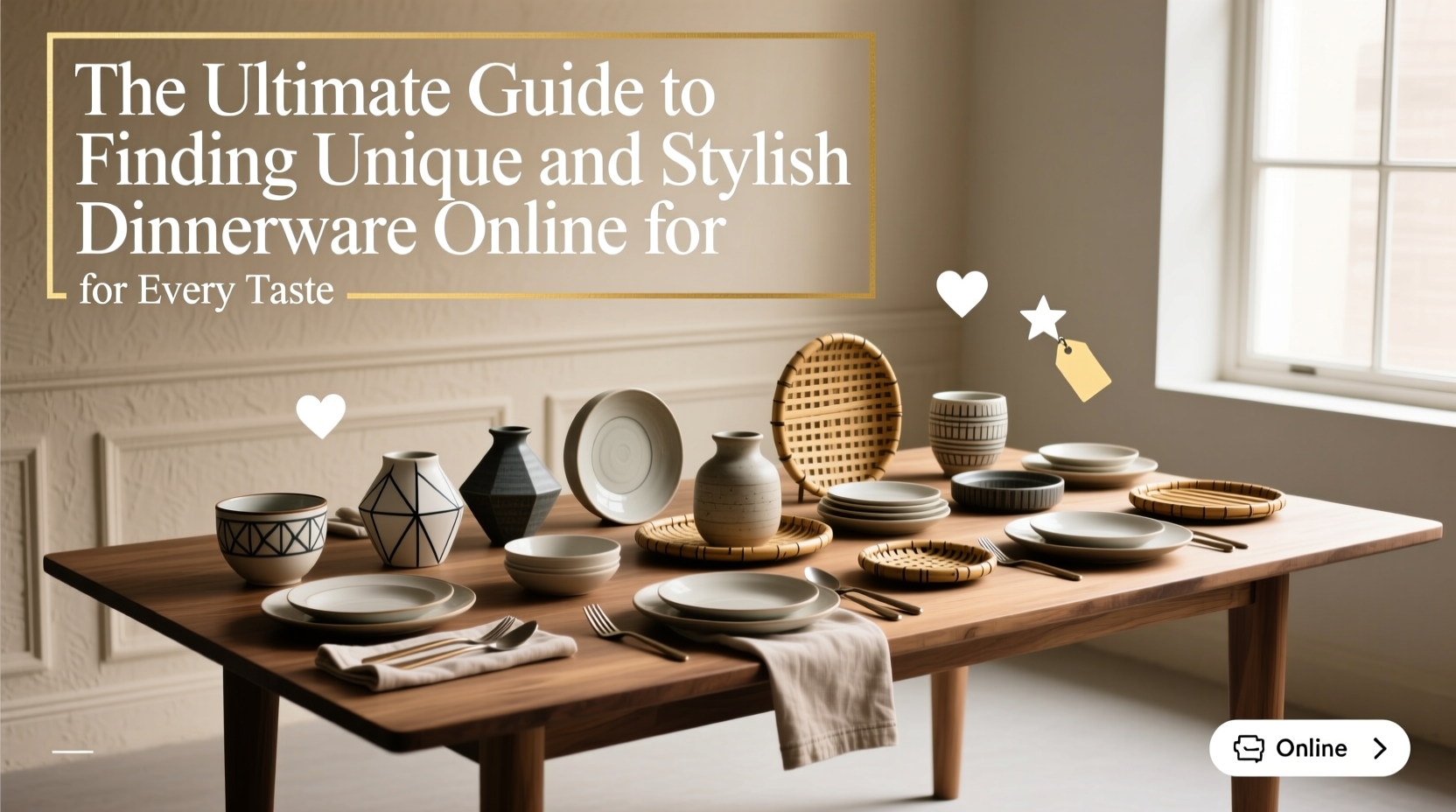
Before diving into online marketplaces, take time to define what kind of dinnerware aligns with your lifestyle and design preferences. “Stylish” is subjective, and “unique” doesn’t always mean handmade ceramics or limited-edition collections. For some, uniqueness lies in subtle textures; for others, it's bold colors or asymmetrical shapes.
- Minimalist: Clean lines, neutral tones (white, gray, black), and uniform shapes.
- Rustic/Earthy: Hand-thrown pottery, matte glazes, organic imperfections.
- Modern Glam: Metallic accents, high-gloss finishes, geometric patterns.
- Vintage-Inspired: Floral motifs, scalloped edges, pastel palettes.
- Eclectic: Mix-and-match sets, global influences, artisan collaborations.
Ask yourself: Do you want a coordinated set, or are you drawn to curating individual pieces over time? Answering this helps determine whether to shop full collections or explore independent makers.
Where to Shop: Trusted Online Destinations for Unique Dinnerware
The internet has democratized access to artisans and small-batch creators. No longer limited to department store selections, shoppers can now source globally inspired, ethically made, and artist-designed dinnerware with just a few clicks.
| Website | Best For | Price Range | Notable Feature |
|---|---|---|---|
| Pottery Barn | Cohesive, classic styles | $$–$$$ | Timeless coordination across collections |
| Etsy | Handmade, one-of-a-kind pieces | $–$$$$ | Direct support for independent ceramicists |
| Food52 | Curated artisan collections | $$–$$$ | Editor-vetted quality and design |
| Unison Home | Modern, sculptural forms | $$$ | Limited-run collaborations with artists |
| Amazon | Budget-friendly sets & fast shipping | $–$$ | Customer reviews and quick delivery |
When browsing, prioritize sites with high-resolution product images, detailed material descriptions, and return policies. Look for keywords like “stoneware,” “dishwasher-safe,” or “lead-free glaze” to ensure durability and safety.
Step-by-Step Guide to Buying Dinnerware Online
Follow this process to make confident, informed purchases—even without seeing the pieces in person.
- Assess your needs: How many place settings do you need? Will you use them daily or only for special occasions?
- Set a budget: Determine per-piece or total spend limits. High-end artisan plates may cost $40+ each, while durable stoneware sets average $20–$30 per plate.
- Research materials: Porcelain is elegant but fragile; stoneware is sturdy and oven-safe; melamine is ideal for outdoor dining.
- Check dimensions: Review exact measurements. A 10.5-inch dinner plate might feel too small or large depending on your usual serving size.
- Read customer reviews: Look for comments about weight, chip resistance, color accuracy, and microwave compatibility.
- Order samples if possible: Some brands offer single plates or starter sets so you can test quality before committing.
- Start small: Buy one place setting first. Live with it for a week to assess comfort, functionality, and visual appeal.
“Many people regret buying full sets online because they didn’t consider the weight or rim shape. A heavier plate feels substantial but can be tiring to hold during long meals.” — Lena Torres, Tabletop Designer & Stylist
Mini Case Study: Building a Cohesive Collection Over Time
Sophie, a graphic designer in Portland, wanted dinnerware that reflected her love of Japanese wabi-sabi aesthetics—imperfect, natural, serene. She avoided mass-produced sets and instead began collecting over six months.
She started with a hand-glazed stoneware dinner plate from a Kyoto-based Etsy seller. Then she added matching cereal bowls from the same artist. For contrast, she introduced matte black side plates from a Los Angeles ceramicist. Finally, she incorporated linen napkins and wooden cutlery rests to complete the look.
The result? A thoughtfully layered table setting that felt intentional and deeply personal. By taking her time, Sophie avoided buyer’s remorse and built a collection that evolved with her taste.
Avoiding Common Pitfalls: Do’s and Don’ts
Even experienced shoppers make mistakes when selecting dinnerware online. Use this checklist to avoid costly errors.
| Do’s | Don’ts |
|---|---|
| ✔ Check if pieces are stackable for storage | ✖ Ignore dishwasher safety claims without verification |
| ✔ Prioritize ergonomics—rim depth affects eating comfort | ✖ Assume all white plates look the same (bone, bright white, and oat vary greatly) |
| ✔ Look for UV-resistant glazes if storing near windows | ✖ Order full sets without testing one piece first |
| ✔ Confirm lead and cadmium compliance, especially for imported goods | ✖ Overlook shipping costs—ceramics are heavy and often expensive to ship |
Frequently Asked Questions
Can I mix different dinnerware brands and still look intentional?
Absolutely. Mixing brands works best when there’s a unifying element—such as consistent color palette, material (e.g., all stoneware), or design motif (like textured rims). The key is balance, not perfection.
How do I know if handmade ceramics are durable enough for daily use?
Ask the maker about firing temperature and glaze type. High-fire stoneware (fired above 1,200°C) is typically more durable than low-fire earthenware. Also, check if the item is labeled “food-safe” and “dishwasher-stable.”
Is it worth paying more for artisan-made dinnerware?
If craftsmanship, sustainability, and uniqueness matter to you, yes. Artisan pieces often use eco-friendly practices, support small studios, and carry emotional value. However, for large households or frequent entertaining, durable mid-range options may be more practical.
Making It Last: Caring for Your Investment
Unique dinnerware often represents both financial and emotional investment. Extend its life with proper care.
- Let hot dishes cool slightly before placing in the sink to prevent thermal shock.
- Avoid stacking delicate pieces without protective padding.
- Use non-abrasive sponges and mild detergents to preserve glaze integrity.
- Store plates vertically if possible, especially handmade ones with uneven bases.
“The most beautiful plates are the ones used with joy. But treating them with mindful care ensures they stay beautiful for years.” — Diego Mendez, Ceramic Artist, Oaxaca
Final Thoughts: Let Your Table Tell a Story
Finding unique and stylish dinnerware isn’t about chasing trends—it’s about discovering pieces that resonate with how you live, eat, and connect with others. The digital marketplace offers unprecedented access to global craftsmanship, allowing you to build a collection that’s as distinctive as your personality.
Start with intention. Shop with patience. Curate with care. Whether you choose a sleek monochrome set or a vibrant mosaic of hand-painted bowls, your table can become a canvas for self-expression.




 浙公网安备
33010002000092号
浙公网安备
33010002000092号 浙B2-20120091-4
Comments
No comments yet. Why don't you start the discussion?