
A watch is more than a tool—it’s a companion through meetings, workouts, travels, and milestones. When it starts acting up, whether by losing time or developing a loose band, the disruption can be more than just inconvenient. The good news? Many common watch problems don’t require professional repair. With a few household tools and some careful attention, you can restore your timepiece to full function. This guide walks through practical fixes for the most frequent issues, helping you extend the life of your favorite watch without spending hundreds at a service center.
Understanding Your Watch Type
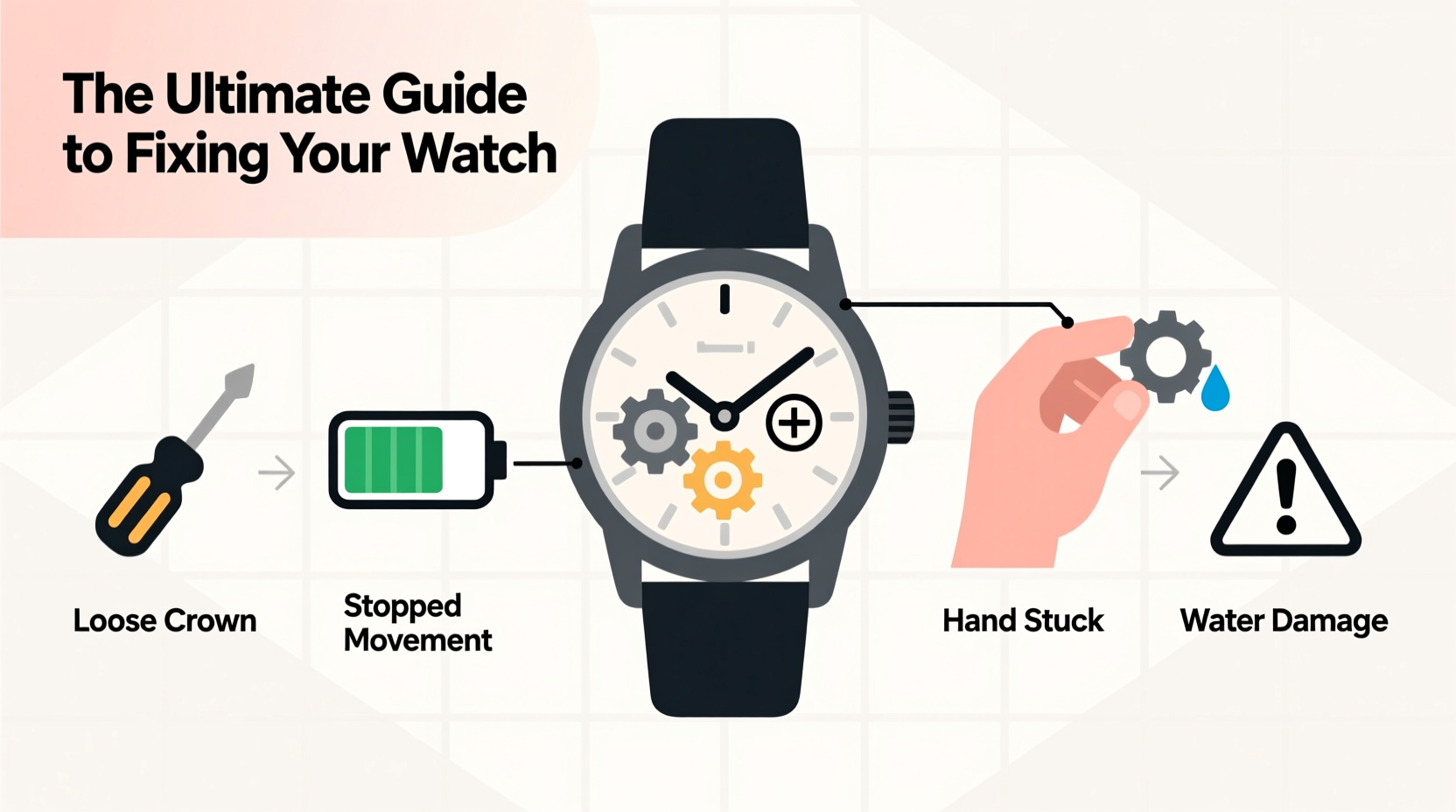
Before attempting any fix, identify your watch type. Mechanical, automatic, and quartz watches operate differently and may need distinct care approaches. Quartz watches run on batteries and are generally simpler to maintain. Mechanical and automatic watches rely on internal gears and springs—more complex but highly durable with proper handling.
Knowing whether your watch is water-resistant or waterproof also matters. Misjudging this can lead to internal damage during cleaning or condensation fixes. Always check the manufacturer’s rating (usually engraved on the case back) before exposing it to moisture.
Fixing a Loose or Broken Watch Band
The band is one of the most vulnerable parts of a watch. Metal bracelets stretch over time; leather straps crack or snap; nylon bands fray. Most of these issues are fixable at home.
Metal Bands: If links have become loose, use a pin removal tool (inexpensive and widely available) to adjust the fit. Remove one or two links and reattach the clasp securely. For stretched bands beyond adjustment, replacement links or a new bracelet might be necessary.
Leather & Nylon Straps: These wear out faster, especially with sweat exposure. Replacing them is often easier than repairing. Most straps use spring bars that can be removed with a small tool or even a paperclip. Slide the bar out, attach the new strap, and secure it in place.
| Band Type | Common Issue | Solution |
|---|---|---|
| Metal | Loose fit, stretched links | Remove links or replace bracelet |
| Leather | Cutting, cracking, odor | Replace strap; condition monthly |
| Nylon | Fraying, discoloration | Wash gently or replace |
| Rubber/Silicone | Stiffness, peeling | Clean with soapy water; replace if degraded |
“Replacing a worn strap isn’t just cosmetic—it prevents sudden breakage and loss of the watch.” — Daniel Reeves, Horology Technician, Boston Watch Repair
Clearing Condensation Under the Crystal
Fog inside your watch usually means moisture has breached the seal. This can happen after rapid temperature changes, submersion beyond its rating, or aging gaskets. Left untreated, moisture leads to rust and movement failure.
If the fog is minor and caught early, try this method: Place the watch near a source of gentle, consistent heat—like a lamp or radiator—for 15–20 minutes. Do not use hair dryers or ovens, as excessive heat damages lubricants and adhesives. If the fog clears, monitor the watch closely. If it returns, the seals likely need replacement by a professional.
Restoring Time Accuracy
Inaccurate timekeeping is frustrating, but the cause varies by watch type.
Quartz Watches: Sudden inaccuracy often points to a dying battery. Replace it with the correct model (check the case back). Use plastic tweezers and a case opener to avoid scratching. After replacement, ensure the case is sealed properly to maintain water resistance.
Mechanical/Automatic Watches: These lose or gain a few seconds daily—normal behavior. But if deviation exceeds ±15 seconds per day, the movement may need cleaning or regulation. Try fully winding the watch manually and observing accuracy over three days. If inconsistency persists, professional servicing is recommended.
Step-by-Step: Battery Replacement for Quartz Watches
- Turn off the watch (if possible) and lay it on a soft cloth.
- Use a case back opener or precision knife to gently pry open the back.
- Remove the old battery with non-metallic tweezers.
- Insert the new battery (match voltage and size exactly).
- Test the watch before closing—press any reset button if applicable.
- Re-seal the case and press firmly to ensure tight closure.
Reviving a Stuck Crown or Non-Responsive Buttons
A stiff crown (the knob used to set time or wind the watch) often results from dirt buildup or dried lubricant. Never force it—this risks damaging the stem or movement.
Try this: Dampen a cotton swab with isopropyl alcohol and wipe around the base of the crown. Gently rotate the crown back and forth without pulling. Let it sit for 10 minutes. Repeat if needed. If unresponsive, the issue may lie deeper in the stem mechanism—best left to professionals.
For chronograph buttons that stick, clean around the pusher with a soft brush and alcohol. Avoid spraying liquid directly. If the button still doesn’t depress smoothly, internal corrosion could be present.
Mini Case Study: Sarah’s Fogged Dive Watch
Sarah wore her dive watch swimming regularly, assuming “water-resistant” meant safe underwater. After six months, she noticed fog under the crystal. She tried drying it near a heater, which cleared the fog temporarily. A week later, the hands began stuttering. She took it to a local jeweler, who found corroded gears due to prolonged moisture exposure. The repair cost exceeded half the watch’s value.
The lesson: Water resistance degrades over time. Even robust watches need gasket checks every 1–2 years if exposed to water frequently. Sarah now services her watch annually and avoids swimming with it unless absolutely necessary.
Essential Watch Maintenance Checklist
- Check time accuracy weekly
- Inspect band for cracks, looseness, or corrosion
- Clean case and crystal with soft cloth monthly
- Verify water resistance annually (or before swim season)
- Store in a dry, cool place away from magnets
- Wind mechanical watches regularly if not worn daily
- Replace battery promptly when time slows
Frequently Asked Questions
Can I clean my watch with soap and water?
Yes, but only if it’s water-resistant. Use lukewarm water and mild soap. Clean the case and metal band with a soft toothbrush, then dry thoroughly. Avoid submerging leather or fabric straps.
Why does my automatic watch stop when I take it off?
Automatic watches rely on wrist motion to wind. If not worn for 24–48 hours, they typically stop. Simply wind the crown 20–30 times or wear it to restart. Consider a watch winder for long-term storage.
How often should I service my watch?
Every 3–5 years for mechanical and automatic watches. Quartz watches need less frequent servicing—mainly battery changes and occasional gasket replacements. Regular maintenance prevents costly repairs down the line.
Final Thoughts
Your watch deserves more than occasional glances at the time. With mindful care, even budget-friendly models can perform reliably for years. Most common issues—from loose bands to hazy crystals—have straightforward solutions you can handle at home. The key is acting early, avoiding forced fixes, and knowing when to call in an expert.
Start today: Pick up your watch, inspect it closely, and apply one tip from this guide. Whether it’s replacing a frayed strap or testing the battery, small actions preserve both function and sentiment. A well-maintained watch isn’t just accurate—it tells the world you value craftsmanship and consistency.




 浙公网安备
33010002000092号
浙公网安备
33010002000092号 浙B2-20120091-4
Comments
No comments yet. Why don't you start the discussion?