
Cushions are more than decorative accents—they’re essential components of comfort in any living space. Whether nestled on a sofa, layered on a bed, or arranged on a patio set, their role in providing ergonomic support and inviting softness is undeniable. Yet over time, even the highest-quality cushions can lose their shape, become flat, or develop lumps. The solution? Regular, intentional fluffing. This simple act not only restores plushness but also extends the life of your furnishings. When done correctly, fluffing revitalizes fill materials, redistributes fibers evenly, and prevents long-term compression damage.
Understanding how to fluff cushions effectively means knowing the type of filling, recognizing signs of wear, and applying techniques tailored to each material. From down-filled throw pillows to high-resilience foam seat pads, every cushion responds differently to care. Mastering this routine ensures consistent comfort and preserves both appearance and function.
The Science Behind Cushion Compression
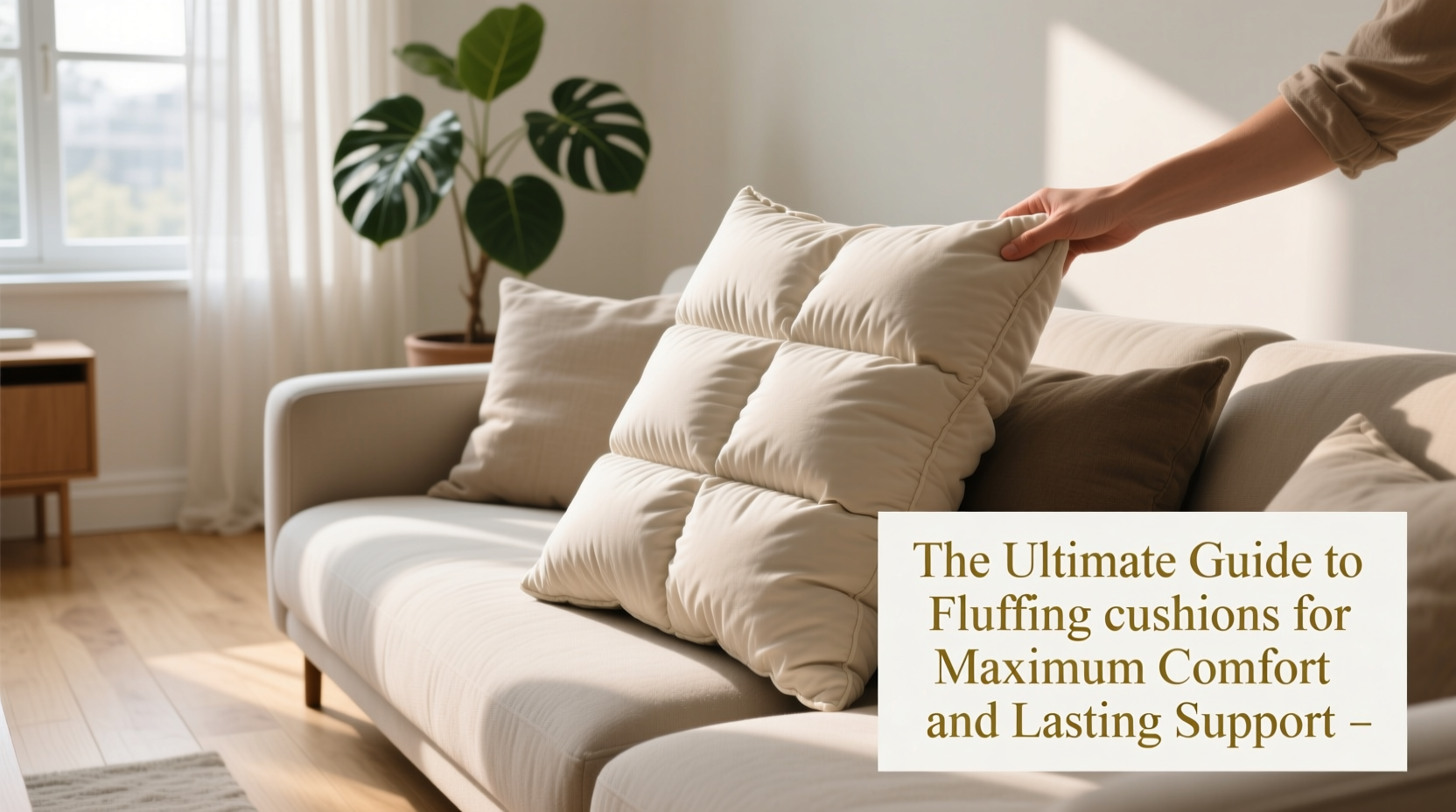
When you sit, lie, or lean on a cushion, pressure compresses its internal structure. Over repeated use, air pockets within the filling collapse, especially in natural fibers like down or cotton batting. Synthetic foams may resist flattening longer but eventually succumb to permanent deformation if not maintained. This process—known as “set”—occurs when the material fails to rebound fully after being compressed.
Different fillings react uniquely to stress:
- Down and feather blends trap air between plumes, creating loft. Without regular fluffing, clusters clump together, reducing breathability and support.
- Polyester fiberfill tends to mat over time, particularly in frequently used areas like backrests or floor cushions.
- Memory foam and HR (high-resilience) foam maintain shape well but benefit from occasional rotation and surface agitation to delay breakdown.
Environmental factors also play a role. Humidity, heat, and lack of airflow accelerate degradation. A cushion left untouched for weeks in a damp room will degrade faster than one rotated and aired weekly—even if rarely used.
“Proper maintenance can extend a cushion’s functional life by up to 50%. Fluffing isn’t just about looks—it’s structural care.” — Dr. Lena Torres, Textile Engineer and Home Furnishings Researcher
Step-by-Step: How to Fluff Any Cushion Type
Effective fluffing goes beyond tossing a pillow into the air. It involves deliberate actions that restore volume, redistribute weight, and reinvigorate trapped air. Follow this universal timeline to maximize results across all cushion types.
- Remove covers (if removable): Machine-washable covers should be cleaned monthly. Fresh fabric enhances overall freshness and allows direct access to the core.
- Shake vigorously: Hold the cushion at two corners and snap it outward 10–15 times. This breaks up compacted fibers and reintroduces air.
- Knead and squeeze: For down or fiberfill, use both hands to press and release sections repeatedly, mimicking a dough-kneading motion. Focus on dense spots.
- Rotate and reverse: Flip the cushion daily on seating furniture. Weekly, rotate front-to-back and side-to-side to ensure even wear.
- Air out: Place cushions upright near an open window or under a ceiling fan for 30–60 minutes once a week. Avoid direct sunlight to prevent fading.
- Use a tennis ball trick (for dryer-safe items): Put small cushions in the dryer on low heat with two clean tennis balls in a pillowcase. Run for 15 minutes to revive loft.
Do’s and Don’ts by Filling Type
| Filling Type | Do’s | Don’ts |
|---|---|---|
| Down/Feather | Fluff daily; air weekly; dry clean only | Wet wash; expose to prolonged moisture |
| Polyester Fiberfill | Machine wash cold; tumble dry low; knead after drying | Iron or bleach; store compressed |
| Memory Foam | Vacuum gently; rotate weekly; spot clean only | Submerge in water; fold or roll tightly |
| Cotton Batting | Hand fluff often; store flat; air regularly | Machine wash aggressively; wring out |
Real-Life Impact: A Living Room Transformation
Sarah M., a remote worker in Portland, noticed her sectional sofa had become uncomfortable after six months of heavy use. “I’d sink into the seat and feel my lower back strain,” she said. “The cushions looked fine, but they felt hard underneath.” After consulting an interior designer, she learned her high-density foam cores were intact—but the polyester wrap layers had compacted due to lack of rotation.
She began a bi-weekly fluffing routine: shaking each cushion, flipping them end-over-end, and placing them near a fan overnight. Within three weeks, she reported noticeable improvement. “They bounced back. I could actually lean back without discomfort.” Her experience underscores a key truth: visible flatness is often just the final stage of a gradual decline that regular care can prevent.
Essential Checklist for Long-Term Cushion Care
To keep every cushion performing at its best, follow this practical checklist monthly:
- ✅ Shake all cushions thoroughly at least twice a week
- ✅ Rotate seating cushions 180° every 7 days
- ✅ Remove and launder removable covers every 4 weeks
- ✅ Inspect for lumps, sagging, or uneven wear monthly
- ✅ Air out cushions in a ventilated area for 1 hour weekly
- ✅ Vacuum tufted or buttoned backs to remove dust buildup
- ✅ Replace inserts older than 3 years, even if covers appear new
Frequently Asked Questions
How often should I fluff my cushions?
For daily-use furniture, shake and rotate cushions every 2–3 days. Occasional-use pieces (like guest room decor) benefit from weekly fluffing. High-traffic areas such as family room sofas need attention at least twice weekly.
Can I machine wash cushion inserts?
No—cushion inserts should never be submerged unless explicitly labeled as washable. Most foam, down, and batting cores degrade when wet. Only wash the outer covers, and always check manufacturer instructions before cleaning any component.
Why do my cushions still go flat even after fluffing?
If fluffing no longer restores shape, the filling has likely reached end-of-life. Down loses elasticity after 5–7 years; fiberfill compacts irreversibly after 2–3 years of heavy use. Consider replacing the inner form while reusing the cover to save costs.
Maintain Comfort, Maximize Longevity
Fluffing cushions is not merely a cosmetic chore—it’s preventive maintenance for your comfort infrastructure. Just as tires are rotated on a car to ensure even wear, cushions require redistribution of pressure and restoration of loft to perform optimally. With minimal effort, you preserve ergonomics, enhance aesthetics, and delay costly replacements.
The habits you build today directly influence how your furniture feels tomorrow. Start incorporating these techniques into your weekly home care routine. Your body—and your living space—will thank you.




 浙公网安备
33010002000092号
浙公网安备
33010002000092号 浙B2-20120091-4
Comments
No comments yet. Why don't you start the discussion?