
Dog ownership comes with responsibilities that extend beyond daily walks and feeding schedules. One of the most important legal and safety obligations is obtaining official registration tags for your dog. These tags are more than just a formality—they serve as proof of licensing, help reunite lost pets with their owners, and ensure compliance with local laws. Whether you’ve just adopted a puppy or moved to a new city, understanding how to properly register your dog can save time, avoid fines, and keep your pet safe.
Why Dog Registration Tags Matter
Official dog registration tags are issued by municipal or county authorities and are typically required in most U.S. cities and towns. The tag itself is usually a small metal disc attached to your dog’s collar, displaying a unique identification number linked to your contact information in a central database.
Beyond legal compliance, these tags offer practical benefits:
- Quick identification: If your dog gets loose, animal control or a good Samaritan can call the number on file.
- Proof of vaccination: Most jurisdictions require proof of rabies vaccination before issuing a tag.
- Fine avoidance: Unlicensed dogs can result in citations or penalties.
- Community safety: Registration helps track vaccination rates and manage stray populations.
“Over 60% of lost dogs without ID tags never make it back home. A simple registration tag dramatically increases recovery chances.” — Dr. Laura Simmons, DVM, American Veterinary Medical Association
Step-by-Step Process to Obtain Official Registration Tags
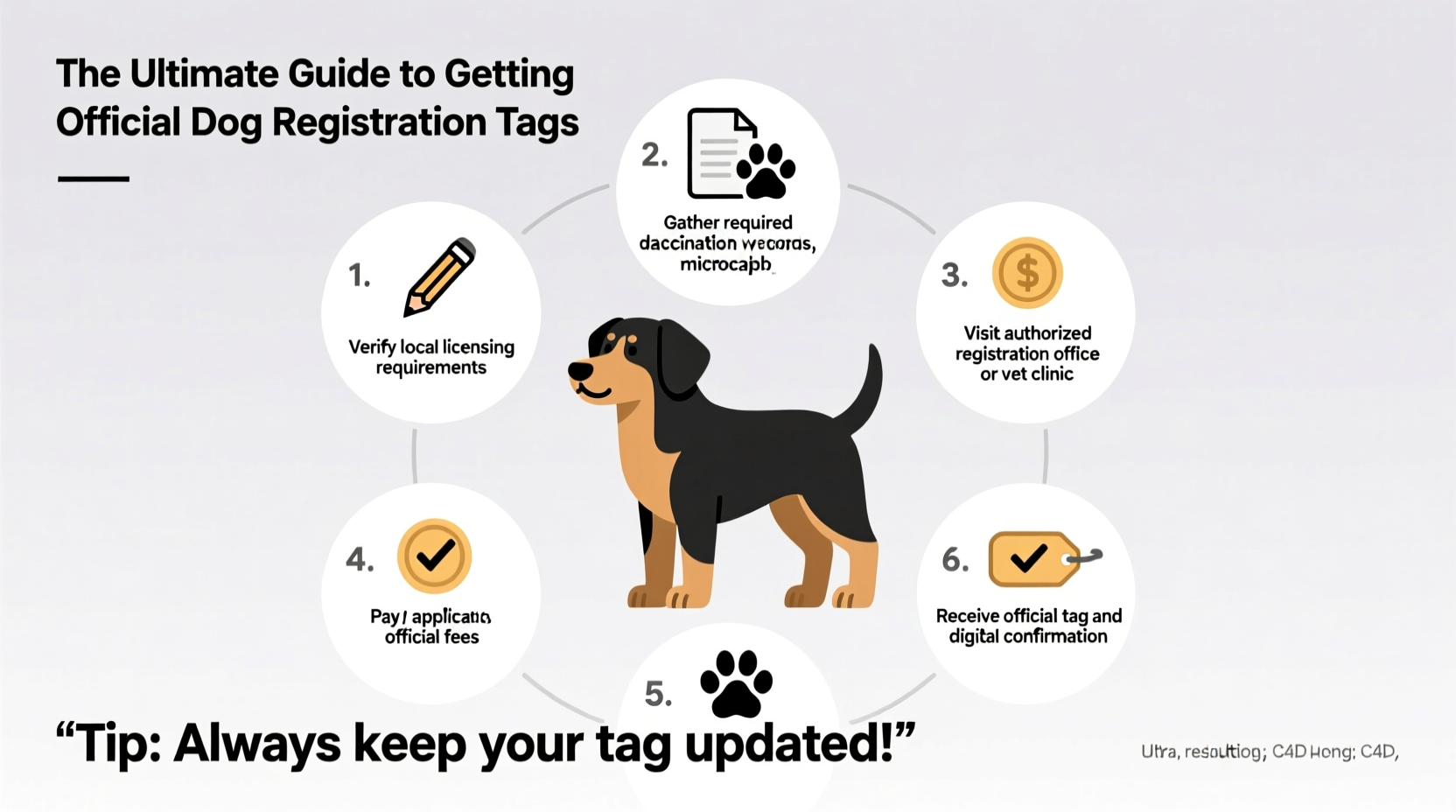
Obtaining a dog registration tag follows a clear sequence. While details vary slightly by location, the core process remains consistent across most municipalities.
- Confirm Local Requirements: Visit your city or county government website (e.g., “City of Austin Animal Services”) to review licensing rules. Some areas require registration within 30 days of moving or acquiring a dog.
- Gather Required Documents: You’ll typically need:
- Rabies vaccination certificate from a licensed veterinarian
- Proof of spay/neuter (if applicable—often reduces fees)
- Your photo ID and proof of residency (utility bill, lease agreement)
- Dog’s breed, color, weight, and date of birth
- Choose Registration Type: Most areas offer:
- Annual license (renewed yearly)
- Multi-year or lifetime license (available in some regions)
- Reduced-cost licenses for seniors, service dogs, or low-income households
- Submit Application: Options include:
- Online portal (fastest method in many cities)
- In-person at animal services offices or vet clinics during outreach events
- By mail with completed forms and payment
- Pay the Fee: Costs range from $10–$30 annually, often lower for spayed/neutered pets. Payment methods vary but usually include credit card, check, or money order.
- Receive Your Tag: Within 7–14 business days, you’ll receive the physical tag in the mail. Attach it to your dog’s collar immediately.
- Renew Annually: Set a calendar reminder. Many jurisdictions send renewal notices, but not all do.
Checklist: What You Need to Register Your Dog
Use this checklist to prepare for a smooth registration process:
- ✅ Up-to-date rabies vaccination certificate
- ✅ Proof of spay/neuter (if applicable)
- ✅ Government-issued ID
- ✅ Proof of address (e.g., driver’s license, utility bill)
- ✅ Dog’s microchip number (if chipped—optional but recommended)
- ✅ Payment method (check local accepted options)
- ✅ Completed application form (downloaded or filled online)
Common Mistakes to Avoid
Even with straightforward procedures, pet owners often encounter avoidable issues. Here’s what not to do:
| Mistake | Consequence | How to Avoid |
|---|---|---|
| Assuming registration is optional | Fines up to $100+ and impoundment if dog is found untagged | Verify local laws—most urban areas mandate registration |
| Using outdated vaccine records | Application rejection | Ensure rabies shot is current and administered by a licensed vet |
| Not updating contact info after moving | Lost dog cannot be returned | Update address with licensing agency immediately |
| Only relying on microchip, skipping tag | Microchips require scanner; tags work instantly | Use both tag and chip for maximum protection |
Real Example: How a Tag Helped Reunite a Lost Dog
In Portland, Oregon, a 3-year-old Havanese named Milo slipped out of his yard during a thunderstorm. He was found wandering two neighborhoods away by a neighbor who noticed the bright blue registration tag on his collar. She called the non-emergency number listed on the city’s tag database, and within 45 minutes, Milo was back home.
“I thought he was gone forever,” said owner Sarah Tran. “I had him microchipped, but I almost skipped the tag because I thought it was redundant. Now I tell every dog owner: the tag is what brought him back.”
This case underscores a critical point: while microchipping is valuable, it requires someone to take the dog to a shelter or clinic to scan. A visible tag enables immediate return—no equipment needed.
FAQ: Common Questions About Dog Registration Tags
Do I need a tag if my dog is microchipped?
Yes. Microchips are internal and require scanning, which may not happen quickly. A registration tag allows instant identification. Both should be used together for optimal safety.
Can I register my dog online?
Most major cities now offer online registration through their animal services websites. Check your local government portal for availability. Rural areas may still require in-person or mail-in applications.
What happens if I don’t register my dog?
Failure to license your dog can lead to fines ranging from $25 to over $200, depending on jurisdiction. In some cases, unlicensed dogs picked up by animal control may face longer hold periods or higher reclaim fees.
Maximizing the Value of Your Dog’s Registration
Registration isn’t just a one-time task—it’s part of responsible pet ownership. To get the most out of your dog’s tag:
- Display it visibly: Use a durable collar and ensure the tag doesn’t get buried under fur.
- Update information promptly: Change your address or phone number? Notify the licensing agency immediately.
- Combine with other IDs: Add a personal ID tag with your phone number in addition to the official tag.
- Inspect regularly: Check for wear, fading, or broken rings. Replace damaged tags quickly.
Conclusion
Securing official registration tags for your dog is a simple yet powerful act of responsibility. It protects your pet, supports public health efforts, and significantly increases the odds of a safe return if your dog ever gets lost. By following the step-by-step process, avoiding common pitfalls, and maintaining accurate records, you ensure your dog remains protected year after year.




 浙公网安备
33010002000092号
浙公网安备
33010002000092号 浙B2-20120091-4
Comments
No comments yet. Why don't you start the discussion?