
Creamy, velvety eggs are a hallmark of well-executed breakfasts and elegant brunches. Whether you're preparing scrambled eggs, an omelet, or soft-set poached eggs, achieving that luxurious texture comes down to more than just heat—it's about technique, timing, and understanding how eggs behave under different conditions. Far from being a simple dish, perfectly creamy eggs require attention to detail, ingredient quality, and method. This guide breaks down everything you need to know to make rich, creamy eggs consistently, no matter your skill level.
The Science Behind Creamy Eggs
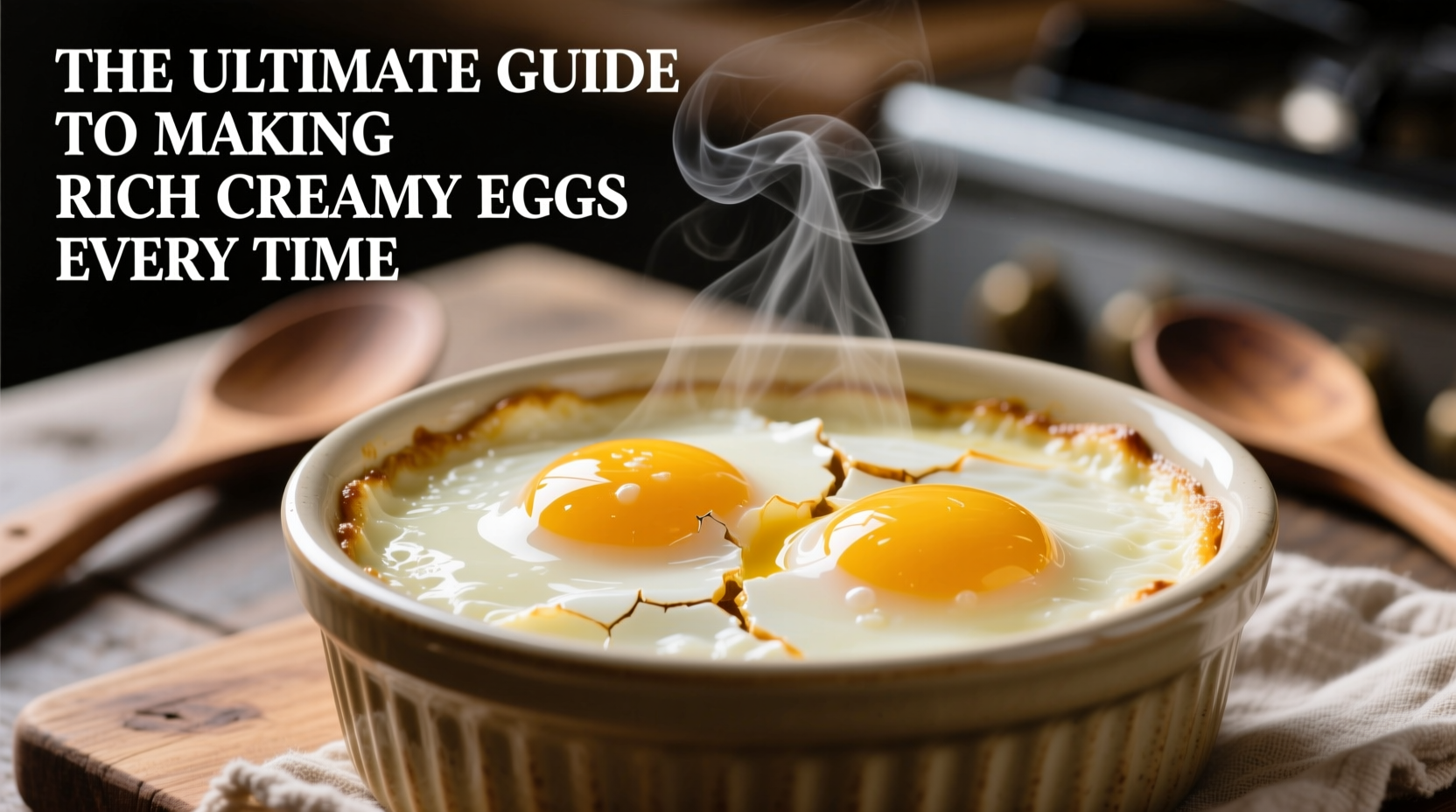
Eggs transform dramatically when heated. The proteins in both the whites and yolks begin to coagulate between 140°F (60°C) and 158°F (70°C). Cooking them too quickly or at too high a temperature causes the proteins to tighten rapidly, squeezing out moisture and resulting in dry, rubbery curds. Creaminess is achieved by slowing this process—gentle heat allows the proteins to set gradually while retaining moisture and creating a smooth, almost custard-like consistency.
Fat plays a crucial role. Butter, cream, or even a splash of whole milk helps insulate the egg proteins from direct heat, delays coagulation, and adds richness. The yolk itself contains emulsifiers like lecithin, which bind fat and water together, enhancing silkiness. Understanding this balance empowers you to control the final texture.
“Temperature control is everything. The difference between silky eggs and scrambled rubber is often just five degrees and two minutes.” — Chef Marcus Lang, Culinary Instructor at Le Cordon Bleu Paris
Essential Tools and Ingredients
While eggs themselves are humble, the tools you use can significantly impact the outcome. Here’s what you’ll need for consistent success:
- Nonstick or well-seasoned carbon steel skillet: Prevents sticking and allows gentle stirring without tearing.
- Silicone spatula: Flexible edge ensures thorough scraping without damaging the pan.
- Digital thermometer (optional but helpful): Lets you monitor internal temperature for precision.
- Whisk or fork: For evenly blending yolks and whites before cooking.
- Heavy-bottomed saucepan: Ideal for double-boiler methods or custardy preparations.
Ingredients should be fresh and high-quality. Free-range or pasture-raised eggs not only taste better but often have richer yolks that contribute to creaminess. Always use unsalted butter so you can control seasoning, and opt for full-fat dairy if adding liquid.
Step-by-Step Guide to Perfect Scrambled Eggs
Scrambled eggs are the most common canvas for creamy textures. Follow this timeline for restaurant-quality results:
- Crack and whisk: Use 2–3 large eggs per person. Whisk vigorously in a bowl until completely homogenous—no streaks of white or yolk.
- Add fat: Melt 1 tablespoon of butter in a cold nonstick skillet over low heat. As it melts, swirl to coat the surface.
- Pour and pause: Add the eggs. Do not stir immediately. Let them sit for 20 seconds to begin setting at the bottom.
- Slow stir: Using a silicone spatula, gently push the eggs from the edges toward the center. Repeat every 20–30 seconds.
- Incorporate creaminess: When eggs are about 70% set (after 3–4 minutes), stir in 1 teaspoon of heavy cream or crème fraîche.
- Finish off heat: Remove the pan from the burner when eggs still look slightly wet. Residual heat will finish cooking them.
- Season and serve: Season with flaky sea salt and freshly cracked pepper just before plating.
This slow-cook method produces tender curds with a custard-like mouthfeel. Rushing any step leads to toughness.
Do’s and Don’ts of Creamy Egg Preparation
| Do’s | Don’ts |
|---|---|
| Use low to medium-low heat | Turn up the heat to speed things up |
| Add a small amount of dairy or butter | Overload with milk (dilutes flavor and can make eggs watery) |
| Stir slowly and infrequently | Stir constantly or aggressively |
| Remove from heat before fully set | Leave eggs in the pan until completely dry |
| Season after or just before serving | Add salt too early (can break down proteins and release moisture) |
Variations for Richer Results
Creaminess isn’t limited to one style. Adjust your approach based on the desired outcome:
- French-style scrambled eggs: Cooked in a double boiler or bain-marie for ultra-smooth, custard-like eggs. Requires constant stirring but yields unparalleled silkiness.
- Omelets with a creamy core: French omelets are rolled tightly and served barely set inside. Use minimal filling and fold while still glossy.
- Soft-poached eggs with runny yolks: Simmer in gently swirling water with a splash of vinegar. Aim for 3 minutes for a jammy white and molten yolk—perfect for topping dishes.
- Baked eggs (shirred eggs): Crack eggs into buttered ramekins, add cream, and bake at 325°F (160°C) until whites are set but yolks wobble. Top with cheese or herbs.
Real Example: From Kitchen Fail to Brunch Star
Jessica, a home cook from Portland, used to struggle with dry, clumpy scrambled eggs. She’d turn the heat high, stir constantly, and add salt at the beginning. After reading about low-and-slow techniques, she tried cooking eggs in a cold pan with butter, stirring every 30 seconds. She added a teaspoon of crème fraîche at the end and removed them from heat while still shiny. The result? Her partner didn’t believe she made them herself. Now, her weekend brunch features “cloud eggs”—fluffy, creamy, and consistently praised by guests.
Checklist: How to Make Creamy Eggs Every Time
- ▢ Use fresh, high-quality eggs
- ▢ Bring eggs to room temperature before cooking
- ▢ Choose a nonstick or well-seasoned pan
- ▢ Start with low heat and melted butter
- ▢ Whisk eggs thoroughly before pouring
- ▢ Stir slowly and infrequently
- ▢ Add cream, butter, or crème fraîche near the end
- ▢ Remove from heat before fully set
- ▢ Season just before serving
- ▢ Serve immediately on warm plates
Frequently Asked Questions
Can I make creamy eggs without dairy?
Yes. While dairy enhances richness, you can achieve creaminess using only butter and careful heat control. Some chefs use a small amount of olive oil or even a spoonful of mayonnaise (which contains egg yolk and oil) to create emulsified, smooth eggs without milk.
Why do my eggs turn watery sometimes?
This usually happens when salt is added too early or when low-quality eggs with thin whites are used. Salting just before serving prevents moisture release. Also, avoid overcooking—residual heat continues to set the eggs after removal from the stove.
What’s the best way to reheat creamy eggs?
Reheating is tricky, as it often leads to dryness. If necessary, gently warm in a microwave at 50% power in 15-second bursts, stirring between intervals. Better yet, cook eggs just before serving for optimal texture.
Final Thoughts
Creamy eggs aren’t reserved for professional kitchens. With the right knowledge and a little patience, anyone can master this deceptively simple dish. The key lies in respecting the delicate nature of eggs—controlling heat, choosing quality ingredients, and applying precise timing. Once you’ve experienced the luxury of rich, velvety eggs, there’s no going back to the rubbery version.




 浙公网安备
33010002000092号
浙公网安备
33010002000092号 浙B2-20120091-4
Comments
No comments yet. Why don't you start the discussion?