
Efficient clothing storage begins long before you fold the first shirt or zip up a garment bag. The key lies in accurate measurement. Whether you're relocating, rotating seasonal wardrobes, or simply decluttering, knowing how to measure your clothes properly ensures every storage box is used to its full potential. Poor measurements lead to overcrowded boxes, damaged fabrics, and wasted time. This guide breaks down the essential techniques, tools, and strategies to help you pack smarter—not harder.
Why Measuring Clothes Matters for Storage
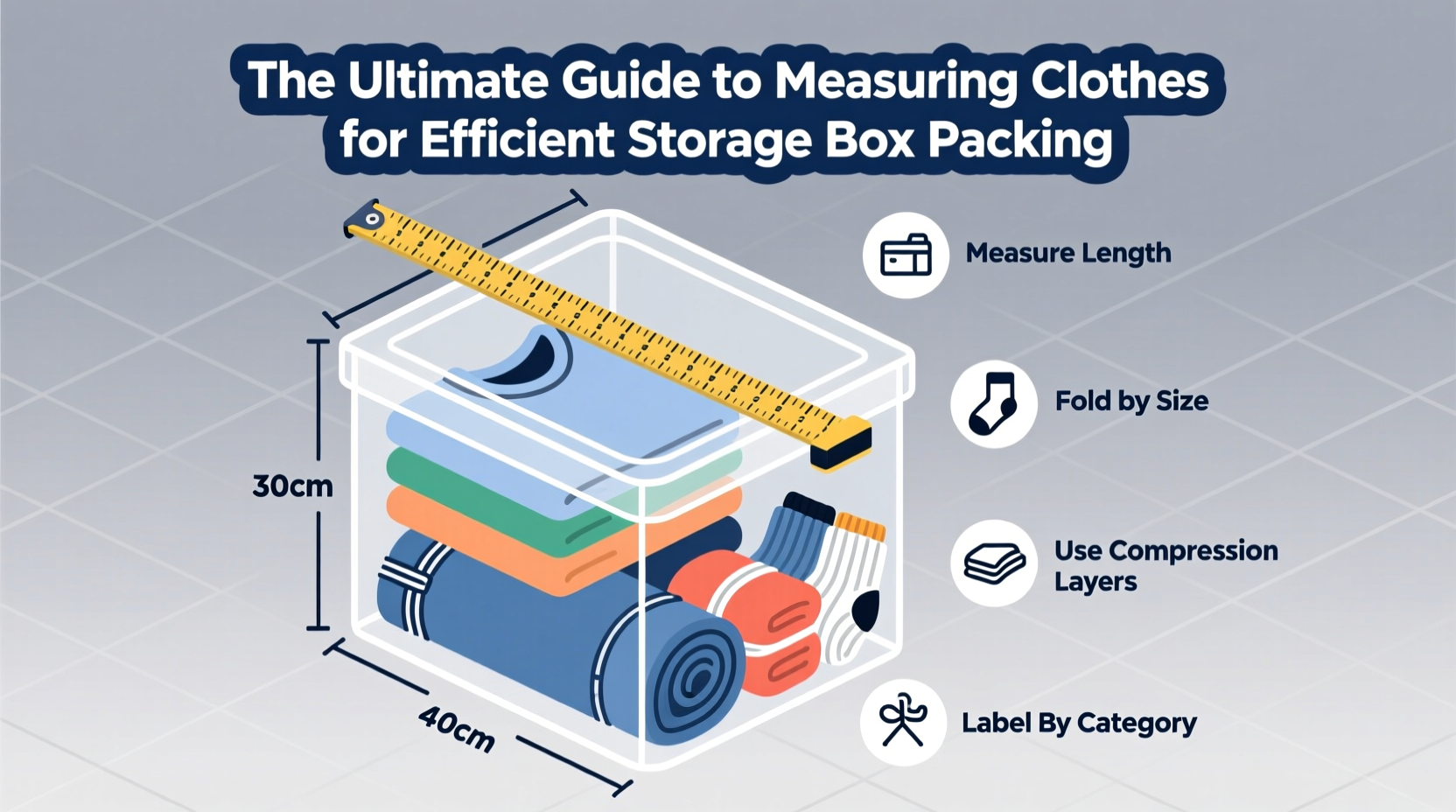
Most people assume folding and stacking clothes into boxes is enough. But without precise measurements, even well-intentioned efforts can backfire. Overpacking causes wrinkles, creases, and fabric stress. Underutilizing space means more boxes than necessary, increasing costs and clutter. By measuring garments accurately, you match each item to the right container, maintain garment integrity, and streamline retrieval later.
Professional organizers and moving experts emphasize that pre-measurement reduces guesswork and enhances organization. It also allows for strategic planning when using vacuum-sealed bags, drawer dividers, or modular bins. When you know exact dimensions, you eliminate the trial-and-error phase of storage.
“Measuring isn’t just about size—it’s about respect for the garment and efficiency in space. One inch can make the difference between preservation and damage.” — Lena Patel, Certified Organization Specialist
Essential Tools for Accurate Measurement
Before measuring any clothing item, gather the right tools. Precision starts with reliable instruments:
- Tape Measure (Soft Fabric Type): Flexible and ideal for following garment curves.
- Ruler or Hard Straight Edge: Useful for measuring flat folds or stacked heights.
- Notebook or Digital App: Record dimensions for reference during packing.
- Folding Board or Cardboard Template: Ensures consistent folding sizes, especially for shirts and pants.
- Digital Scale (Optional): Helps monitor weight limits per box, particularly for delicate fabrics.
Always measure garments laid flat unless otherwise specified. Hang items first to release wrinkles, then gently lay them on a clean surface. Avoid stretching or pulling fabric during measurement.
Step-by-Step Guide to Measuring Different Clothing Types
Clothing varies widely in shape, thickness, and foldability. Each category requires a tailored approach to measurement.
- Dress Shirts & Blouses: Lay flat, buttoned. Measure from shoulder seam to hem (length), and across chest from armpit to armpit (width). Fold vertically or use roll method; final packed height typically ranges 8–10 inches.
- Pants & Trousers: Measure waistband width, inseam, and total length. For folding, stack height depends on fabric: wool suits average 3–4 inches per pair, jeans 2–3 inches.
- Sweaters & Knits: Measure flat chest and length. Due to bulk, sweaters take up more vertical space—average 5–7 inches per folded layer. Never hang heavy knits to avoid stretching.
- Dresses & Gowns: Measure from neckline to hem and bust width. Long dresses may require upright storage or specialized tall boxes. Fold at hips to minimize creasing.
- Undergarments & Socks: Group by type and compress into bundles. A standard bundle of 10 pairs of socks measures approximately 3” x 3” x 2”.
For irregularly shaped items like coats or hoodies, use the \"box test\": place the folded garment inside a sample storage container to assess fit before committing.
Matching Measurements to Storage Boxes
Not all storage boxes are created equal. Choosing the right container depends on both garment dimensions and material sensitivity. Below is a comparison of common box types and their optimal uses based on measured clothing volumes.
| Clothing Type | Avg. Folded Dimensions | Recommended Box Size | Special Notes |
|---|---|---|---|
| Dress Shirts (x5) | 10” x 12” x 5” | Small (12” x 12” x 10”) | Use tissue paper between layers to prevent pilling |
| Jeans (x6) | 14” x 8” x 9” | Medium (18” x 14” x 12”) | Stack horizontally; avoid over-compression |
| Wool Sweaters (x4) | 16” x 10” x 16” | Large (20” x 16” x 18”) | Do not vacuum seal; allow airflow |
| Winter Coats (x2) | 24” x 18” x 10” (folded) | Tall Bin (24” x 18” x 20”) | Use breathable cotton bags inside box |
| Underwear & Socks | 3” x 3” x 2” (per bundle) | Drawer-Style Organizer Box | Ideal for small compartments or stackable trays |
Always leave 1–2 inches of headspace in each box to prevent lid strain and fabric compression. Heavier items should go in smaller, reinforced containers to maintain structural integrity.
Real-World Example: Packing a Seasonal Wardrobe Transition
Sarah, a freelance designer in Portland, needed to store her winter wardrobe in under-bed containers. She began by sorting items into categories: sweaters, coats, scarves, and boots. Using a soft tape measure, she recorded each sweater’s folded height and width. She discovered that three chunky knit sweaters stacked to nearly 18 inches—too tall for her low-profile bins. Instead of forcing them, she opted for a slightly taller, ventilated plastic tote (20” x 16” x 18”). She lined it with acid-free tissue and added cedar blocks. The result? Full utilization of space, no damage, and easy access when winter returned.
This practical approach saved her time, protected her investment pieces, and eliminated the need for repacking mid-season.
Common Mistakes and How to Avoid Them
Even experienced packers make errors when rushing or skipping measurement steps. Here are frequent pitfalls and solutions:
- Mistake: Estimating instead of measuring. Solution: Always use a tape measure—even a 2-inch miscalculation can ruin stacking efficiency.
- Mistake: Mixing thick and thin fabrics in one box. Solution: Separate by weight and volume to maintain even pressure distribution.
- Mistake: Ignoring fabric breathability needs. Solution: Label boxes with ventilation requirements (e.g., “Do Not Seal – Linen”).
- Mistake: Overfilling to save space. Solution: Follow the “one-knuckle rule”—if you can’t fit a finger between the top garment and the lid, it’s too full.
FAQ: Your Top Questions Answered
How do I measure bulky items like puffer jackets?
Lay the jacket flat, smoothed out. Measure from shoulder to hem and across the chest. After folding, compress gently and remeasure. Puffer jackets regain volume, so allow extra space—ideally 25% more than the compressed size.
Should I roll or fold clothes for storage?
Roll lightweight items like t-shirts and pajamas to save space and reduce creasing. Fold structured garments such as blazers, dress pants, and anything with shoulders. Rolling works best in drawers or segmented bins; folding is superior for long-term box storage.
Can I use vacuum bags for all types of clothing?
No. While vacuum bags are excellent for quilts and off-season bedding, they can damage delicate wools, structured tailoring, and memory-retaining fabrics. Use them only for durable cottons, synthetics, or non-structured layers—and never store them compressed for more than six months.
Final Checklist: Prepare, Measure, Pack, Protect
Follow this concise checklist to ensure every step of your clothing storage process is optimized:
- Sort clothes by type, season, and frequency of use.
- Gather tools: tape measure, notebook, folding board, labels.
- Measure each garment flat and record folded dimensions.
- Select appropriate storage boxes based on size and material needs.
- Fold or roll consistently; use tissue paper or dividers where needed.
- Label boxes clearly with contents and special instructions (e.g., “Fragile Silk,” “Store Upright”).
- Store boxes in a cool, dry, pest-free environment away from direct sunlight.
Conclusion: Turn Measurement Into Mastery
Measuring clothes for storage is not a tedious chore—it’s an act of care and foresight. With accurate data, you transform random packing into a system of precision and protection. You extend the life of your garments, reclaim usable space, and simplify future access. Whether you’re storing a few sweaters or managing a full wardrobe rotation, the discipline of measurement pays dividends in order, longevity, and peace of mind.




 浙公网安备
33010002000092号
浙公网安备
33010002000092号 浙B2-20120091-4
Comments
No comments yet. Why don't you start the discussion?