
Car keys are more than just tools—they’re everyday essentials that deserve protection. A custom-fit case shields your key from scratches, dents, and moisture while adding a personal touch. But the success of any custom case hinges on one critical step: accurate measurement. Too small, and the key won’t fit; too large, and it rattles around uselessly. This guide walks you through the precise process of measuring your car key so your custom case fits like a glove.
Why Accurate Measurements Matter
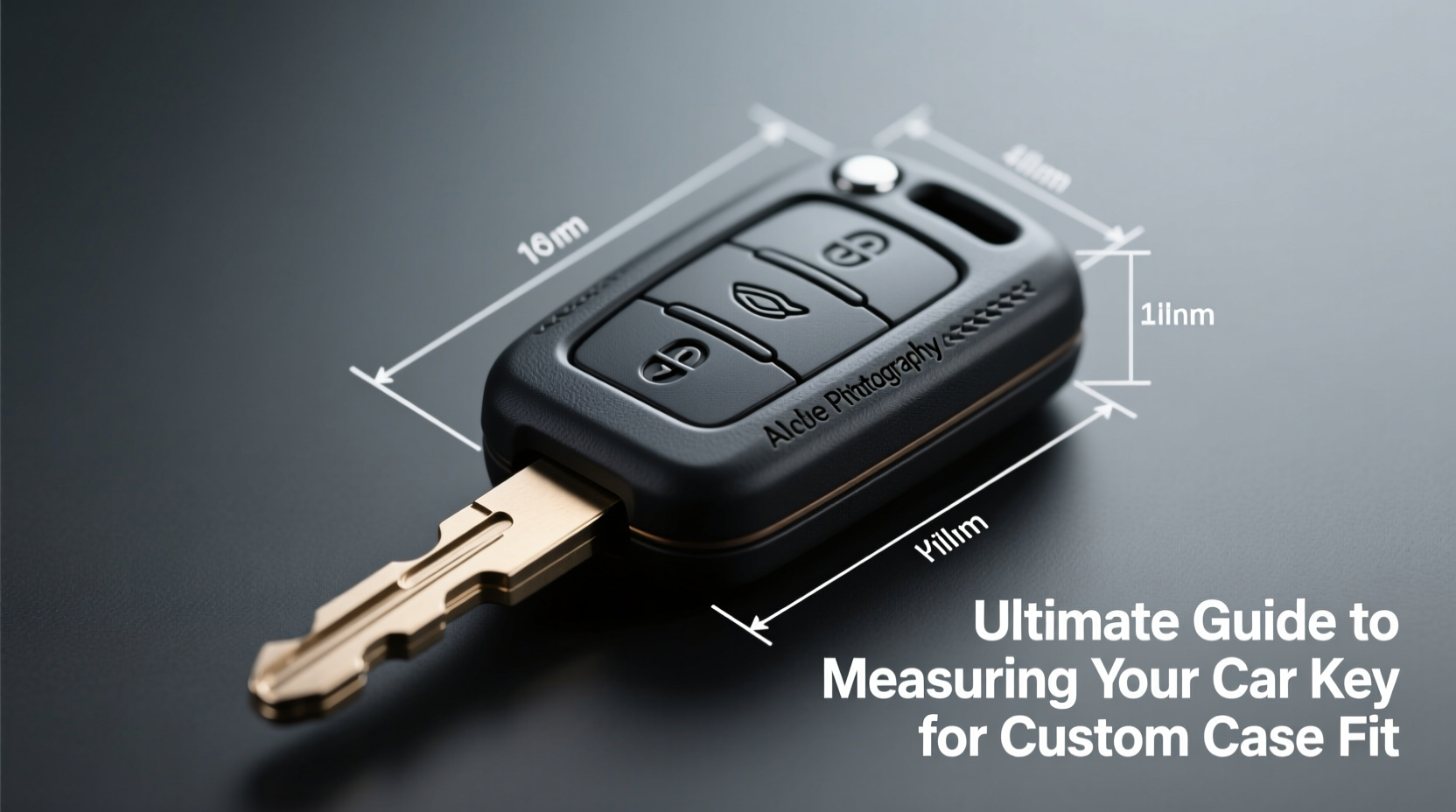
A poorly measured key leads to wasted money and frustration. Custom cases are made to order, often non-returnable, so precision is non-negotiable. Whether you're ordering online or working with a local craftsman, dimensions must reflect every contour, thickness, and protrusion.
Modern car keys come in various shapes—compact fobs, flip-style remotes, traditional metal blades, or hybrid designs. Each requires attention to different details. For example, a smart key fob may have raised buttons or a metal insert that affects overall depth, while an older transponder key might have a longer blade requiring extra length clearance.
“Over 60% of custom case returns are due to incorrect measurements—not material or design flaws.” — Jordan Lin, Product Design Lead at KeyShield Labs
Tools You’ll Need for Precision Measurement
Before you begin, gather the right tools. Using improper instruments leads to errors. Here’s what you should have on hand:
- Digital calipers – Most accurate for measuring length, width, and thickness down to 0.1mm.
- Metal ruler or precision straightedge – Useful for flat surface checks if calipers aren’t available.
- Notepad or digital note app – Record each dimension immediately to avoid confusion.
- Bright, shadow-free lighting – Ensures visibility of edges and contours.
- Soft cloth – Clean the key first to remove debris that could skew readings.
Step-by-Step Guide to Measuring Your Car Key
Follow this sequence to capture all necessary dimensions accurately. Work slowly and double-check each number.
- Clean the key thoroughly. Wipe off dirt, oils, and lint. Even a thin film can affect thickness readings.
- Measure total length. From the tip of the blade (or farthest edge) to the end of the fob or head. Place the key flat and align the caliper’s jaws precisely at both ends.
- Measure maximum width. Find the widest point—often where buttons or ridges stick out. Don’t assume symmetry; measure both sides.
- Check thickness at multiple points. Fobs vary in depth. Measure the thickest area (usually near the battery compartment) and the thinnest (edge of plastic housing).
- Record blade specifications (if applicable). For traditional or hybrid keys, measure blade width, thickness, and length separately. Note whether it tapers.
- Account for 3D features. Buttons, logos, USB ports, or metal inserts add height. Use calipers vertically to measure “profile height” above the main body.
- Note attachment points. If your key has a hole for a keyring, measure its diameter and distance from the nearest edge.
Once recorded, label each measurement clearly: e.g., “Total Length: 82.4mm,” “Max Width: 38.1mm,” “Button Height: 2.7mm.” Avoid vague notes like “about 8 cm.”
Common Measurement Mistakes to Avoid
Even experienced users make errors when rushing. These pitfalls compromise fit:
| Mistake | Why It’s a Problem | How to Avoid It |
|---|---|---|
| Using a flexible tape measure | Lacks precision for small objects; bends easily | Use rigid rulers or digital calipers only |
| Measuring over grime or stickers | Adds false thickness or width | Clean key and remove temporary adhesives |
| Assuming symmetry | Many keys are wider on one side due to buttons | Measure both left and right extremes |
| Ignoring button protrusions | Case may not close or damage buttons | Include vertical profile in specs |
| Rounding numbers aggressively | Custom makers need exact figures | Report to at least one decimal place (e.g., 37.5mm) |
Real-World Example: Measuring a 2020 Toyota Smart Key
Sarah needed a leather case for her husband’s 2020 Toyota Camry key fob. She used a smartphone ruler app and estimated 80mm x 40mm. The case arrived too tight—buttons wouldn’t press, and the key barely fit.
She re-measured with digital calipers and discovered:
- Total length: 82.6mm (not 80mm)
- Max width: 41.3mm at the button side
- Thickness: 14.2mm at center, but buttons added 2.1mm of profile height
With corrected data, she ordered again. The second case slid on smoothly, protected all surfaces, and allowed full button function. The difference? Precision over estimation.
Checklist: Pre-Submission Verification
Before sending your measurements to a vendor, verify everything using this checklist:
- ✅ All dimensions recorded in millimeters (preferred) or inches with decimals
- ✅ Length, width, thickness, and profile height included
- ✅ Blade specs noted (if applicable)
- ✅ Keyring hole size and position documented
- ✅ Measurements double-checked and labeled clearly
- ✅ Photos attached (if allowed by seller) showing front, back, side, and top views
- ✅ Model/year of vehicle provided (helps vendors cross-reference)
Frequently Asked Questions
Can I use my phone’s built-in measurement app?
While convenient, most phone AR rulers lack the accuracy needed for small objects like keys. They can be off by several millimeters due to camera angle or calibration issues. For custom cases, rely on physical tools like calipers instead.
What if my key has replaceable parts, like a battery cover?
Measure the key fully assembled, as you normally carry it. Include the cover in all dimensions. Removing parts creates mismatched specs and risks poor fit.
Do I need to account for future wear?
No. Custom cases are designed to fit your key today. Over time, minor wear won’t affect fit significantly. Designing for “future shrinkage” isn’t practical and could result in immediate looseness.
Expert Tips for Ordering Success
Some artisans offer pre-production sketches or digital previews. Take advantage of this. Also, specify whether you want a snug slide-in fit or slight wiggle room for easy removal. Both are valid preferences, but they require slightly different tolerances.
If you own multiple keys (e.g., primary and spare), measure each individually. Even keys from the same model year can vary slightly due to manufacturing batches or aftermarket replacements.
Conclusion: Precision Today, Protection for Years
Measuring your car key might seem trivial, but it’s the foundation of lasting protection and daily convenience. With the right tools and methodical approach, you ensure your custom case enhances—not hinders—your experience. A well-fitted case preserves functionality, elevates aesthetics, and reflects attention to detail.




 浙公网安备
33010002000092号
浙公网安备
33010002000092号 浙B2-20120091-4
Comments
No comments yet. Why don't you start the discussion?