
A tissue box may seem like a small detail in home or office decor, but its presentation can significantly impact the overall aesthetic and functionality of a space. Whether you're selecting a decorative fabric cover, a sleek wooden case, or a minimalist metal holder, getting the fit right is essential. Too tight, and the box won’t slide in; too loose, and it will rattle around unsecured. The solution lies not in guesswork, but in accurate measurement. This guide walks through every step of measuring your tissue box correctly, ensuring a seamless fit every time.
Why Proper Measurement Matters
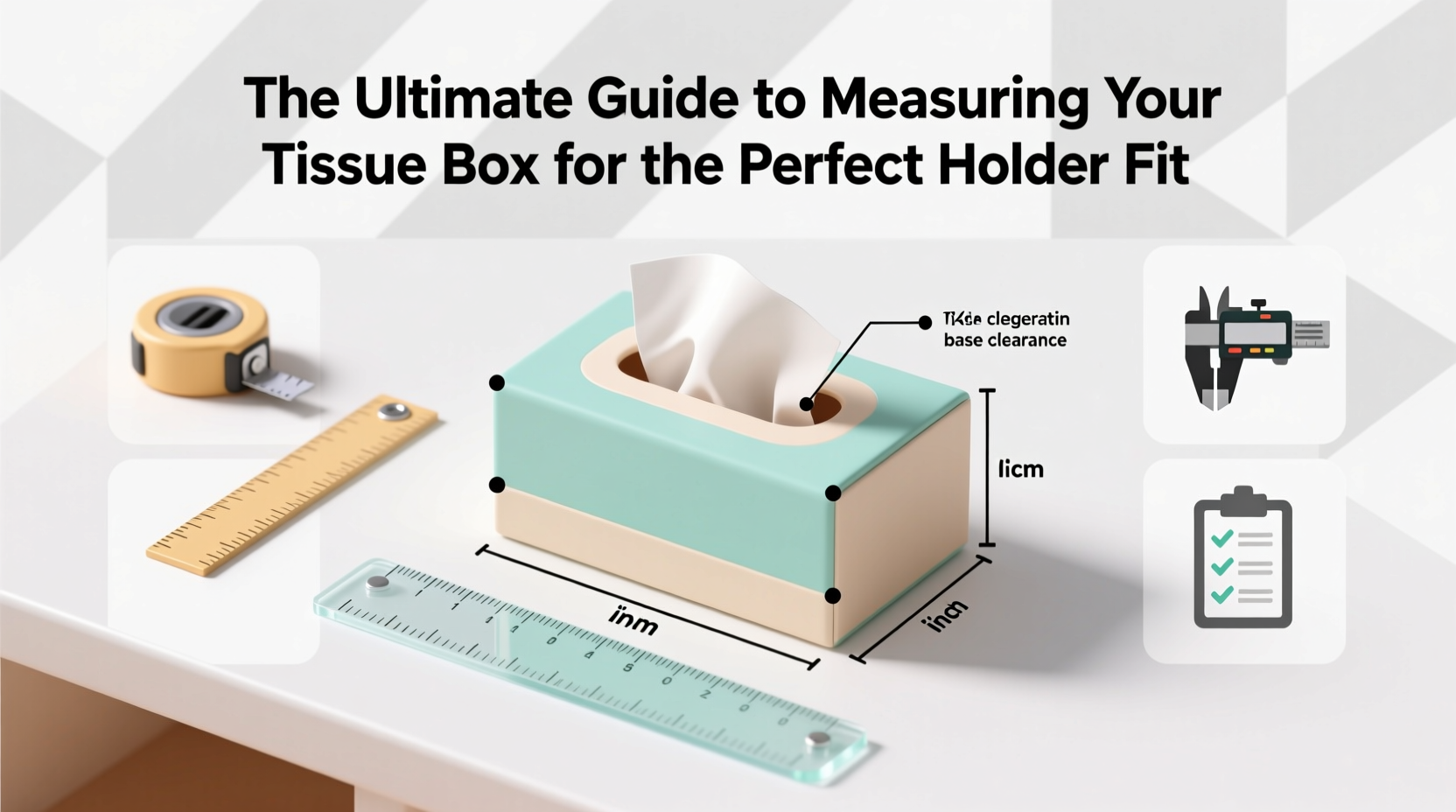
Selecting a tissue box holder based on appearance alone often leads to disappointment. Many holders are designed to fit standard sizes, but tissue boxes vary by brand, region, and product line. A box labeled “standard” in one country might be slightly larger than another. Even within the same brand, limited-edition packaging or eco-friendly thinner cardboard can alter dimensions subtly but meaningfully.
A poorly fitting holder forces compromises: you either modify the box (cutting corners or folding edges), which looks unprofessional, or abandon the holder altogether. In high-traffic areas like reception desks or living rooms, an ill-fitting setup undermines both convenience and visual harmony.
“Precision in measurement prevents frustration in design. A well-fitted holder reflects attention to detail.” — Lydia Chen, Interior Stylist & Home Organization Consultant
Step-by-Step Guide to Measuring Your Tissue Box
To ensure compatibility, measure your tissue box with care using a ruler or tape measure. Follow this sequence:
- Use the full, unopened box. An empty or partially used box may have collapsed sides, giving inaccurate readings.
- Place the box on a flat surface. Keep it upright with the opening facing up.
- Measure the length. This is the longest side from left to right across the top opening.
- Measure the width. This is the shorter side, front to back across the top.
- Measure the height. From the base to the top edge of the longest panel (usually where the opening is).
- Note the orientation. Some holders are designed for horizontal or vertical placement—know your intended use.
- Double-check each dimension. Small errors compound when fitting into snug enclosures.
Standard Sizes vs. Real-World Variations
Most manufacturers produce tissue boxes close to a “standard” size: approximately 5 inches wide × 9 inches long × 5 inches high (12.7 × 22.9 × 12.7 cm). However, deviations are frequent. For example:
| Brand | Length (in) | Width (in) | Height (in) | Notes |
|---|---|---|---|---|
| Kleenex Standard | 9.0 | 5.0 | 5.0 | Fits most universal holders |
| Puffs Plus | 9.2 | 5.1 | 5.3 | Slightly taller and wider |
| Scott Naturals | 8.7 | 4.8 | 4.9 | Smaller footprint; may rattle in standard cases |
| Seventh Generation Recycled | 9.1 | 5.0 | 5.0 | Same width, longer due to packaging structure |
As shown, even minor differences of 0.2–0.3 inches can affect fit, especially in rigid holders made of wood or ceramic. Flexible fabric covers offer more leeway, but precise sizing still ensures a clean, tailored look.
Choosing the Right Holder Based on Measurements
Once you have your numbers, match them to the holder’s internal dimensions—not the exterior. Many product descriptions list only outer size, which misleads buyers. Always check if specs include inner cavity measurements.
- If the holder is made of flexible material (linen, cotton, neoprene), aim for internal dimensions within ±0.25 inches of your box.
- For rigid materials (bamboo, metal, resin), internal dimensions should match your box exactly or allow no more than 0.1 inch of extra space per side.
- Consider access: some holders have open tops only, others have front dispensing slots. Ensure the cutout aligns with your box’s pull-tab location.
Real Example: Office Renovation Oversight
A mid-sized law firm in Portland ordered 15 bamboo tissue holders for their client lounges, choosing a stylish model with engraved logos. They assumed all tissue boxes were uniform. Upon delivery, three brands of boxes were tested—one wouldn’t fit at all, and two sat loosely, shifting when pulled. The project manager had to reorder custom-fit fabric sleeves as a stopgap solution, delaying the rollout by two weeks and increasing costs by 30%. Had they measured first, they could have selected a compatible model or adjusted procurement early.
Essential Checklist Before Buying a Holder
Before finalizing any purchase, verify the following:
- ✅ Measure your current tissue box (length, width, height).
- ✅ Confirm whether the holder accommodates vertical or horizontal orientation.
- ✅ Check internal cavity dimensions in product details.
- ✅ Determine if the material allows slight flexibility (helpful for minor variances).
- ✅ Ensure the dispensing slot aligns with the box’s pull-tab position.
- ✅ Read reviews mentioning fit issues—customers often note sizing quirks.
- ✅ Consider future changes: will you switch brands? Choose a slightly adjustable option.
Frequently Asked Questions
Can I use a ruler instead of a tape measure?
Yes, a rigid ruler works well for tissue boxes. Just ensure it has fine gradations (1/16 inch or 1 mm) for accuracy.
What if my box doesn’t fit any standard holder?
You have options: seek customizable holders made to order, use a fabric cover that stretches, or switch to a universally sized box brand. Some specialty retailers offer modular designs with adjustable inserts.
Do recycled tissue boxes differ in size?
Often, yes. Eco-conscious brands sometimes use lighter cardboard or alternative shaping to reduce material use, which can result in slightly smaller or less rigid boxes. Always measure before assuming compatibility.
Final Tips for Long-Term Success
Measuring once gives you a fit today, but planning ahead ensures lasting satisfaction. If you frequently change tissue brands—perhaps switching between ultra-soft luxury tissues and budget bulk packs—consider investing in a multi-size holder or keeping two different covers on hand. Label each cover with the compatible brand and dimensions for quick reference.
Also, remember that seasonal packaging (like holiday-themed boxes) often comes in non-standard sizes. These festive designs are usually wider or taller to accommodate special graphics. Measure these separately if you plan to use them with existing holders.
“Design isn’t just about how something looks—it’s about how it works. A tissue box that fits perfectly is both functional and refined.” — Marcus Reed, Product Designer at HomeForma Studio
Take Action Today
Grab your tissue box and a measuring tool now. Record the exact dimensions and keep them saved—on your phone, in a home organization app, or taped inside your linen closet. With this data, every future holder purchase becomes faster, smarter, and more satisfying. Whether upgrading a powder room or furnishing a new office, precision eliminates waste and elevates everyday experiences. Don’t settle for a near-fit when a perfect one is just a few measurements away.




 浙公网安备
33010002000092号
浙公网安备
33010002000092号 浙B2-20120091-4
Comments
No comments yet. Why don't you start the discussion?