
Selecting a watch isn’t just about brand, design, or price—it’s about fit. A timepiece that’s too large can dominate your wrist; one that’s too small may look out of place. The difference between a stylish accessory and an awkward add-on often comes down to precise measurements. Whether you're shopping online or trying on watches in person, understanding your wrist dimensions and how they relate to case size, lug-to-lug span, and strap width ensures comfort, proportion, and confidence.
Why Watch Fit Matters More Than You Think
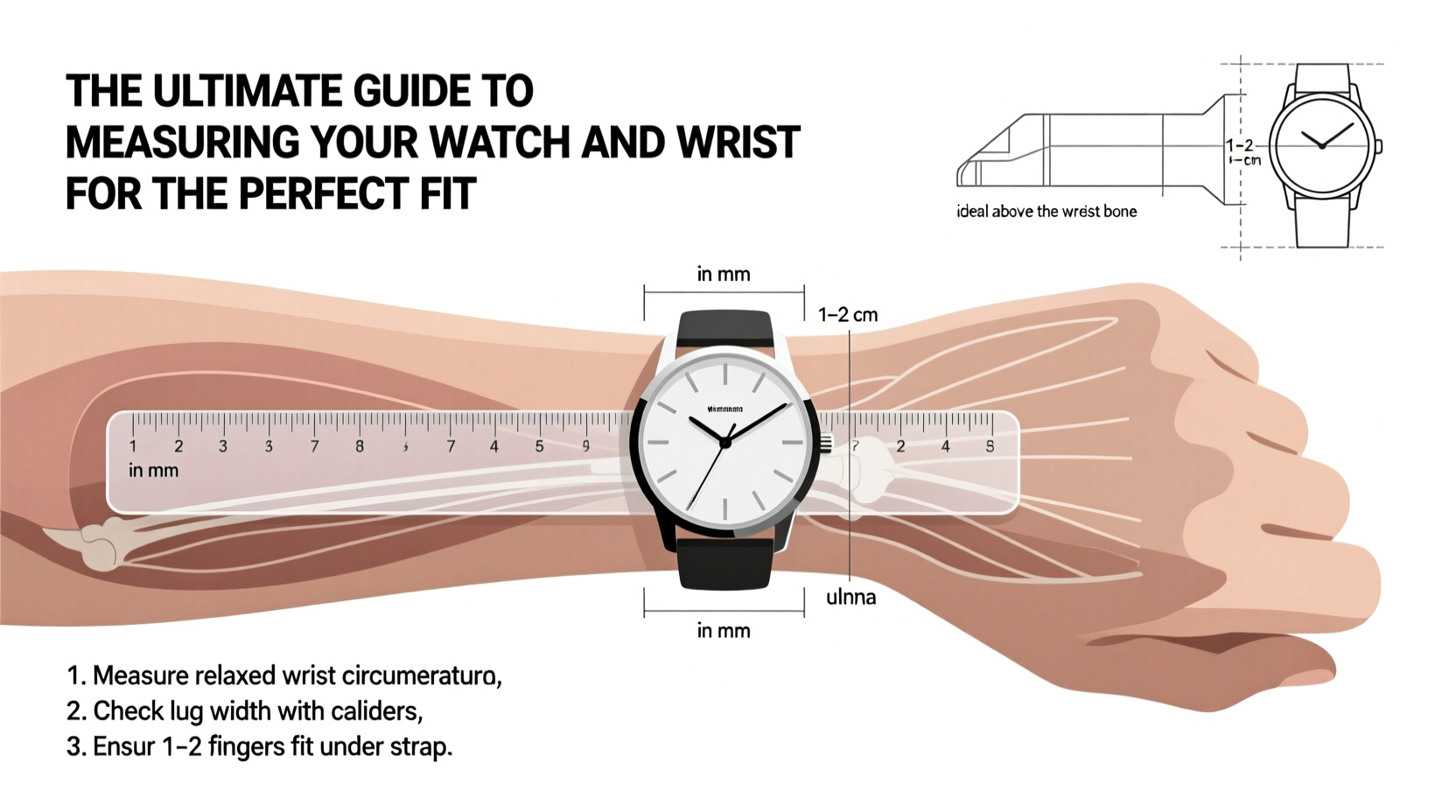
A well-fitted watch doesn’t just look better—it feels better. Poorly sized watches can slip, pinch, or create pressure points during daily wear. Beyond comfort, proportions influence aesthetics. A 44mm sports watch might suit a broad forearm but overwhelm a slender wrist. Conversely, a delicate 34mm dress watch could get lost on someone with larger bones.
Fit also affects versatility. A balanced watch transitions seamlessly from formal events to casual outings. Wearing a piece that aligns with your anatomy enhances personal style without drawing undue attention to sizing errors.
“Proper fit is the silent hallmark of a discerning collector. It’s not just about the watch—it’s about how it lives on the wrist.” — Daniel Reeves, Horology Consultant and Watch Designer
Step-by-Step Guide to Measuring Your Wrist
Accurate wrist measurement is the foundation of proper watch selection. Follow these steps using a flexible measuring tape (or a strip of paper and ruler):
- Wrap the tape around your wrist just below the wrist bone—the same spot where a watch would sit.
- Ensure the tape is snug but not tight; you should be able to slide a finger underneath for comfort.
- Record the measurement in millimeters or inches. Most watch brands use millimeters.
- Repeat the process two or three times to confirm consistency.
If you’re using paper, mark where it overlaps, then measure the length with a ruler. This number is your wrist circumference.
Understanding Key Watch Dimensions
Wrist size alone isn’t enough. To evaluate fit, you must understand three critical watch measurements:
- Case Diameter: The width of the watch face, typically measured in millimeters across the widest point (excluding the crown).
- Lug-to-Lug Distance: The total span from the tip of one watch lug to the other. This determines how much the watch extends over your wrist.
- Strap Width: The distance between the lugs where the strap attaches. This affects how the watch sits and whether replacement bands will fit.
For example, two watches with identical 40mm cases can feel vastly different if one has a lug-to-lug span of 45mm and the other measures 50mm. The latter will overhang more, potentially causing discomfort or imbalance.
Recommended Case Sizes by Wrist Circumference
| Wrist Size (mm) | Recommended Case Diameter | Typical Fit Profile |
|---|---|---|
| 140–160 mm | 34–38 mm | Feminine or vintage-inspired; ideal for dress watches |
| 160–180 mm | 38–42 mm | Balanced and versatile; suits most modern styles |
| 180–200 mm | 42–46 mm | Bolder presence; common in dive and chronograph models |
| 200+ mm | 44 mm+ | Statement-sized; best with proportionate lugs and lightweight materials |
Real-World Example: Choosing Between Two Watches
Consider Alex, a professional with a 172mm wrist. He’s choosing between a classic 39mm field watch with a 46mm lug-to-lug span and a modern 42mm diver at 49mm lug-to-lug. Both are within typical recommendations, but when he tried them on, the field watch sat flush and felt integrated, while the diver extended slightly beyond his wrist edge and rotated during typing.
Despite loving the diver’s aesthetic, Alex chose the field watch for daily wear due to its superior ergonomics. For weekends, he opted for a lighter titanium version of the diver, which reduced movement and improved comfort. His experience underscores that fit isn’t just about numbers—it’s about how the watch behaves in real life.
Checklist: How to Ensure a Perfect Watch Fit
Before purchasing or wearing a new timepiece, go through this checklist:
- ✅ Measure your wrist accurately using a soft tape measure.
- ✅ Check the watch’s case diameter and compare it to your wrist size.
- ✅ Verify the lug-to-lug distance—ideally under 5mm longer than your wrist width.
- ✅ Assess the thickness and weight: over 12mm thick may dig into desk surfaces.
- ✅ Try the watch on before buying, if possible, or consult user reviews for fit feedback.
- ✅ Ensure the strap adjusts comfortably: at least two middle holes should be usable.
- ✅ Test movement: the watch shouldn’t spin freely or press into your knuckles.
Common Fitting Mistakes to Avoid
Even experienced collectors make sizing errors. Here are frequent missteps:
- Ignoring lug design: Horned or extended lugs increase effective length, affecting balance.
- Overvaluing trends: Large watches are popular, but oversized cases compromise elegance and function on smaller wrists.
- Skipping strap adjustment: A poorly sized bracelet creates gaps or pinching.
- Measuring over clothing: Thick sleeves inflate wrist size, leading to incorrect assumptions.
Do’s and Don’ts of Watch Sizing
| Action | Do | Don’t |
|---|---|---|
| Measuring wrist | Use bare skin, snug but not tight | Measure over bulky clothing |
| Selecting case size | Match to wrist diameter and lifestyle | Choose based solely on trend or gender norms |
| Trying on watches | Wear for at least 10 minutes to test comfort | Rely only on visual appeal |
| Adjusting straps | Use professional tools or services | Force links or pins with improper tools |
FAQ: Common Questions About Watch and Wrist Fit
Can I wear a 44mm watch if my wrist is 170mm?
It’s possible, but not ideal for everyday wear. A 44mm case on a 170mm wrist will likely extend beyond the edges, creating a top-heavy appearance. If you prefer larger designs, look for models with shorter lug-to-lug spans (under 47mm) or curved cases that hug the wrist.
How tight should a watch strap be?
The strap should allow the watch to stay in place without sliding, but you should be able to slide one finger comfortably between the band and your skin. Too tight restricts circulation; too loose leads to movement and potential damage.
Does watch thickness matter as much as width?
Yes. A thick watch—even a small one—can feel bulky and fail to fit under shirt cuffs. Aim for under 12mm thickness for dress watches and under 15mm for sport models, depending on wrist shape and sleeve fit.
Final Thoughts: Make Every Second Count With the Right Fit
A watch is more than a tool to tell time—it’s an extension of your identity. When it fits perfectly, it becomes invisible in the best way: always there, never intrusive. By taking accurate measurements, understanding key dimensions, and prioritizing comfort alongside style, you ensure that each timepiece you wear enhances your presence rather than distracts from it.




 浙公网安备
33010002000092号
浙公网安备
33010002000092号 浙B2-20120091-4
Comments
No comments yet. Why don't you start the discussion?