
Earphones are essential companions in our daily lives—whether commuting, working out, or focusing on tasks. Yet one of the most common frustrations users face is tangled cords. Not only does this waste time, but repeated knotting can damage internal wiring, degrade sound quality, and shorten lifespan. The solution lies not just in how you store them, but in choosing the right method and container. A mini pouch, when used correctly, offers an elegant, portable, and protective storage system. This guide walks through proven techniques, best practices, and real-world strategies to keep your earphones neatly organized and ready for use—every single time.
The Problem with Tangled Earphones
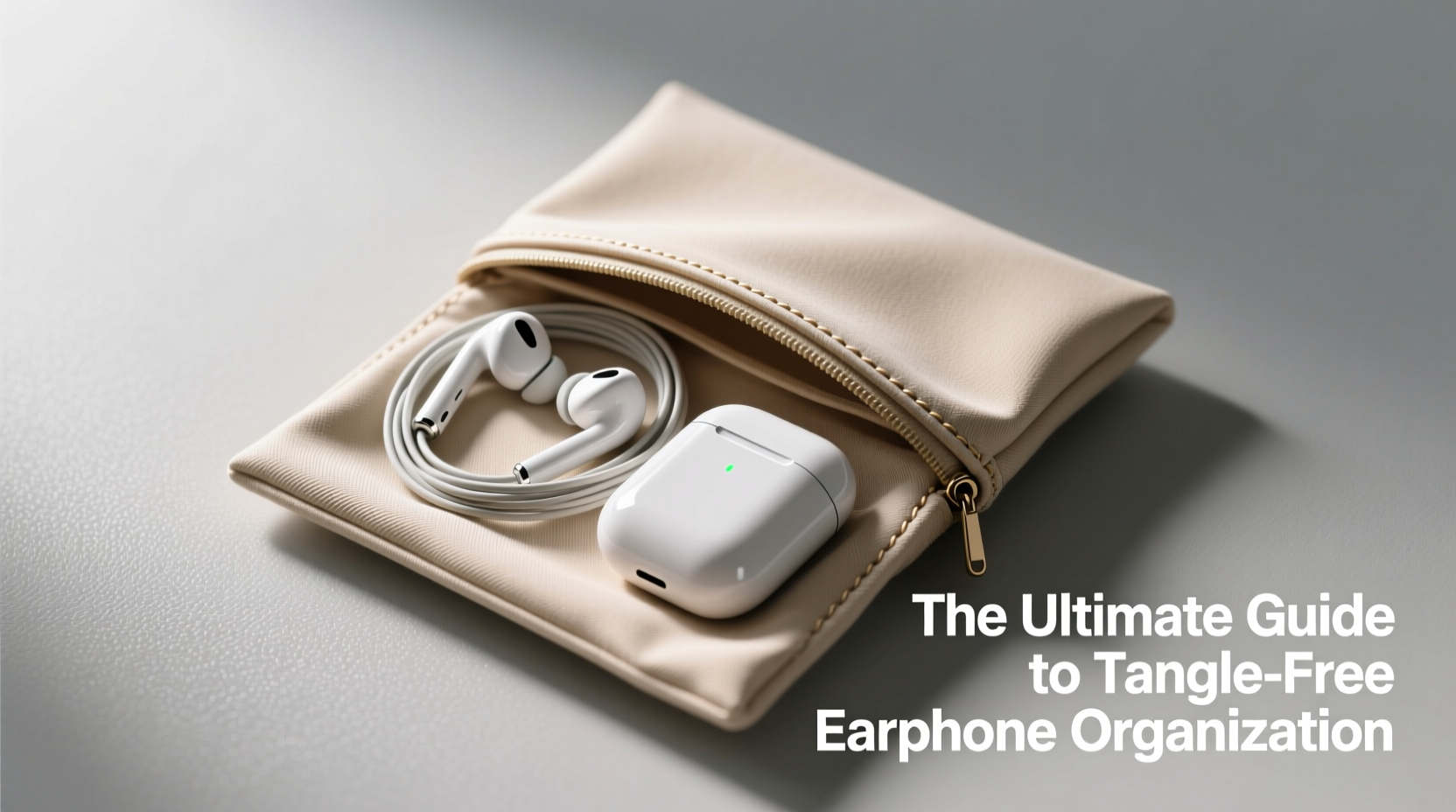
Scientific research has shown that loose cords naturally twist and coil due to random motion—a phenomenon known as the \"spontaneous knotting of agitated strings.\" When earphones are tossed loosely into pockets, bags, or drawers, they’re subjected to constant movement, increasing the likelihood of knots. Beyond frustration, these tangles strain solder joints, weaken insulation, and increase breakage risk.
A 2021 consumer electronics survey revealed that over 63% of wired earphone owners experienced at least one cable failure within two years—most often due to improper storage. Investing in a mini pouch isn’t just about neatness; it’s a practical defense against premature wear.
Choosing the Right Mini Pouch
Not all pouches are created equal. The ideal mini pouch balances size, material, and accessibility. Too small, and you’ll struggle to fit coiled cables without force. Too large, and the earphones will shift around inside, defeating the purpose.
| Feature | Ideal Choice | Avoid |
|---|---|---|
| Size | Approx. 4” x 5” (fits coiled cord + plug) | Overly compact pouches that require cramming |
| Material | Durable nylon, neoprene, or padded fabric | Flimsy polyester or non-cushioned mesh |
| Closure Type | Zipped or magnetic flap | Elastic loops or open tops |
| Interior | Soft lining to prevent abrasion | Rough seams or exposed stitching |
Many premium audio brands include custom-fit pouches with high-end models. Third-party options like those from Twelve South, Nomad, or Muama offer reinforced padding and sleek designs suitable for travel.
“Proper storage accounts for nearly half the longevity of wired audio gear. A well-designed pouch prevents microfractures caused by bending and friction.” — Dr. Alan Zhou, Audio Equipment Durability Researcher, MIT Media Lab
Step-by-Step Guide to Coiling & Storing Earphones
How you coil your earphones before placing them in the pouch determines whether they’ll stay tangle-free. Follow this five-step process for consistent results:
- Unplug and inspect: Disconnect your earphones and check for existing tangles or frays. Address minor knots now to avoid compounding issues later.
- Start with the plug end: Hold the plug in one hand. This ensures the heavier end stays anchored during coiling.
- Use the over-under method: Loop the cord alternately over and under your fingers (like wrapping a hose). This cancels out twists and prevents spiral memory in the wire.
- Secure with a wrap or clip: Once coiled, use a soft velcro tie, silicone band, or built-in strap to hold the bundle together. Avoid tight rubber bands that can compress insulation.
- Place gently into the pouch: Lay the coil flat or fold once if needed. Position the earbuds and plug at opposite ends to minimize internal movement.
Real Example: How a Travel Nurse Reduced Earphone Failures
Sophia M., a nurse based in Portland, relied on her earphones during commutes and short breaks. She previously replaced a pair every four months due to broken left channels and frayed connectors. After switching to a structured routine—using a padded zip pouch and applying the over-under coiling technique—her current pair has lasted over 18 months with no degradation in performance.
“I keep the pouch in my scrub jacket pocket,” she explained. “Before, I’d just shove the earphones in loosely. Now I take ten seconds to wind them properly. It’s made a huge difference—not just in durability, but in peace of mind.”
This case illustrates how small behavioral changes, supported by the right tools, yield significant long-term benefits.
Best Practices Checklist
To ensure your earphones remain tangle-free and functional, follow this daily checklist:
- ✅ Always disconnect gently from devices—never pull by the cord
- ✅ Inspect for tangles before storing
- ✅ Use the over-under coiling method consistently
- ✅ Secure the coil with a soft tie (no metal clips or tight elastics)
- ✅ Store in a dedicated mini pouch, not mixed with keys or chargers
- ✅ Keep away from extreme temperatures and moisture
- ✅ Clean earbud tips monthly to maintain hygiene and sound clarity
Avoid These Common Mistakes
Even with a pouch, poor habits can undermine your efforts:
- Wrapping around objects: Using your hand, phone, or credit card as a winding base often introduces twists that lead to tangles.
- Forcing the coil: Jamming a tightly packed bundle into a small pouch strains connectors and damages shielding.
- Mixing with sharp items: Keys, pens, or multitools in the same compartment can pierce or scratch the cable over time.
- Ignoring strain relief points: The areas near the plug and earbuds are most vulnerable. Ensure these aren’t bent beyond a 90-degree angle during storage.
FAQ
Can I use any small bag as a mini pouch?
You can, but not all bags are suitable. Ideal pouches have cushioned interiors, secure closures, and enough structure to protect against crushing. Repurposed cosmetic or toiletry bags may work temporarily, but lack targeted design for delicate electronics.
What if I don’t have a pouch? Are there alternatives?
Yes. In a pinch, use a stiff cardboard ring (like from tape) to wrap and secure your earphones with a rubber band. However, this lacks portability and protection. For regular use, investing in a proper pouch is strongly recommended.
Do wireless earbuds need the same care?
While true wireless earbuds (like AirPods) eliminate cords, their charging cases still benefit from protective pouches—especially when carried in bags or pockets. Additionally, keeping the case clean and dry extends both battery life and hygiene.
Conclusion: Small Habits, Lasting Results
Organizing earphones in a mini pouch might seem trivial, but it reflects a broader principle: mindful maintenance extends the life of everyday tools. By dedicating less than a minute per day to proper coiling and storage, you prevent frustration, reduce electronic waste, and get more value from your devices. Whether you're using budget earbuds or high-fidelity audiophile gear, the principles remain the same—respect the cable, choose the right container, and be consistent.




 浙公网安备
33010002000092号
浙公网安备
33010002000092号 浙B2-20120091-4
Comments
No comments yet. Why don't you start the discussion?