
World War II dog tags are more than military artifacts—they are deeply personal symbols of service, sacrifice, and identity. Whether you're a historian, collector, reenactor, or family member seeking to honor a veteran, obtaining an accurate replacement requires careful attention to detail, authenticity, and respect for historical integrity. Unlike modern reproductions sold as souvenirs, authentic-style replacements must reflect the correct materials, engraving standards, and design features used during the war. This guide provides actionable insights into sourcing historically accurate WWII dog tag replicas, avoiding common pitfalls, and connecting with reputable suppliers.
Understanding Authentic WWII Dog Tag Specifications
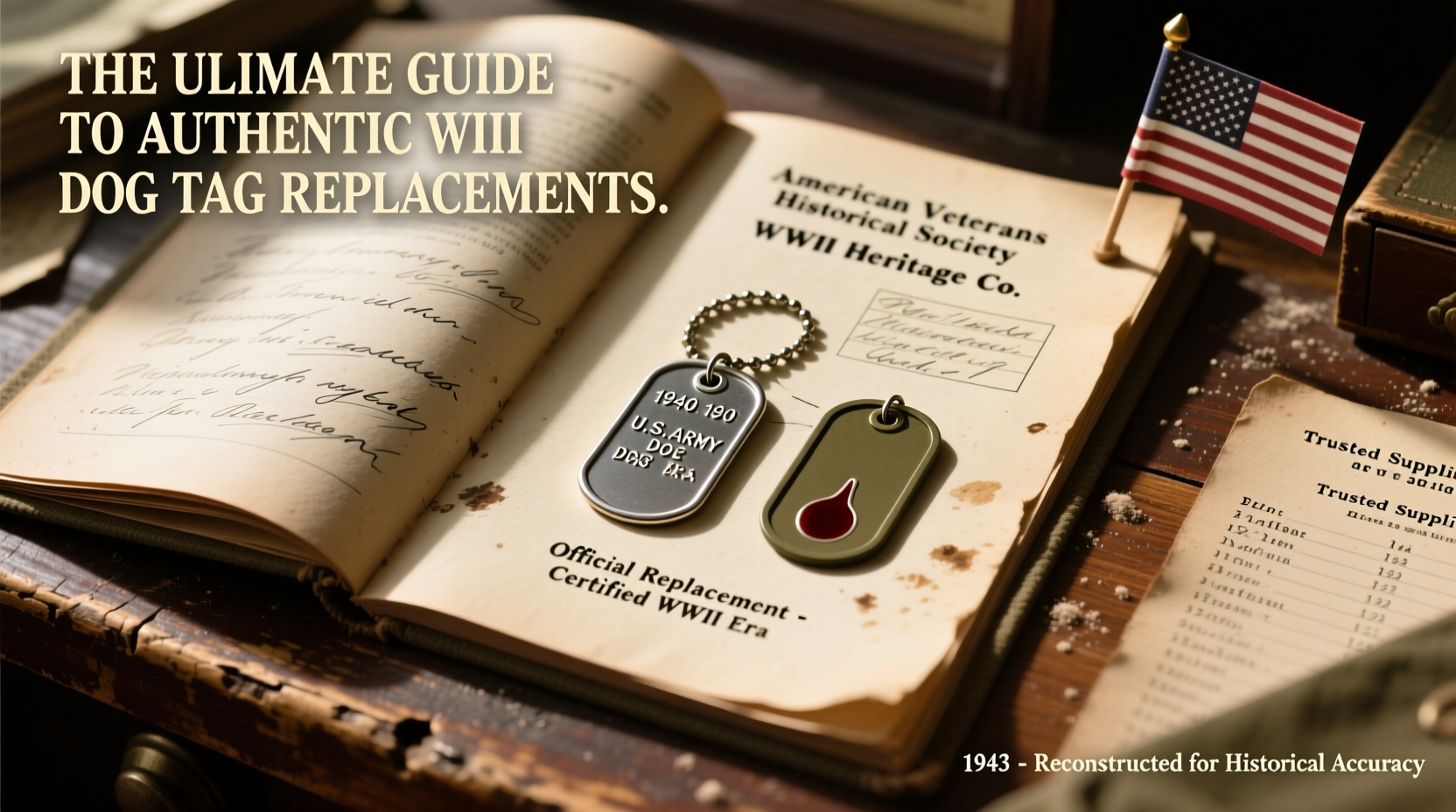
The U.S. military issued two identical dog tags per soldier during World War II. These were circular, made from stainless steel, and measured approximately 1 inch in diameter. Each was stamped with critical information: the soldier’s name, service number, blood type, religious preference, and branch of service. One tag remained with the body if killed; the other was collected for record-keeping.
Key characteristics of original WWII dog tags include:
- Material: Stainless steel (not aluminum or brass)
- Shape: Round with a notched edge (used to align the impression in field typewriters)
- Engraving: Machine-stamped lettering, slightly uneven due to manual pressing
- Hole placement: Two holes—one for wearing, one for the notched \"dog ear\"
- Text layout: Specific formatting based on Army, Navy, or Marine Corps standards
Step-by-Step Guide to Sourcing Accurate Replacements
- Verify the Original Information: Obtain the veteran’s full name, service number, unit, blood type, and religion. Military records can often be accessed through the National Archives (NARA) or veteran organizations like the American Battle Monuments Commission.
- Determine Branch-Specific Format: The Army, Navy, and Marines used slightly different layouts. For example, Navy tags included “U.S.N.” while Army tags listed the service number format starting with a digit.
- Select a Reputable Supplier: Choose vendors known for historical accuracy and use of proper materials. Look for those who specialize in military memorabilia rather than general souvenir shops.
- Request Stamped (Not Engraved) Lettering: Ensure the vendor uses traditional stamping methods to replicate the raised, indented text seen on originals.
- Review a Proof Before Production: Many quality suppliers provide digital mockups. Check spacing, font size, and punctuation against archival examples.
- Inspect Upon Delivery: Compare the finished tag to photos of authentic WWII specimens. Weight, finish, and edge texture should match historical pieces.
Trusted Sources for Historically Accurate Reproductions
Not all reproduction companies prioritize authenticity. The following vendors have earned reputations among collectors and historians for their commitment to accuracy, craftsmanship, and ethical practices.
| Vendor | Specialty | Materials Used | Contact Method |
|---|---|---|---|
| Military Dog Tags Inc. | WWII-era precision replicas | Stainless steel, hand-stamped | Website form + phone support |
| Historic Medals & Replicas | Museum-grade reproductions | Authentic alloy, period-correct tooling | Email consultation required |
| Veterans Memorial Supply Co. | Focused on family tributes | 316L surgical steel, stamped | Online order with proof approval |
| Reenactor’s Depot | Larger bulk orders for living history groups | Carbon steel with anti-rust coating | Wholesale portal available |
“Authenticity isn’t just about appearance—it’s about honoring the truth of what these soldiers carried. A correctly made dog tag reflects both technical precision and emotional weight.” — Dr. James Holloway, Curator at the National Museum of Military Vehicles
Avoiding Common Mistakes: Do’s and Don’ts
Even well-intentioned efforts can result in inaccurate or disrespectful reproductions. Use this checklist to stay on track.
| Do | Don’t |
|---|---|
| Use official military abbreviations (e.g., “R.C.” for Roman Catholic) | Abbreviate names unless documented (e.g., “Bob” instead of Robert) |
| Include blood type and gas mask size if known | Add fictional units or ranks not verified in service records |
| Order two matching tags (original practice) | Purchase single tags unless for display purposes only |
| Ask for a certificate of authenticity from the maker | Accept vague descriptions like “vintage style” without specifics |
Real Example: Honoring a Grandfather’s Service
Mark Reynolds, a teacher from Ohio, wanted to create an authentic tribute for his late grandfather, Pvt. Thomas Reynolds, who served with the 101st Airborne in Normandy. After requesting his grandfather’s service records from NARA, Mark discovered discrepancies in online databases—his grandfather’s middle initial was missing, and his blood type was misrecorded.
He contacted Military Dog Tags Inc., provided scanned documents, and requested a review by their historical consultant. The company corrected the data, used actual WWII-era stamping dies, and delivered two matching tags on a ball chain. Mark now uses them in a classroom exhibit about D-Day, emphasizing the importance of factual accuracy when teaching history.
FAQ
Can I legally own or wear a WWII-style dog tag?
Yes. Reproduction dog tags are legal to own and wear, provided they are not presented as official government-issued items or used fraudulently. They are considered commemorative or educational items.
Are original WWII dog tags still issued by the military?
No. Modern U.S. military dog tags have evolved significantly since WWII. Today’s tags are rectangular, made from corrosion-resistant alloys, and include Social Security numbers or DoD ID numbers. The circular, notched design was phased out in the 1960s.
How can I verify if a seller produces authentic-style tags?
Ask specific questions: What material is used? Is lettering hand-stamped or machine-engraved? Can you provide references or museum affiliations? Reputable vendors welcome such inquiries and often publish their research and methods online.
Conclusion
Obtaining an authentic WWII dog tag replacement is an act of remembrance, education, and respect. It connects generations, preserves personal histories, and ensures that the sacrifices of those who served are represented with dignity. By understanding the precise specifications, choosing trusted sources, and avoiding common inaccuracies, you contribute to a more truthful and meaningful legacy.




 浙公网安备
33010002000092号
浙公网安备
33010002000092号 浙B2-20120091-4
Comments
No comments yet. Why don't you start the discussion?