
Winter demands more than just fashion—it requires function. Yet the idea that warmth must come at the expense of style is outdated. Today’s outerwear market offers coats that blend insulation, weather resistance, and modern aesthetics seamlessly. Whether you're navigating city streets or braving rural cold snaps, the right coat can elevate your look while keeping you comfortable. Choosing one isn’t about compromise; it’s about understanding materials, fit, climate needs, and personal style in tandem.
Understand Your Climate and Daily Routine
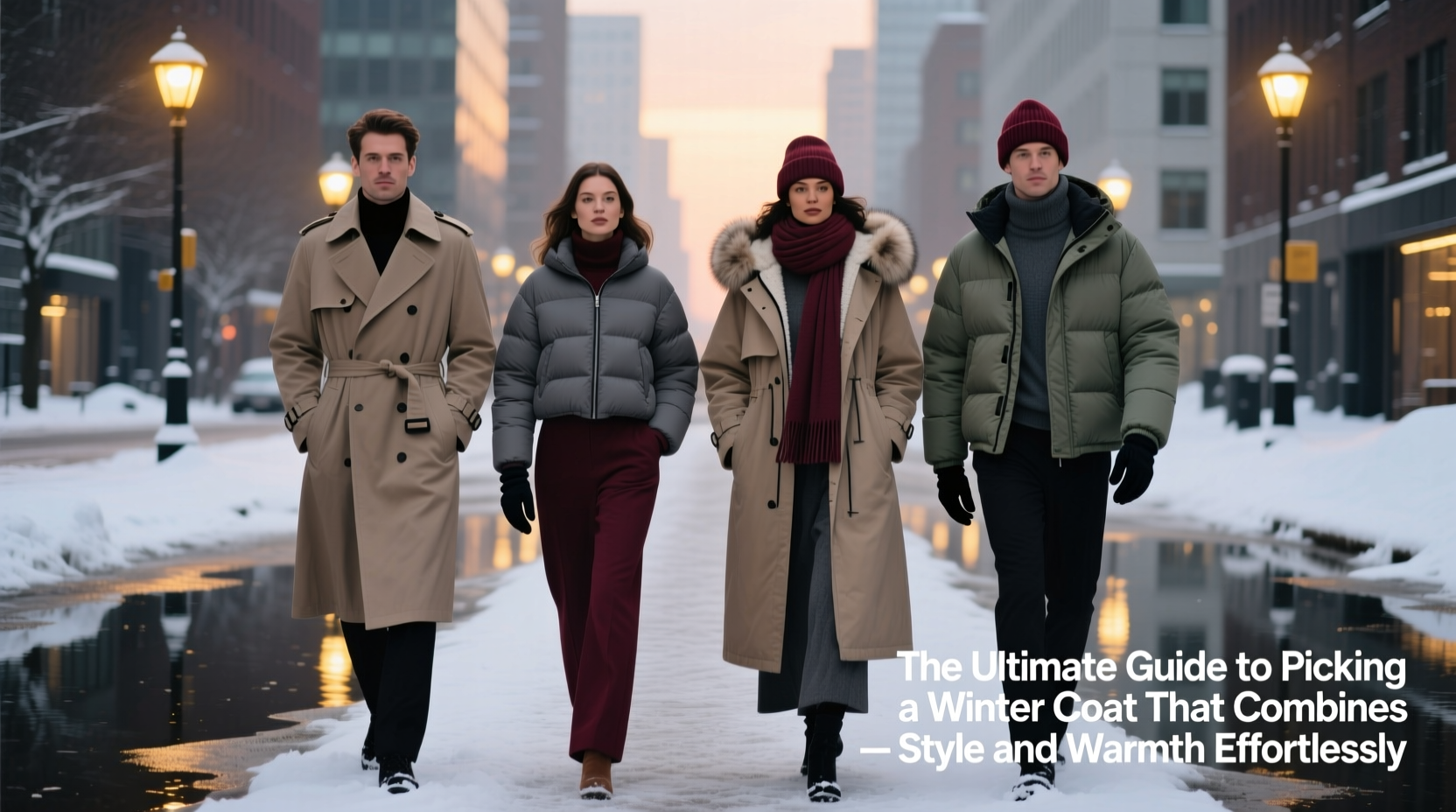
Your environment and lifestyle are the first filters in selecting the ideal winter coat. A parka designed for subzero temperatures in Minnesota may be overkill—and uncomfortable—for someone in Portland, where dampness and mild cold dominate. Similarly, if you walk less than a block from car to office each day, extreme technical features may be unnecessary.
Consider these factors:
- Average winter temperature: Below freezing? Around 30°F (-1°C)? This determines insulation level.
- Precipitation: Snow, sleet, or rain affects shell material and water resistance needs.
- Wind exposure: Urban canyons or open countryside change wind chill impact.
- Daily activity: Commuting on foot, biking, or driving alters breathability and layering requirements.
Break Down Key Insulation Types
Insulation is the core of warmth. The type and quality determine how efficiently heat is retained, how much the coat weighs, and how it performs when wet.
| Insulation Type | Warmth Level | Weight | Water Resistance | Best For |
|---|---|---|---|---|
| Duck/Goose Down (Fill Power 550–900) | ★★★★★ | Light | Poor (loses loft when wet) | Cold, dry climates |
| Synthetic (Primaloft, Thermore) | ★★★★☆ | Medium | Good (retains warmth when damp) | Damp or variable conditions |
| Wool Blends (Melton, Tweed) | ★★★☆☆ | Medium-Heavy | Fair (naturally water-repellent) | Urban wear, mild winters |
| Faux Fur Lined | ★★★☆☆ | Medium | Good | Style-focused urban use |
Down remains the gold standard for warmth-to-weight ratio, but only when kept dry. High-fill-power down (700+) provides superior insulation with minimal bulk. Synthetic alternatives have closed the performance gap significantly—especially Primaloft Gold, which mimics down’s loft and compressibility while resisting moisture.
“Modern synthetic insulations now offer 90% of down’s warmth even when wet, making them ideal for unpredictable winter conditions.” — Dr. Lena Torres, Textile Engineer, Outdoor Gear Lab
Choose the Right Outer Shell and Features
The shell protects insulation and wearer from the elements. Look beyond color and texture—focus on fabric technology.
Durable water-repellent (DWR) coatings cause moisture to bead and roll off. Nylon and polyester weaves like ripstop or Taslan resist tearing and abrasion. Some premium coats use laminated membranes (e.g., Gore-Tex) for full waterproofing and breathability, essential for active users.
Functional details matter just as much:
- Hood: Detachable for versatility; insulated and adjustable for storm protection.
- Cuffs: Elastic or ribbed to block cold air infiltration.
- Storm flaps: Over zippers prevent wind and snow entry.
- Pocket placement: High hand-warmer pockets add comfort; secure zippered ones protect valuables.
- Venting options: Underarm zips improve airflow during exertion.
Balance Fit, Proportion, and Style
A well-fitting coat enhances both comfort and appearance. Too tight, and it compresses insulation, reducing warmth. Too loose, and heat escapes while the silhouette looks sloppy.
Layering dictates fit. If you wear thick sweaters or vests underneath, size up slightly—but avoid excessive volume. Tailored does not mean tight; it means structured shoulders, a clean waistline, and hem length that complements your body type.
Length considerations:
- Waist-length: Ideal for mild climates and urban settings. Offers maximum mobility and pairs easily with any outfit.
- Hip-length: Balanced coverage and style. Works for most builds and conditions.
- Thigh-to-knee length: Superior warmth and wind protection. Best for very cold areas or tall individuals.
Color and cut should reflect your wardrobe. Neutrals—black, navy, charcoal, camel—offer maximum versatility. Bold colors or patterns make a statement but require coordination. Consider timeless silhouettes: the double-breasted wool coat, the belted trench-style parka, or the minimalist puffer with clean lines.
Mini Case Study: From Bulky to Balanced
Sophie, a graphic designer in Chicago, used to wear an oversized black puffer every winter. It kept her warm, but she felt shapeless and disliked how it overwhelmed her frame. After assessing her routine—mostly walking to transit and working in heated offices—she switched to a mid-length hybrid coat: a wool-blend exterior with Primaloft insulation. The tailored fit enhanced her proportions, the neutral gray matched her wardrobe, and the moisture-resistant shell handled snow flurries without issue. She stayed warm, looked polished, and no longer dreaded putting on her coat.
Your Winter Coat Selection Checklist
Before purchasing, run through this checklist to ensure you’re getting both performance and panache:
- ✅ Identify your coldest typical temperature and precipitation levels.
- ✅ Decide between down (dry cold) or synthetic (wet/cold mix).
- ✅ Choose a shell with DWR treatment or waterproof membrane if needed.
- ✅ Confirm the coat fits over your thickest intended layers without pulling.
- ✅ Check functional details: hood, cuffs, storm flap, pocket security.
- ✅ Assess proportion: hem length should align with your height and style.
- ✅ Ensure color and cut complement at least three outfits in your closet.
- ✅ Verify care instructions—can you machine wash, or is dry cleaning required?
FAQ
Can a stylish coat truly be as warm as a technical one?
Yes—many brands now merge fashion and function. Look for garments labeled “technical wool,” “hybrid insulation,” or “weatherproof finish.” Designers like Canada Goose, Woolrich, and Acne Studios engineer coats that meet rigorous thermal standards without sacrificing aesthetics.
How do I maintain warmth without looking bulky?
Focus on high-loft, lightweight insulation like 700+ fill down or advanced synthetics. Prioritize tailored cuts and layer smartly—thermal base layers and merino wool mid-layers generate heat without adding visible bulk.
Is it worth investing in a luxury winter coat?
If you live in a harsh climate and wear the coat daily for months, yes. High-end coats often use superior materials, better construction (e.g., baffled stitching, reinforced seams), and last significantly longer. A $800 coat worn five days a week for four winters costs less per use than a $300 coat replaced annually.
Final Thoughts: Make Warmth Work for You
Choosing a winter coat shouldn’t be a battle between practicality and personality. With informed decisions, you can own a piece that defends against the cold and defines your presence. The best coats don’t just cover you—they complete you. They’re reliable in a blizzard and appropriate at a dinner party. They age gracefully, maintaining structure and function year after year.
Start by clarifying your needs, then explore options with both eyes open—one on performance specs, the other on personal expression. When warmth and style coexist, winter doesn’t feel like a season to endure. It becomes one to embrace.




 浙公网安备
33010002000092号
浙公网安备
33010002000092号 浙B2-20120091-4
Comments
No comments yet. Why don't you start the discussion?