
Enamel earrings are more than just accessories—they’re expressive statements of personality, color, and craftsmanship. With their vibrant hues and polished finish, they bring life to any outfit. But beyond style and color preference, one often overlooked factor determines how well a pair of earrings flatters you: your face shape. Choosing the right enamel earrings for your facial structure can subtly balance proportions, highlight your best features, and elevate your overall look. This guide breaks down the art and science of matching enamel earring styles to your unique face shape, so you can wear them with confidence and precision.
Understanding Face Shapes and Earring Proportions
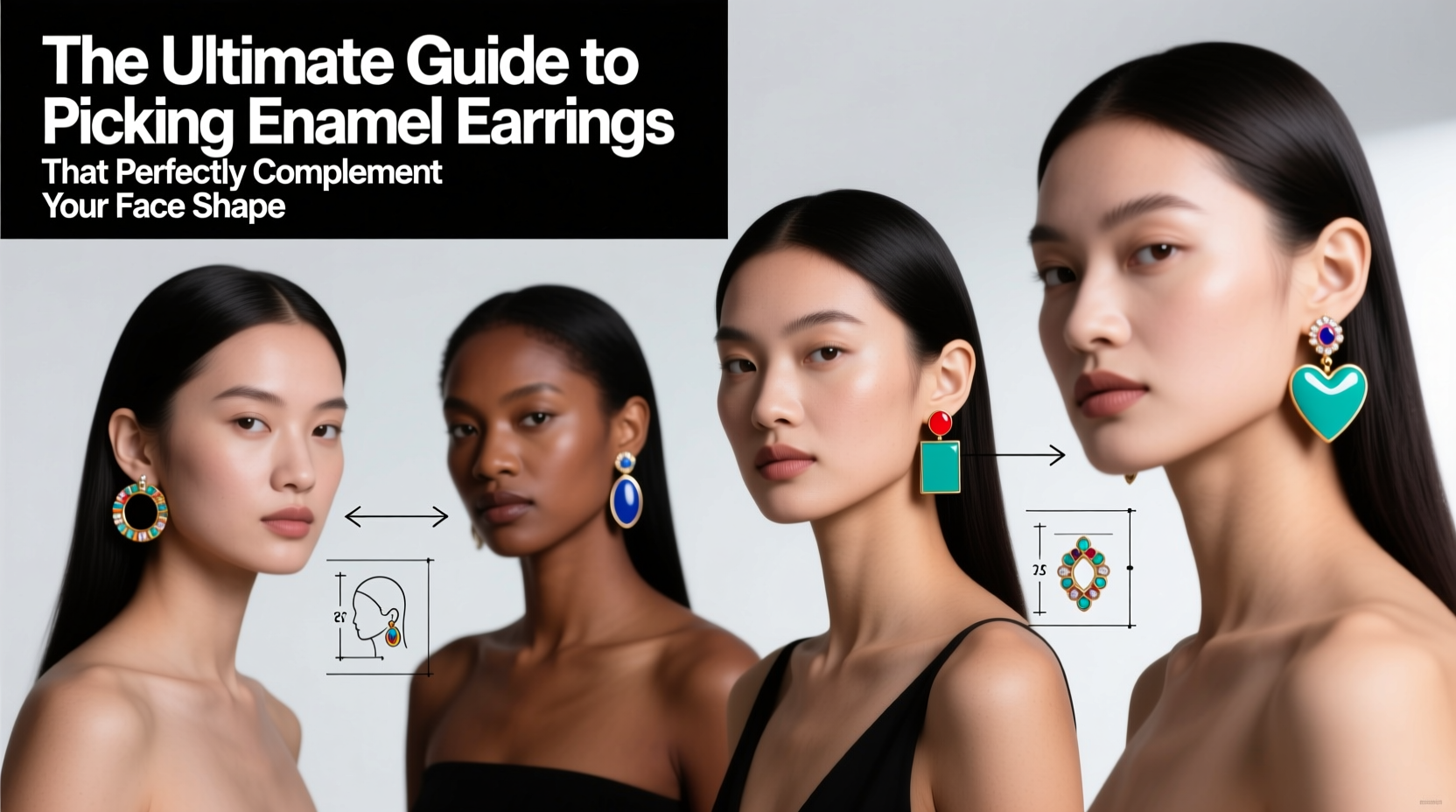
Your face shape influences which earring lengths, widths, and silhouettes will appear most harmonious. While no two faces are identical, most fall into six primary categories: oval, round, square, heart, diamond, and oblong. Each has distinct characteristics that respond differently to earring design.
Earrings function like visual anchors. Long drops draw the eye vertically, elongating the face. Wide or circular designs add width, balancing narrow cheekbones. Angular pieces echo strong jawlines, while soft curves soften sharp features. Enamel earrings—available in bold geometrics, floral motifs, hoops, and teardrops—offer vast stylistic range, making them ideal for targeted face-shape enhancement.
“Earrings are the only jewelry that frames the face directly. Their shape and scale should work *with* your bone structure, not against it.” — Lila Monroe, Jewelry Stylist & Fashion Consultant
The Right Enamel Earrings for Your Face Shape
Selecting the ideal pair starts with identifying your face shape. Stand in front of a mirror, pull your hair back, and trace the outline of your face on the glass. Compare it to the descriptions below, then use the corresponding recommendations to guide your earring choices.
Oval Face
The oval face is balanced and symmetrical, with gently curved jawlines and a forehead slightly wider than the chin. It’s considered the most versatile shape, able to carry almost any earring style.
- Best styles: Hoops, studs, chandeliers, and geometric drops
- Color tip: Use bright enamel colors like cobalt blue or cherry red to add playful contrast
- Avoid: Tiny studs that get lost; aim for moderate size to maintain proportion
Round Face
Characterized by equal width and length with full cheeks and soft jawlines, a round face benefits from earrings that create vertical emphasis.
- Best styles: Long dangles, linear drops, marquise shapes, and vertical ovals
- Material note: High-gloss enamel enhances light reflection, drawing eyes downward
- Avoid: Large circular hoops or wide studs that widen the face further
Square Face
A square face has a strong jawline, broad forehead, and angular features. The goal is to soften edges and add gentle curves.
- Best styles: Round hoops, teardrop pendants, floral enamel designs, and curved bars
- Design insight: Enamel’s smooth surface contrasts beautifully with angular bone structure
- Avoid: Sharp-edged geometrics or boxy shapes that echo jaw angles
Heart Face
Narrow chin, wide forehead, and high cheekbones define this shape. Earrings should balance the upper face and add volume below the jawline.
- Best styles: Bottom-heavy drops, fan shapes, and inverted triangles
- Color strategy: Warm enamel tones (terracotta, mustard) ground the look
- Avoid: Top-heavy designs or small studs that don’t reach the lower face
Diamond Face
Narrow forehead and jaw with prominent cheekbones. The aim is to widen the top and bottom to frame cheekbones.
- Best styles: Oval hoops, cat-eye shapes, and earrings with top-and-bottom embellishments
- Pro tip: Asymmetric enamel pairs can highlight uniqueness without imbalance
- Avoid: Long, straight drops that emphasize narrowness
Oblong Face
Longer than it is wide, with a high forehead and elongated chin. Earrings should add width and break up facial length.
- Best styles: Short hoops, cluster studs, horizontal bars, and wide cuffs
- Length rule: Stay above the jawline or extend just slightly below
- Avoid: Excessively long drops or minimalist wires that stretch the face visually
Choosing Enamel Colors Based on Skin Tone and Face Shape
While shape guides structure, color brings emotion. Enamel offers saturated pigments that interact with skin tone and lighting. Pairing the right hue with your face shape amplifies harmony.
| Skin Undertone | Complementary Enamel Colors | Face Shape Synergy |
|---|---|---|
| Warm (golden, peachy) | Amber, coral, olive green, gold-trimmed red | Enhances round and heart faces with earthy warmth |
| Cool (pink, bluish) | Sapphire, emerald, violet, icy pink | Sharpens square and diamond faces with crisp contrast |
| Neutral | Teal, plum, burnt orange, black enamel | Versatile across all shapes; ideal for oblong faces needing definition |
For example, a person with a square face and cool undertones might choose deep sapphire enamel teardrops—the curve softens the jaw, while the color adds sophistication without harshness.
Step-by-Step Guide to Selecting Your Perfect Pair
Follow this practical process to ensure every enamel earring choice enhances your natural beauty:
- Identify your face shape using a mirror and reference chart.
- Measure your face—width at forehead, cheekbones, jaw, and overall length—to confirm proportions.
- Determine your go-to neckline, as high collars may require longer drops, while open necks suit studs or short hoops.
- Choose earring length and width based on face shape guidelines.
- Pick enamel color that complements your skin tone and wardrobe palette.
- Test in natural light—hold potential pairs near your face to see how they influence balance.
- Wear and observe in different settings: do they feel like an extension of your expression?
Mini Case Study: Transforming Style with Strategic Earrings
Sophia, a 34-year-old graphic designer with a round face and warm undertones, loved bold accessories but felt overwhelmed by her own reflections. She often chose large circular enamel hoops, thinking they were “fun,” but noticed photos made her face appear broader.
After consulting a stylist, she switched to elongated enamel drops in deep coral with subtle gold accents. The vertical line created visual length, and the warm hue enhanced her complexion. Within weeks, colleagues commented on how “rested” and “put-together” she looked. The change wasn’t in her makeup or hairstyle—it was in the intentional choice of earrings that respected her face shape.
Checklist: Picking Enamel Earrings Like a Pro
- ☑ I know my face shape and its key characteristics
- ☑ I’ve ruled out styles that exaggerate my face’s proportions
- ☑ The earring length adds balance—either vertically or horizontally
- ☑ The enamel color complements my skin undertone
- ☑ The design aligns with my lifestyle (e.g., lightweight for daily wear)
- ☑ I’ve tested the pair in natural light and from multiple angles
Frequently Asked Questions
Can I wear statement enamel earrings every day?
Yes—if they’re proportionate to your face and comfortably lightweight. Opt for smaller statement designs (like 1.5-inch drops) in durable enamel over heavy resins. Daily wear is possible with proper care and fit.
What if I have a mix of face shape traits?
Most faces are hybrids. Focus on the dominant feature—e.g., if you have a square jaw but narrow chin, prioritize softening angles. You can also alternate styles depending on hairstyle or occasion.
Do earring backs matter for face shape?
Indirectly, yes. Secure, comfortable backs prevent earrings from tilting or shifting, ensuring the intended shape stays aligned with your face. For long drops, consider lever-backs or screw fittings for stability.
Final Thoughts: Wear Confidence, Not Just Earrings
Picking enamel earrings isn’t just about fashion—it’s about alignment. When shape, color, and personal style converge, the result isn’t merely attractive; it’s authentic. The right pair doesn’t hide your features but honors them, turning everyday moments into expressions of self-awareness and grace.




 浙公网安备
33010002000092号
浙公网安备
33010002000092号 浙B2-20120091-4
Comments
No comments yet. Why don't you start the discussion?