
Carrying wireless earbuds in a compact case has become second nature for millions. But one often-overlooked detail can make a big difference: how you secure that case. A well-chosen keychain doesn’t just add personality—it enhances convenience, prevents loss, and ensures your tech stays protected. Yet, many users attach random trinkets without considering durability, weight distribution, or access speed. The right keychain transforms your everyday carry from chaotic to streamlined.
Why Your Keychain Choice Matters More Than You Think
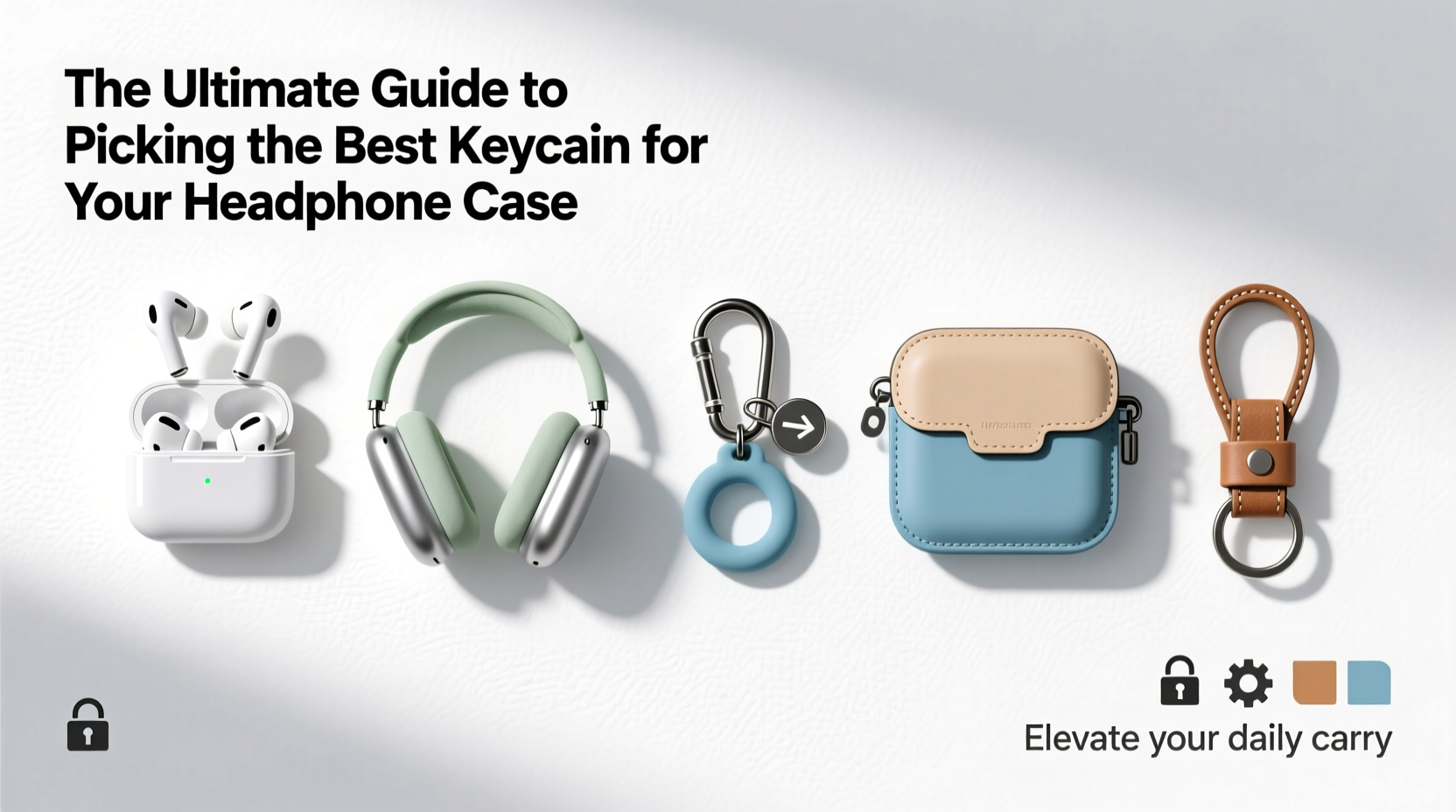
A keychain might seem like a minor accessory, but when attached to a high-value item like a premium headphone case, its role expands beyond decoration. Consider this: Apple AirPods Pro retail for over $200, and similar models from Sony, Bose, or Samsung are priced comparably. Losing such an item due to a flimsy clip or poorly designed attachment isn’t just inconvenient—it’s costly.
Functionality begins with physics. A bulky or unbalanced keychain can cause the case to swing, snag, or detach unexpectedly. Over time, repeated stress on the lanyard loop may lead to wear and tear. Style also plays a psychological role; people are more likely to maintain items they feel connected to aesthetically. Finally, security is paramount—especially in crowded environments where pickpocketing or accidental drops occur frequently.
Key Factors in Selecting the Right Keychain
Choosing the ideal keychain requires evaluating multiple factors simultaneously. Prioritize these three pillars: material quality, attachment mechanism, and ergonomic design.
Material Quality and Durability
Common materials include stainless steel, aluminum, nylon webbing, silicone, and leather. Each offers distinct advantages:
- Stainless steel: Highly durable and scratch-resistant, ideal for heavy-duty use. However, it adds noticeable weight.
- Aluminum: Lightweight yet strong, often used in aerospace-grade accessories. Resists corrosion better than steel.
- Nylon webbing: Flexible and soft on fabrics, commonly seen in tactical gear. Excellent for minimizing scratches on case surfaces.
- Silicone: Shock-absorbent and grippy, perfect for active lifestyles. Easy to clean but may degrade under prolonged UV exposure.
- Leather: Stylish and ages beautifully, though less practical in wet conditions unless treated.
Attachment Mechanism: Carabiner vs. Split Ring vs. Lanyard Loop
The way your keychain connects to the case determines both security and accessibility.
| Type | Pros | Cons |
|---|---|---|
| Carabiner (locking) | Secure, easy one-handed access, modern look | Bulkier, potential to scratch case finish |
| Split ring | Cheap, widely compatible, low profile | Hard to open, risks damaging case edge |
| Lanyard loop (woven) | Soft, flexible, integrates seamlessly | Less secure, can fray over time |
“Most losses happen not because of theft, but because of poor attachment points. A locking carabiner reduces detachment risk by up to 70%.” — Jordan Lin, Product Security Analyst at Urban Gear Labs
Matching Keychains to Lifestyle Needs
Your daily routine should dictate your choice. A minimalist office worker needs different features than a cyclist or traveler.
For Commuters and Travelers
Frequent movement demands reliability. Opt for a compact, locking carabiner made of titanium or reinforced polymer. Look for anti-sway designs that minimize swinging during transit. Magnetic quick-release clips offer fast access while reducing noise in pockets or bags.
For Active Users (Runners, Climbers, Gym-Goers)
Vibration resistance and sweat compatibility matter. Silicone-coated chains or elastic loops prevent slippage and dampen impact. Avoid metal-on-metal contact that could damage delicate case hinges.
For Fashion-Conscious Individuals
Style doesn’t have to compromise function. Engraved pendants, braided paracord, or designer-branded tags can elevate your carry. Ensure decorative elements don’t interfere with pocket fit or button access on the case.
Step-by-Step Guide to Choosing and Installing Your Keychain
- Assess your current carrying method. Are you stuffing the case loose in a bag? Keeping it in a jacket pocket? This determines whether visibility or discretion matters most.
- Check the case’s attachment point. Measure the diameter of the lanyard hole. Most are between 4–6mm. Confirm compatibility with your chosen chain’s connector.
- Select based on priority. Rank security, weight, aesthetics, and ease of access. Use this hierarchy to narrow options.
- Test before committing. Attach the keychain and simulate real-world movements—walking, sitting, pulling from a pocket. Does it catch? Feel unstable?
- Inspect monthly. Check for signs of wear: fraying threads, weakened clasps, or stretched rings. Replace proactively.
Real-World Example: How Sarah Prevented a Costly Loss
Sarah, a freelance photographer in Seattle, regularly commutes via ferry and light rail. She once lost her AirPods case when a standard split ring snapped mid-transit. After replacing it, she invested in a micro-sized magnetic carabiner with a textured grip. “It holds firm even when I’m adjusting my camera bag,” she says. “And because it clicks shut audibly, I know it’s secure.” Six months later, during a rainy evening commute, her case dangled briefly off a bench—stopped only by the keychain’s lock mechanism. That moment confirmed her upgrade was worth every dollar.
Essential Checklist Before Buying
- ✅ Measures under 1.5 inches in width to avoid bulk
- ✅ Uses a secure closure (magnetic snap, screw gate, or spring latch)
- ✅ Made from non-abrasive material to protect case finish
- ✅ Weighs less than 15 grams (excluding decorations)
- ✅ Allows full access to case charging port and buttons
- ✅ Includes a secondary retention feature (e.g., safety tether)
Frequently Asked Questions
Can a keychain damage my headphone case over time?
Yes—if it’s made from rough metal or constantly rubs against the surface. Sandblasted aluminum or rubber-coated connectors reduce friction. Also, ensure the chain doesn’t apply uneven pressure on the lanyard hole, which can deform plastic over months of use.
Are expensive keychains worth it?
Not always, but higher-priced models often use superior engineering. For example, a $25 titanium carabiner from a reputable brand typically undergoes load testing and uses precision machining. Budget options under $10 may lack quality control, increasing failure risk.
Is there a universal standard for keychain attachments?
No. While most cases follow Apple’s 5mm lanyard hole size, some third-party brands deviate. Always verify dimensions before purchasing. Adapters exist but add complexity and potential weak points.
Final Thoughts: Elevate Your Everyday Carry
A keychain is more than an afterthought—it’s a functional extension of your personal ecosystem. When paired thoughtfully with your headphone case, it enhances peace of mind, simplifies access, and reflects your attention to detail. Whether you prioritize ruggedness, elegance, or innovation, the perfect match exists. Don’t settle for generic hardware store finds when purpose-built solutions offer measurable benefits.




 浙公网安备
33010002000092号
浙公网安备
33010002000092号 浙B2-20120091-4
Comments
No comments yet. Why don't you start the discussion?