
Natural peridot, with its vibrant olive-to-lime green hue, has captivated gem lovers for centuries. Revered as the \"gem of the sun,\" it is one of the few gemstones that occur in a single color—green—due to its iron content. However, its rising popularity has also led to an influx of imitations and synthetic substitutes. Recognizing a genuine peridot requires more than just admiration; it demands knowledge, attention to detail, and a few practical techniques. This guide equips you with everything needed to confidently identify authentic natural peridot, avoid common pitfalls, and make informed decisions when purchasing.
Understanding Peridot: Origin and Characteristics
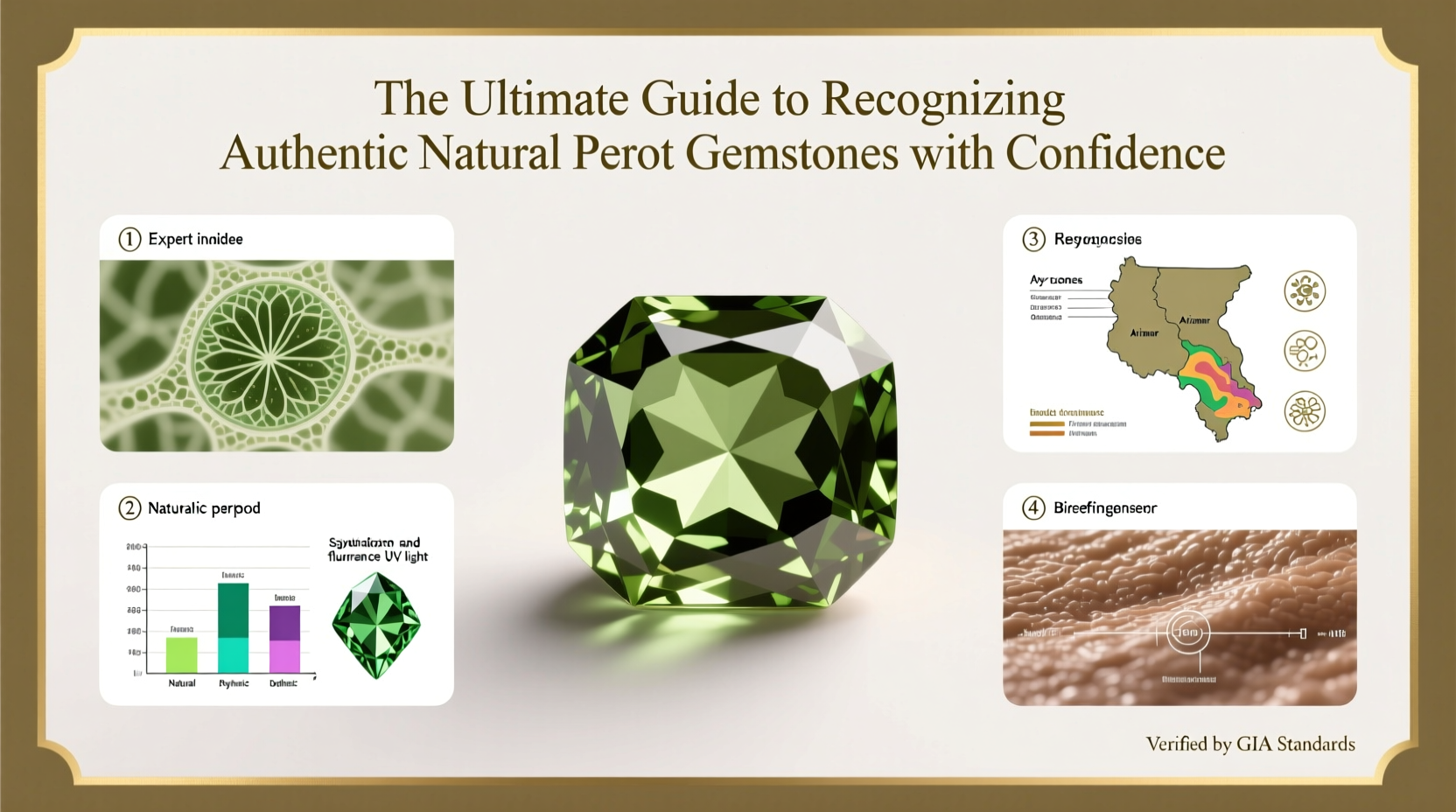
Peridot is a variety of the mineral olivine, formed deep within the Earth’s mantle and brought to the surface by volcanic activity. It is primarily mined in places like Arizona (USA), Pakistan, Myanmar, and China. Unlike many colored gemstones, peridot’s green color comes from iron, not trace impurities, making it unique among gem minerals.
The most prized peridots display a bright, spring-like green without yellow or brown undertones. High clarity and transparency are common, though natural inclusions—often described as “lily pad” inclusions—are frequently present and can actually support authenticity.
Visual Identification: Key Clues to Authenticity
The first step in verifying peridot authenticity is visual inspection under natural light. While no single feature guarantees genuineness, a combination of characteristics can strongly suggest authenticity.
- Color: Genuine peridot ranges from yellowish-green to pure green and sometimes brownish-green. Avoid stones with neon or overly saturated green tones, which are typical of synthetics like green cubic zirconia or glass imitations.
- Luster: Peridot has a vitreous (glassy) luster. It should shine brightly but not sparkle like a diamond. Overly flashy brilliance may indicate a doublet or coated stone.
- Transparency: Most natural peridots are eye-clean or have minor inclusions visible under magnification. Completely flawless large stones are suspicious.
- Double Refraction: A hallmark of peridot is strong birefringence. When viewed through a loupe, facet edges may appear doubled—a reliable sign of natural origin.
“Peridot’s double refraction is one of its most consistent identifiers. If you don’t see doubling, question whether it’s truly peridot.” — Dr. Lena Torres, GIA Gemologist
Practical Testing Methods at Home
You don’t need a lab to perform basic verification. With simple tools, you can conduct preliminary tests to assess authenticity.
- Use a 10x Loupe: Examine the stone closely. Look for internal features like rounded crystals, stress fractures, or “lily pad” inclusions—tiny circular cavities with stress halos. These are naturally occurring and difficult to replicate.
- Check for Double Refraction: Focus on the pavilion facets through the table. If lines appear doubled, it’s a strong indicator of peridot. Glass or synthetic spinel will not show this effect.
- Conduct a Heat Conductivity Test (Indirect): Press the stone to your lip or tooth. Natural peridot feels cool initially and warms slowly. Plastics and glass heat up quickly. Note: This is not definitive but helps rule out fakes.
- Observe Under Light: Rotate the stone under daylight. Authentic peridot maintains a consistent green tone. Imitations may flash yellow or brown inconsistently.
Common Imitations and How to Spot Them
Several materials mimic peridot’s appearance, but each has telltale flaws. Familiarize yourself with these look-alikes to avoid deception.
| Imitation | How to Identify | Key Differences |
|---|---|---|
| Glass | Bubbles, swirl marks, soft edges | Lacks double refraction; softer (scratches easily) |
| Synthetic Forsterite | Perfect clarity, uniform color | Rarely sold as peridot; higher birefringence than natural |
| Green Cubic Zirconia | Overly brilliant, sharp facets | Shows rainbow flashes; no inclusions |
| Peridot Doublets | Visible bonding line under magnification | Top layer is real peridot, glued to cheaper base |
Expert Verification and Certification
For high-value purchases, professional evaluation is non-negotiable. Reputable gemological laboratories such as GIA (Gemological Institute of America), AGTA (American Gem Trade Association), or IGI (International Gemological Institute) provide certification that confirms natural origin, treatment status, and quality.
A certified report typically includes:
- Confirmation of natural peridot
- Disclosure of any treatments (e.g., oiling to mask cracks)
- Measurements of refractive index and specific gravity
- Photomicrographs of inclusions
If a seller refuses to provide a certificate for a stone priced over $300, consider it a red flag.
Mini Case Study: The Tourist Trap Purchase
Sophie, a jewelry enthusiast, bought a \"natural peridot\" pendant during a vacation in a coastal market. The vendor claimed it was mined locally and priced it at $120. Excited, she wore it proudly—until a jeweler friend examined it with a loupe. The stone showed no double refraction, had perfect clarity, and exhibited air bubbles under magnification. It was confirmed as green glass. Sophie learned the hard way: without verification, even convincing stories can lead to costly mistakes.
This case underscores the importance of skepticism and due diligence, especially when buying outside established retail environments.
Buying Guide: Checklist for Confident Purchases
Before acquiring a peridot, follow this checklist to ensure authenticity:
- Inspect the stone under natural light for consistent green color with no neon tint.
- Use a 10x loupe to check for inclusions and double refraction.
- Ask for a gemological certificate from a recognized lab.
- Verify the seller’s return policy and reputation.
- Avoid deals that seem too good to be true—especially large, flawless peridots at low prices.
- Compare weight and size: Peridot has a specific gravity of ~3.3–3.4. If it feels unusually light, it might be glass.
Frequently Asked Questions
Can peridot change color over time?
Natural peridot is stable under normal conditions. However, prolonged exposure to sunlight, heat, or harsh chemicals may cause slight fading or surface damage. Store it away from direct UV light and remove during cleaning tasks.
Is all peridot treated?
No. Most natural peridot is untreated. Some cracked stones may be oiled to improve appearance, but this is uncommon. Full disclosure should accompany any treatment.
How does peridot compare to emerald or tourmaline?
Peridot has a lighter, more yellowish-green tone compared to the deep greens of emerald. It’s also less brittle than emerald. Unlike tourmaline, which can show pleochroism (multiple colors from different angles), peridot displays a consistent green hue.
Final Thoughts: Confidence Through Knowledge
Recognizing authentic natural peridot isn’t about memorizing facts—it’s about developing a discerning eye and trusting verified processes. From understanding its geological roots to mastering simple observation techniques, every step builds your confidence as a buyer and collector. Whether you’re investing in a family heirloom or treating yourself to a meaningful piece, the assurance of authenticity transforms a beautiful stone into a lasting treasure.




 浙公网安备
33010002000092号
浙公网安备
33010002000092号 浙B2-20120091-4
Comments
No comments yet. Why don't you start the discussion?