
Puffer jackets are a winter essential—lightweight, compressible, and packed with insulating power. But over time, they can lose their loft, trap odors, or develop flat spots that compromise warmth. Whether your favorite jacket has been crammed in a closet all summer or survived multiple ski seasons, restoring its puff is crucial to maintaining performance. This guide walks you through the science of down and synthetic insulation, practical restoration steps, and long-term care strategies to keep your puffer performing like new.
The Science Behind Loft and Warmth
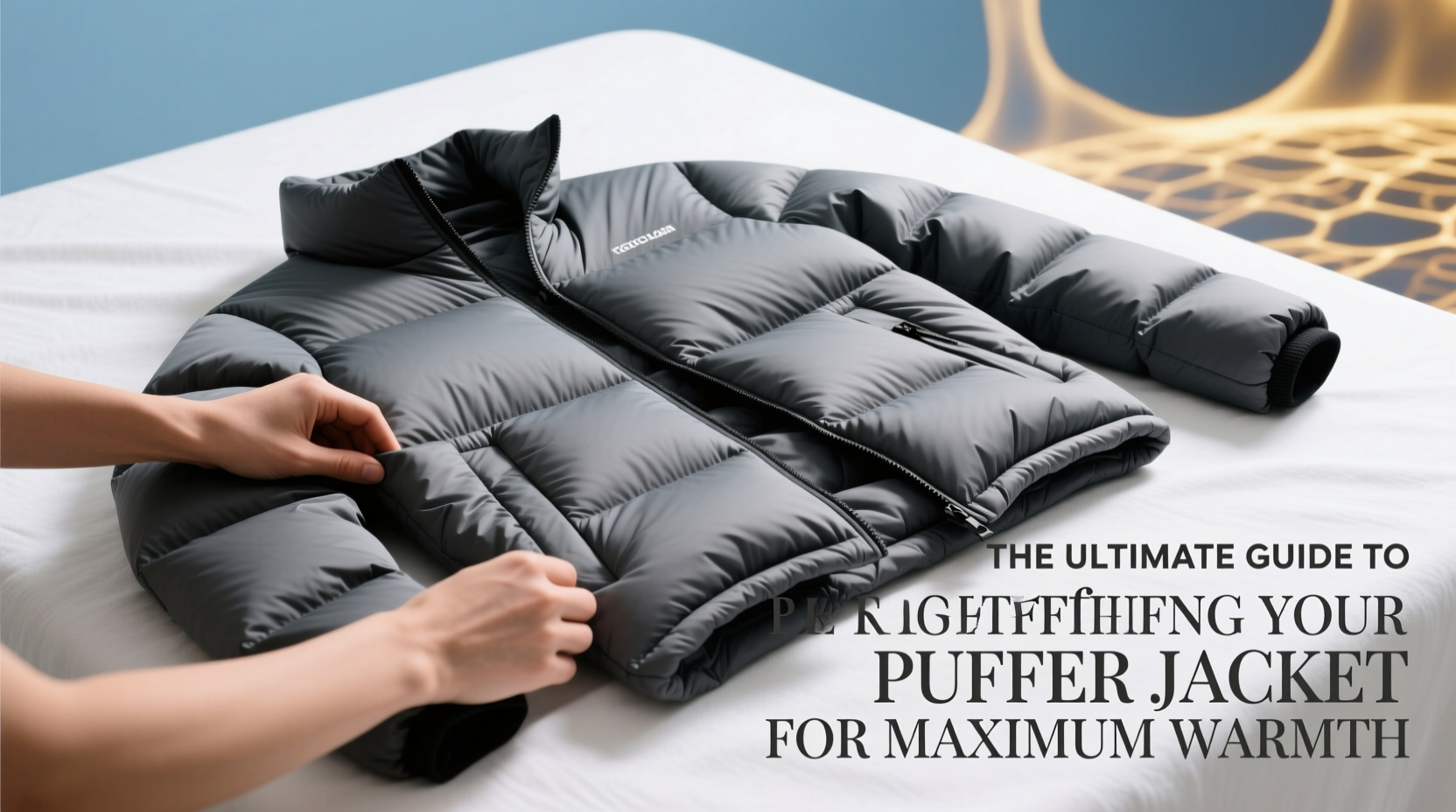
Loft—the fluffiness of a puffer jacket—is directly linked to thermal efficiency. Insulation works by trapping warm air close to the body. When down clusters or synthetic fibers collapse, they create cold spots and reduce heat retention. Down, derived from duck or goose feathers, offers superior warmth-to-weight ratio but loses effectiveness when wet or compressed. Synthetic fills, such as PrimaLoft or Thermolite, maintain insulation even in damp conditions and are easier to restore after washing.
Over time, oils from skin, environmental dirt, and moisture break down the natural oils in down clusters, causing them to clump. For synthetics, repeated compression without proper recovery leads to permanent fiber fatigue. The key to restoration lies in deep cleaning, mechanical agitation, and controlled drying.
“Proper maintenance can extend a puffer jacket’s effective life by 5–7 years. Most people don’t realize that a flat jacket isn’t dead—it just needs reactivation.” — Dr. Lena Torres, Textile Performance Researcher, Outdoor Gear Lab
Step-by-Step Guide: Restoring Your Puffer Jacket
Reviving a flattened puffer jacket requires more than a standard wash cycle. Follow this detailed process to ensure thorough cleaning and full loft recovery.
- Check the Care Label: Confirm if the jacket is machine-washable and whether it contains down or synthetic fill. Use down-specific detergent for down-filled jackets.
- Pre-Treat Stains: Apply a small amount of mild detergent mixed with water to stained areas. Gently rub with a soft cloth. Avoid bleach or fabric softeners.
- Wash With Care: Place the jacket in a front-loading washing machine (top-loaders with agitators can damage stitching). Use a technical down or synthetic cleaner on a gentle, cold-water cycle. Add two clean tennis balls or dryer balls to help separate fibers during agitation.
- Rinse Thoroughly: Run an extra rinse cycle to remove all detergent residue, which can coat fibers and inhibit loft.
- Dry Slowly and Fully: Transfer immediately to a tumble dryer on low heat. Add 2–3 clean tennis balls or wool dryer balls. Dry in 30-minute intervals, removing the jacket to manually shake and break up clumps. Total drying time may take 2–4 hours.
- Final Fluff Check: Once dry, vigorously shake the jacket outdoors. Hang it for several hours to allow fibers to fully expand. If any flat spots remain, repeat the drying process with fresh dryer balls.
Do’s and Don’ts of Puffer Jacket Care
| Do | Don’t |
|---|---|
| Use specialized detergents (e.g., Nikwax Down Wash) | Use regular laundry detergent or fabric softener |
| Wash every 3–5 wears or when visibly soiled | Wash too frequently; over-cleaning degrades fibers |
| Store loosely in a breathable cotton sack | Compress long-term in vacuum bags or stuff sacks |
| Air out after use to prevent odor buildup | Leave damp in a gym bag or car trunk |
| Use a steamer to revive minor flat spots | Iron directly on insulation panels |
Real Example: Reviving a 5-Year-Old Mountain Jacket
Sarah, a backcountry skier from Colorado, relied on her down puffer for alpine tours. After five winters, the jacket had lost most of its loft, especially around the shoulders and hood. She assumed it was beyond repair. Instead of replacing it, she followed the restoration process: washed it with Nikwax Down Cleaner, then dried it with three wool dryer balls over three cycles. Between cycles, she massaged stubborn clumps by hand. After four hours, the jacket regained 95% of its original puff. A week later, she wore it on a -10°F summit push with no cold spots. The jacket continues in rotation two winters later.
This case illustrates that age doesn’t equal obsolescence. With correct care, even heavily used puffers can be revived.
Maintenance Checklist for Long-Term Loft Preservation
- ✅ Air out after each use, especially if worn during activity
- ✅ Spot clean minor stains instead of full washes
- ✅ Wash only when necessary—typically 1–3 times per season
- ✅ Always use low heat and dryer balls during drying
- ✅ Store uncompressed in a cool, dry closet
- ✅ Perform a full restoration at the start and end of each winter season
- ✅ Reapply DWR (durable water repellent) treatment if shell fabric soaks through
Frequently Asked Questions
Can I dry clean my puffer jacket?
No. Dry cleaning uses harsh solvents that strip natural oils from down and degrade synthetic fibers. It often leaves chemical residues that attract dirt. Machine washing with technical detergent is safer and more effective.
Why won’t my jacket fully fluff after drying?
Residual moisture is the most common culprit. Even slight dampness prevents full expansion. Ensure complete dryness by extending drying time and checking seams and baffles. If fibers remain clumped, the insulation may be damaged or degraded—common in jackets older than 8–10 years.
Is it okay to store my puffer in a stuff sack?
Only for short trips. Long-term compression breaks down insulation structure. Store it loosely hanging or in a large cotton storage sack to preserve loft between seasons.
Conclusion: Restore, Maintain, Stay Warm
Your puffer jacket is an investment in comfort and protection. Its ability to keep you warm depends not just on initial quality, but on consistent care. Restoration isn’t complicated—just methodical. By understanding how insulation works, following proper washing and drying protocols, and avoiding common pitfalls, you can revive even the flattest jacket and extend its life for years.
Don’t discard a jacket because it looks tired. Give it a second life with the right technique. Not only will you save money, but you’ll also reduce textile waste and environmental impact. A well-maintained puffer performs better, lasts longer, and keeps you warmer when it matters most.




 浙公网安备
33010002000092号
浙公网安备
33010002000092号 浙B2-20120091-4
Comments
No comments yet. Why don't you start the discussion?