
Accidents happen—especially in homes with pets. When your dog has an unfortunate episode on the carpet, it’s essential to act quickly and correctly. Improper cleanup doesn’t just leave behind stains; it can result in lingering odors, bacteria growth, and even attract repeat incidents if scent markers remain. Removing dog poop from carpet requires more than a quick wipe. It demands a methodical approach that prioritizes hygiene, fabric safety, and long-term cleanliness. This guide walks you through every step, tool, and precaution needed to restore your carpet to pristine condition—without damaging fibers or risking health hazards.
Why Proper Cleanup Matters
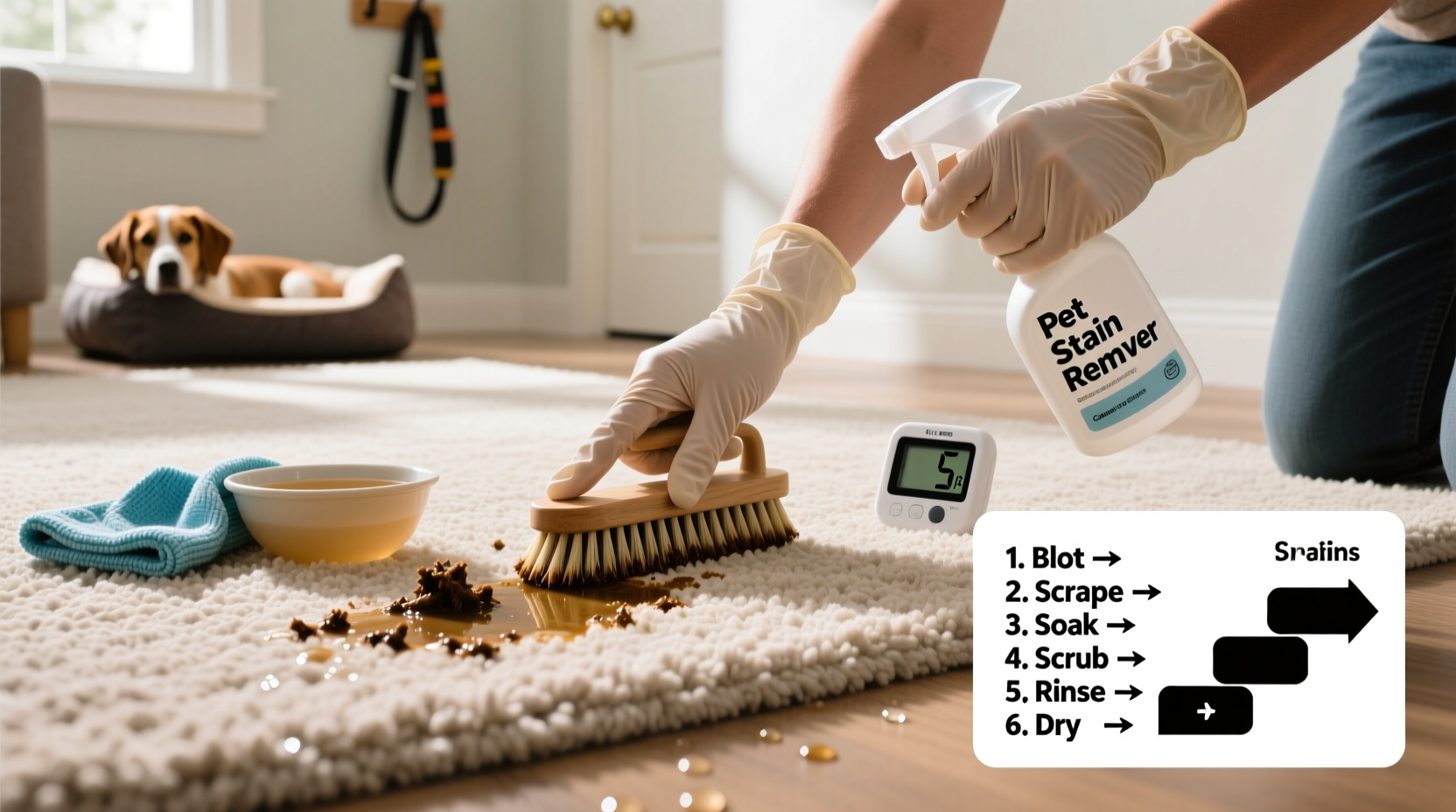
Dog feces contain bacteria such as E. coli, parasites like roundworms, and strong organic compounds that break down slowly. When left untreated, these contaminants can seep deep into carpet padding and subflooring, creating persistent smells and potential health risks—especially for children and immunocompromised individuals. Additionally, residual odor signals to dogs that the area is an acceptable bathroom spot, increasing the likelihood of future accidents.
Cleaning isn't just about appearance—it's about sanitation. A surface may look clean but still harbor microbes and volatile organic compounds responsible for foul smells. That’s why thorough removal involves more than blotting; it requires lifting solids safely, treating the stain at a molecular level, and neutralizing odors at their source.
Step-by-Step Guide to Safe and Effective Removal
Follow this detailed sequence to ensure complete and sanitary cleanup. The process is divided into phases: preparation, solid removal, pre-treatment, cleaning, and final deodorization.
- Prepare the Area: Clear the space around the mess. Keep children and other pets away. Ventilate the room by opening windows or turning on fans.
- Remove Solids Safely: Use paper towels, a plastic bag over your hand, or a disposable scraper to lift as much solid waste as possible. Avoid rubbing or pressing down, which forces material deeper into fibers.
- Blot the Area: Press dry paper towels firmly onto the spot to absorb moisture. Replace towels frequently until no more transfer occurs.
- Apply a Pre-Treatment Solution: Mix one tablespoon of dish soap (like Dawn) with two cups of warm water. Spray or dab lightly onto the stain. Let sit for 5–10 minutes to break down oils and proteins.
- Use a Carpet Cleaner or Enzyme Solution: Apply an enzymatic cleaner according to label instructions. These products contain live cultures that digest organic matter and eliminate odor-causing bacteria.
- Blot Again and Rinse: Dampen a clean cloth with cold water and gently blot the area to rinse out soapy residue. Excess soap can attract dirt later.
- Dry Thoroughly: Place a stack of dry paper towels over the spot and weigh them down with a heavy book or pan. Replace every few hours. For faster drying, use a fan or portable carpet dryer.
- Deodorize (Optional): Once fully dry, sprinkle baking soda lightly over the area. Let sit for several hours before vacuuming to neutralize any remaining odors.
“Enzymatic cleaners are critical because they target the root cause of odor—biological waste—rather than masking it.” — Dr. Linda Harper, Veterinary Microbiologist
Do’s and Don’ts of Carpet Poop Cleanup
| Do’s | Don’ts |
|---|---|
| Wear gloves and practice good hygiene | Use hot water initially—it can set proteins in the stain |
| Blot, don’t scrub or rub | Use bleach or ammonia-based cleaners—they react poorly and damage fibers |
| Use enzyme-based cleaners designed for pet messes | Ignore the padding—if soaked, it may need professional treatment or replacement |
| Vacuum after full drying to restore texture | Use scented air fresheners alone—they don’t eliminate bacteria |
| Test cleaning solutions on a hidden area first | Delay cleanup—immediate action prevents deep penetration |
Real-World Example: A Stubborn Stain Resolved
Sarah, a dog owner in Portland, discovered her Labrador had defecated on a high-traffic hallway rug. She cleaned it immediately with paper towels and a store-bought spray, but within days, her dog returned to the same spot repeatedly. Frustrated, she consulted a pet behaviorist who recommended checking for residual odor. Using a blacklight, Sarah detected invisible biological traces glowing faintly under UV light. She reapplied an enzymatic cleaner, allowed 24 hours for drying, and blocked access to the area during that time. After this second attempt, the recurrence stopped completely. The lesson? Visible cleanliness isn’t enough—complete microbial breakdown is essential.
Essential Tools and Products Checklist
To handle any incident efficiently, keep a dedicated cleanup kit ready. Here’s what should be included:
- Disposable gloves (nitrile preferred)
- Paper towels or microfiber cloths
- Plastic bags or scraper tool
- Bottled enzymatic cleaner (e.g., Nature’s Miracle, Rocco & Roxie)
- Empty spray bottle for mixing solutions
- Dish soap (fragrance-free, degreasing formula)
- Baking soda for odor absorption
- Fan or portable carpet dryer
- Trash bag for safe disposal
When to Call a Professional
While most accidents can be managed at home, some situations require expert intervention. Consider hiring a carpet cleaning service if:
- The spill soaked through to the padding or subfloor.
- The stain covers a large area (over 1 square foot).
- You notice mold-like smells or discoloration after drying.
- Your carpet is made of delicate material (wool, silk, antique weaves).
- There’s recurring odor despite multiple cleanings.
Professionals use truck-mounted extraction systems that pull up to 95% of moisture, far exceeding household vacuums. They also have access to industrial-grade sanitizers and odor-neutralizing treatments not available over the counter.
Frequently Asked Questions
Can I use vinegar to clean dog poop from carpet?
Yes, but with caution. A solution of one part white vinegar to two parts water can help disinfect and deodorize. However, vinegar alone won’t fully break down complex organic proteins. It should be used after initial cleaning and only on colorfast carpets, as acidity may affect certain dyes. Always follow with an enzymatic treatment for best results.
How long does it take for the carpet to dry completely?
Drying time varies based on humidity, airflow, and carpet thickness. Typically, it takes 6–12 hours. Speed up the process with fans, dehumidifiers, or HVAC circulation. Never walk on or replace furniture until the carpet feels completely dry to the touch—and especially underneath.
Will steam cleaning remove old poop stains and odors?
Steam cleaning can help lift older residues, but only if combined with proper pretreatment. High heat without prior enzymatic breakdown may spread odor-causing particles or set proteins further. For aged stains, apply enzyme cleaner first, wait 15 minutes, then proceed with steam extraction.
Final Thoughts and Action Steps
Cleaning dog poop from carpet isn’t glamorous, but doing it right protects your home’s hygiene, extends your flooring’s lifespan, and supports better pet behavior. Success lies in speed, technique, and the right products. By following this guide, you’re not just fixing a mess—you’re preventing future ones.
Start today by assembling a cleanup kit and storing it in an accessible location. Familiarize yourself with your carpet’s fiber type and manufacturer guidelines. Most importantly, never skip the enzyme step—this is where true sanitation begins.




 浙公网安备
33010002000092号
浙公网安备
33010002000092号 浙B2-20120091-4
Comments
No comments yet. Why don't you start the discussion?