
After your dog undergoes surgery, their comfort and safety become top priorities. Whether it's a routine spay or neuter, orthopedic repair, or abdominal procedure, improper handling during recovery can delay healing or cause complications. One of the most common yet overlooked aspects of post-surgical care is how you lift and carry your pet. Done incorrectly, it can strain incisions, disrupt internal healing, or even lead to re-injury. This comprehensive guide walks you through safe carrying techniques, timing considerations, and real-world strategies to support your dog’s full and smooth recovery.
Why Proper Carrying Technique Matters Post-Surgery
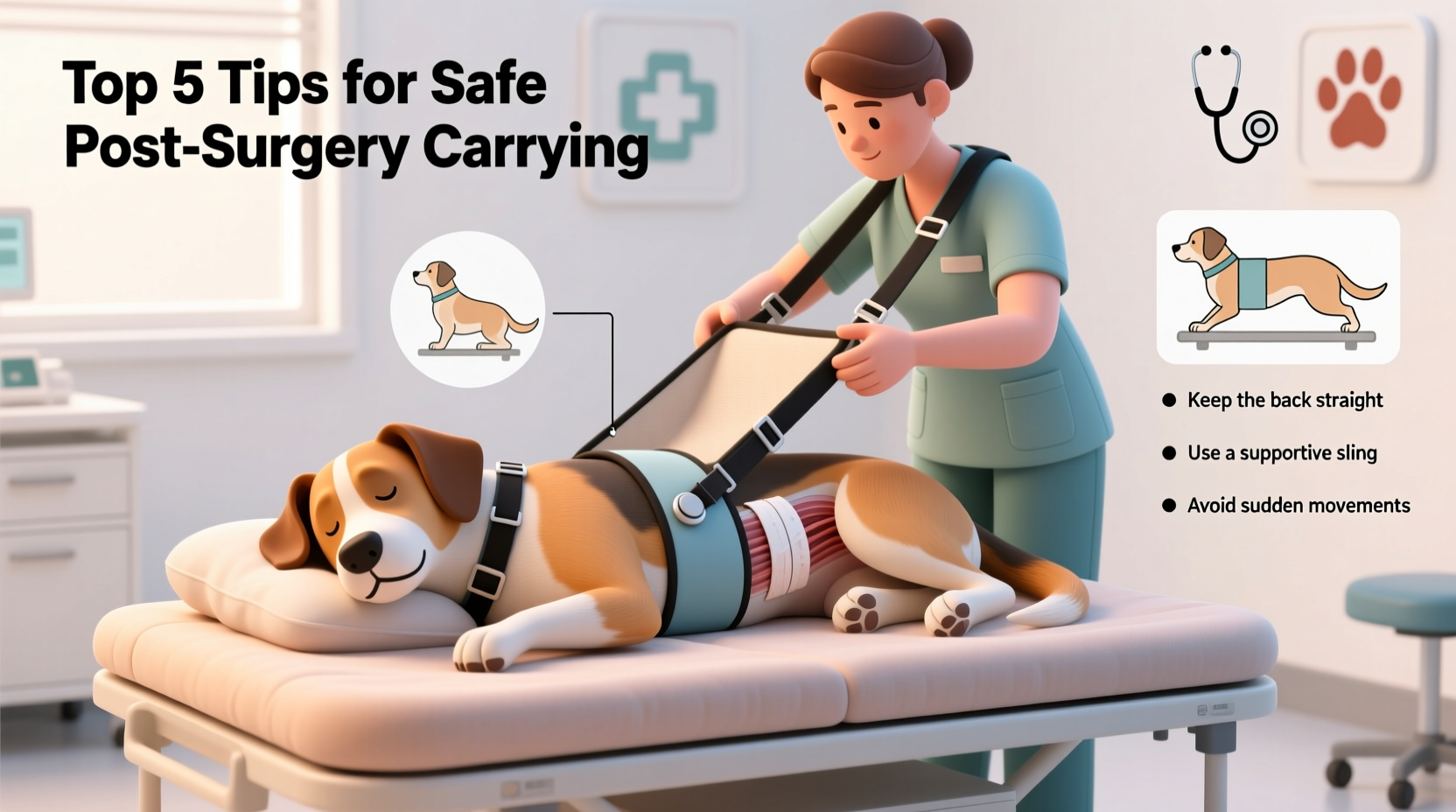
Unlike humans, dogs cannot communicate pain with precision. A jolt, twist, or pressure on the surgical site might not elicit an immediate cry but could still compromise healing. After surgery—especially involving the abdomen, spine, or limbs—the body needs stability. Sudden movements or poor lifting mechanics increase intra-abdominal pressure, which may lead to suture breakdown or herniation in extreme cases.
Veterinary experts emphasize that the first 72 hours post-surgery are critical. During this window, inflammation peaks, pain sensitivity is high, and tissues are at their weakest. How you handle your dog during this phase directly impacts long-term outcomes.
“Improper lifting is one of the leading causes of post-operative setbacks in small and medium breeds. Supporting the torso evenly and minimizing movement is non-negotiable.” — Dr. Lena Torres, DVM, Small Animal Surgeon
Step-by-Step Guide: How to Safely Carry Your Dog After Surgery
Carrying your dog isn’t just about strength—it’s about technique. Follow this step-by-step method to ensure minimal stress on the surgical area:
- Prepare yourself mentally and physically. Stand with stable footing, clear space around you, and no distractions. Remove loose rugs or obstacles.
- Approach calmly and speak softly. Your dog may be groggy or anxious. Use a soothing tone to prevent sudden movements.
- Slide one arm under the chest. Gently place your forearm behind the front legs, supporting the ribcage. Avoid pressing on the abdomen.
- Support the hindquarters with your other arm. Cup the rear legs and lower back, ensuring the pelvis and hips are fully supported—never dangle the back legs.
- Lift smoothly and keep close to your body. Use your legs, not your back. Keep the dog horizontal and aligned—no twisting or bending.
- Move slowly and set down gently. Lower into position without jerking. Place all four paws down simultaneously when possible.
When and When Not to Carry Your Dog
Not every situation requires lifting. Over-carrying can create dependency and reduce mobility needed for recovery. Use this timeline as a general guideline:
| Recovery Stage | Timeframe | Carry Recommended? | Notes |
|---|---|---|---|
| Immediate Post-Op | Days 1–3 | Yes, frequently | Use for bathroom breaks, moving between rooms, and vet visits only. |
| Early Recovery | Days 4–7 | Minimally | Allow short, leashed walks. Carry only over stairs or thresholds. |
| Moderate Healing | Days 8–14 | Rarely | Dog should bear weight normally. Carry only if limping or showing distress. |
| Near Full Recovery | Day 15+ | No (unless directed) | Follow vet clearance. Most dogs resume normal activity by now. |
This schedule assumes a standard soft-tissue surgery. Orthopedic procedures like TPLO or hip replacement may require extended restrictions—always defer to your veterinarian’s specific instructions.
Special Considerations by Surgery Type
The safest way to carry your dog depends heavily on the surgical site. Tailoring your approach reduces risk significantly.
- Abdominal Surgery (e.g., spay, tumor removal): Never allow the belly to sag. Maintain full trunk support. Avoid any upward pressure under the abdomen.
- Orthopedic Surgery (e.g., knee repair, fracture): Immobilize the affected limb. Prevent weight-bearing on the injured leg during lifts. Use a towel sling if needed.
- Spinal Surgery: Keep the spine perfectly straight. Do not bend or twist. Two-person carry may be necessary for larger dogs.
- Dental or Head Procedures: Avoid pressure on the neck or jaw. Support the head gently but do not tilt backward.
Real Example: Max’s Recovery from TPLO Surgery
Max, a 5-year-old Labrador Retriever, underwent TPLO surgery after a cruciate ligament tear. His owner, Sarah, was diligent about medication and crate rest but didn’t realize how her daily habit of “scooping” Max up by his front legs was causing discomfort. On day five, Max yelped when lifted onto the couch. A follow-up X-ray revealed slight joint misalignment due to inconsistent support.
After consulting her vet, Sarah learned to use a double-arm lift with full hindquarter support and began using a ramp for furniture access. Within days, Max’s willingness to rest improved, and he progressed steadily toward full function. The experience highlighted how seemingly minor actions can have major consequences in recovery.
Checklist: Safe Post-Op Carrying Protocol
Use this checklist each time you prepare to lift your dog:
- ✅ Confirm your dog is wearing an Elizabethan collar (if prescribed) to prevent licking.
- ✅ Check the incision site for swelling, discharge, or redness before moving.
- ✅ Clear the path of obstacles, stairs, or slippery floors.
- ✅ Position both arms correctly: one under chest, one under hips.
- ✅ Lift smoothly using leg muscles, keeping spine neutral.
- ✅ Hold close to your body and avoid turning while carrying.
- ✅ Set down gently, ensuring all paws touch the ground at once.
- ✅ Monitor behavior afterward for signs of pain or reluctance to move.
Frequently Asked Questions
Can I carry my dog like a baby after surgery?
No. Holding your dog upright or cradling them vertically increases abdominal pressure and risks opening internal sutures. Always maintain a horizontal, fully supported position.
What if my dog resists being carried?
Resistance may indicate pain or fear. Stop immediately and assess. Offer reassurance, but do not force. Contact your vet if pain behaviors persist—whining, trembling, or rapid breathing.
How do I carry a large dog safely?
For dogs over 50 lbs, consider using a lifting harness or folded blanket as a sling. Have a second person assist if possible. Never attempt to carry a large dog one-handed or over long distances.
Conclusion: Prioritize Safety, Promote Healing
Your dog’s recovery begins on the operating table—but continues in your living room, backyard, and daily routines. Every decision, including how you pick them up, contributes to their healing trajectory. By applying proper lifting techniques, respecting recovery timelines, and staying alert to warning signs, you give your pet the best chance at a complication-free return to health.




 浙公网安备
33010002000092号
浙公网安备
33010002000092号 浙B2-20120091-4
Comments
No comments yet. Why don't you start the discussion?