
Driving with a dog in the car is common, but far too many pet owners make the dangerous mistake of allowing their dogs to roam freely or using makeshift restraints like leashes clipped haphazardly to seatbelts. In a sudden stop or collision, an unrestrained dog can become a projectile—endangering both themselves and human passengers. Properly securing your dog isn’t just about comfort; it’s a critical safety issue. This guide provides actionable, expert-backed methods to keep your dog safe during car travel, focusing on effective restraint systems that go beyond simply attaching a leash to a door handle.
Why Standard Leash Use in Cars Is Dangerous
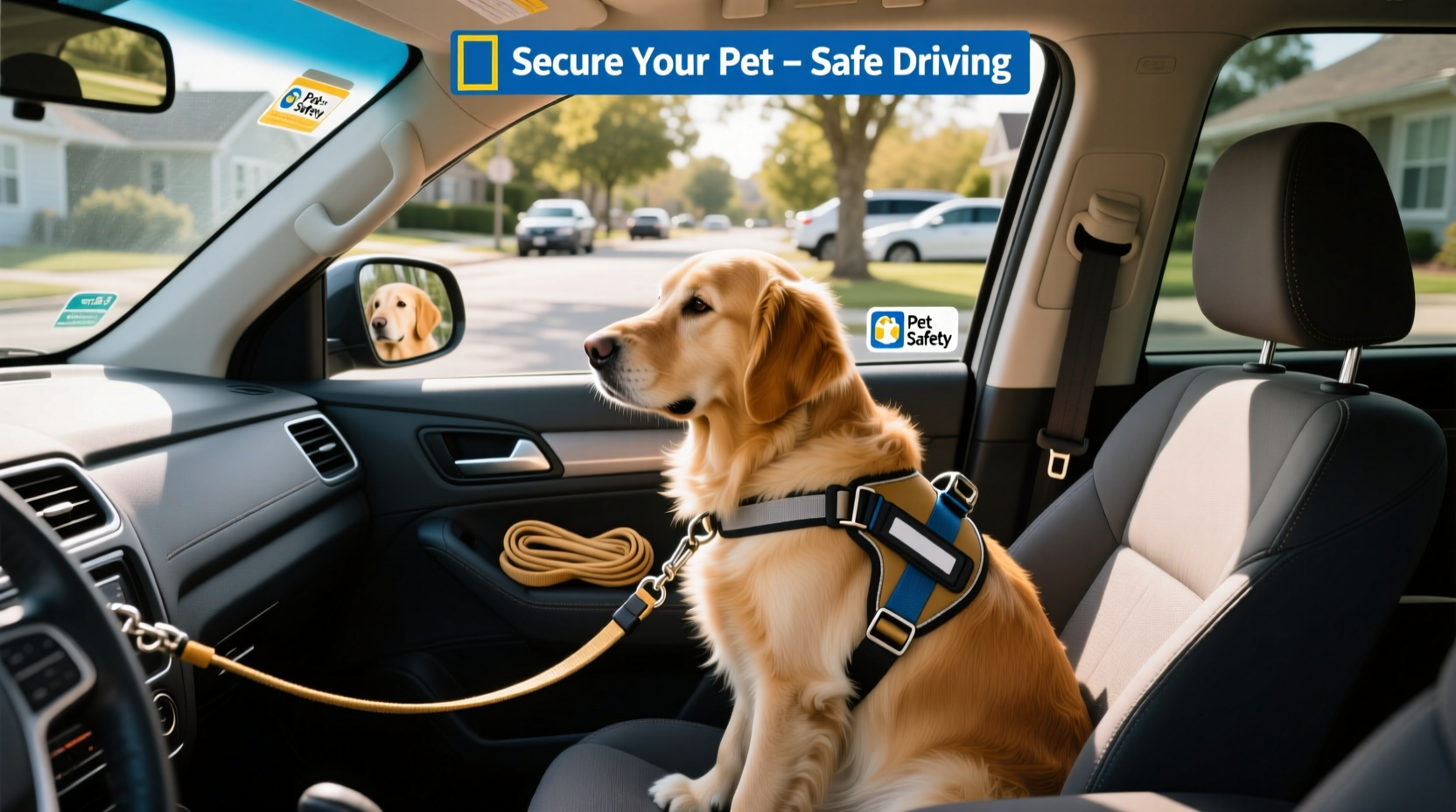
A leash alone is not designed for vehicle use. When clipped directly to a seatbelt or door latch, a standard leash offers little protection and can cause serious injury in an accident. The force of a 30 mph crash can turn a 50-pound dog into a 1,500-pound impact force. A flimsy leash will snap, or worse, allow the dog to be thrown forward, potentially injuring occupants or becoming trapped under pedals.
Additionally, unrestricted movement increases driver distraction. A dog jumping onto the console or blocking rear visibility significantly raises the risk of an accident. According to the American Veterinary Medical Association (AVMA), nearly 100,000 crashes annually involve distracted drivers interacting with unrestrained pets.
The Right Way to Secure Your Dog: Safety-Tested Solutions
Proper dog restraints for vehicles fall into three main categories: harnesses, carriers, and barriers. Each has strengths depending on your dog’s size, temperament, and travel frequency.
Dog Safety Harnesses (Crash-Tested)
Unlike regular walking harnesses, safety-rated harnesses are engineered to withstand crash forces. They attach directly to the vehicle’s seatbelt system and distribute force across the dog’s chest and back, reducing neck strain. Look for models certified by the Center for Pet Safety (CPS).
- Features to look for: Steel hardware, reinforced stitching, adjustable fit, compatibility with seatbelt buckles
- Best for: medium to large dogs who ride frequently
Vehicle-Safe Carriers
Hard-sided or soft-sided carriers can be secured with seatbelts in the back seat. Ideal for small dogs and cats, these should be crash-certified and placed upright in a stable position.
- Placement tip: Avoid placing carriers in the front passenger seat due to airbag risks.
- Ventilation: Ensure airflow without compromising structural integrity.
Rear Seat Barriers and Crates
For larger breeds, a metal or mesh barrier between the passenger and cargo area prevents access to the front seats. Pair with a secured crate anchored to tie-down points in SUVs or trucks.
“Just like children, pets need proper restraints in vehicles. A leash tied to a headrest won’t save your dog in a crash.” — Dr. Karen Becker, DVM and Animal Safety Advocate
Step-by-Step Guide: Securing Your Dog Safely in 5 Minutes
- Choose the right restraint: Select a CPS-tested harness, secured carrier, or installed barrier based on your dog’s size and behavior.
- Position your dog: Place them in the back seat—the safest location in most vehicles.
- Fit the harness properly: Adjust so two fingers fit snugly between the harness and your dog’s body. Avoid choking or chafing.
- Attach to seatbelt anchor: Connect the harness’s tether to the lower anchor point (LATCH) or seatbelt buckle. Do not loop over headrests.
- Double-check stability: Gently tug the harness to confirm it holds firm. Ensure your dog can sit and lie down comfortably but cannot reach the driver.
Common Mistakes and What to Avoid
| Mistake | Why It's Risky | Better Alternative |
|---|---|---|
| Clipping leash to a headrest or door handle | No crash support; attachment point fails easily | Use a seatbelt-tethered safety harness |
| Using only a collar for restraint | Can cause tracheal damage or slip-off | Use a chest-distributing safety harness |
| Placing dog in front seat | Airbag deployment can be fatal | Always secure in back seat or cargo area |
| Unsecured carrier | Carrier slides or tips during braking | Seatbelt the carrier in place |
Real-Life Example: A Close Call on I-95
Jamie from Virginia was driving her Labrador, Max, to a weekend trail when a car abruptly stopped ahead. She braked hard at 55 mph. Max, previously unrestrained, launched forward and struck the dashboard, yelping in pain. Jamie lost control momentarily, veering onto the shoulder. Fortunately, no one was hurt—but Max developed a mild neck sprain. After consulting her vet, she invested in a crash-tested harness. On their next trip, Max remained calm and secure even during sudden stops. “I thought he was fine loose,” Jamie said. “Now I know I was gambling with his life.”
Checklist: Pre-Drive Safety Routine
- ✅ Confirm your dog’s restraint is crash-tested and properly fitted
- ✅ Attach the harness or carrier securely to the vehicle’s seatbelt or LATCH system
- ✅ Ensure your dog cannot reach the driver or interfere with controls
- ✅ Provide water and take breaks every 2 hours on long trips
- ✅ Keep windows cracked slightly for ventilation, but not enough to allow escape
- ✅ Avoid feeding large meals right before departure to prevent motion sickness
Frequently Asked Questions
Can I use my dog’s regular walking harness in the car?
No. Most walking harnesses are not tested for crash forces and lack the structural integrity needed for vehicle safety. Only use harnesses specifically labeled as “crash-tested” or “automotive-safe.”
Is it legal to have an unrestrained dog in the car?
Laws vary by state, but several—including California, Connecticut, and Hawaii—have specific regulations requiring pets to be restrained. Even where not legally required, unrestrained pets contribute to distracted driving citations. Fines can range from $50 to $1,000 depending on jurisdiction and incident severity.
What if my dog hates being restrained?
Start with short sessions at home. Let your dog wear the harness indoors, reward with treats, and gradually introduce car time. Never force compliance—positive reinforcement builds trust. If anxiety persists, consult a trainer or veterinarian about behavioral strategies.
Final Thoughts: Responsibility Meets Love
Securing your dog in the car isn’t just about following rules—it’s an expression of care. The same love that inspires you to feed them well and take them on adventures demands that you protect them when the journey involves risk. Modern pet safety products make it easier than ever to do the right thing. Whether you’re driving across town or across states, taking five minutes to properly secure your dog could mean the difference between a minor incident and a tragedy.




 浙公网安备
33010002000092号
浙公网安备
33010002000092号 浙B2-20120091-4
Comments
No comments yet. Why don't you start the discussion?