
Delicate chain necklaces are timeless accessories that elevate any outfit with subtle elegance. However, their fine links and lightweight construction make them especially vulnerable to tangling, kinking, scratching, and breakage. Improper storage is one of the leading causes of premature wear in fine chains, often resulting in costly repairs or irreversible loss. With the right techniques and tools, you can preserve both the beauty and structural integrity of your most cherished pieces for years to come.
Why Proper Storage Matters for Delicate Chains
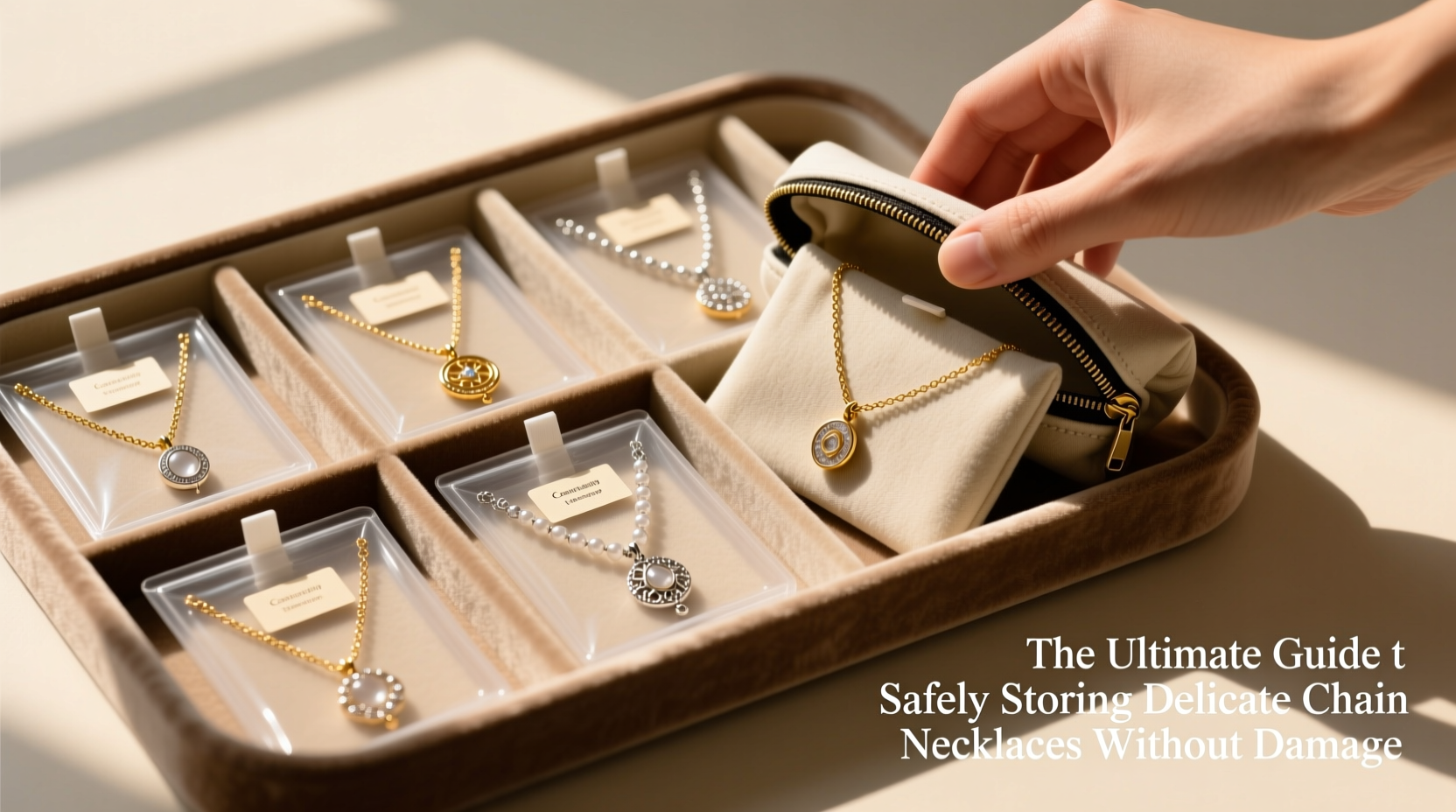
Unlike bulkier jewelry, delicate chains—such as cable, box, or snake chains—are made from thin metal wires with minimal reinforcement. Even slight pressure or friction can cause individual links to bend, stretch, or snap. When stored haphazardly, chains frequently wrap around other items, knot tightly, or rub against harder surfaces like rings or bracelets, accelerating wear.
Humidity, air pollutants, and skin oils left on unworn pieces can also contribute to tarnishing, particularly in silver or gold-plated jewelry. Without a controlled environment, oxidation sets in quickly, dulling luster and weakening metal over time.
“Fine chains are like silk threads—beautiful but fragile. How you store them determines whether they last a season or a lifetime.” — Lena Torres, Master Jeweler & Conservator at The Heritage Jewelry Archive
Best Storage Methods for Delicate Chain Necklaces
The ideal storage solution isolates each necklace, limits movement, and protects against environmental factors. Here are the most effective methods used by collectors and professionals:
Hanging Jewelry Organizers with Individual Hooks
Wall-mounted or door-hanging organizers with soft-lined hooks keep chains fully extended, reducing the chance of tangling. Choose models with fabric-covered or rubber-coated hooks to prevent metal abrasion. Hang one necklace per hook, ensuring no contact between pieces.
Jewelry Rolls with Compartmentalized Pockets
Leather or fabric rolls designed for travel offer padded, zippered sections that hold each necklace flat and separated. These are excellent for protecting chains during transit while maintaining organization at home.
Dedicated Necklace Stands or Trees
Display stands made from wood, acrylic, or ceramic provide an elegant way to store frequently worn chains. Opt for smooth, rounded arms to avoid snagging. Limit use to one necklace per arm and avoid overcrowding.
Anti-Tarnish Pouches with Drawstrings
Individually wrapping each chain in an anti-tarnish cloth bag (often treated with tarnish-inhibiting compounds) offers dual protection against moisture and friction. These compact pouches are perfect for drawer storage.
Compartmentalized Jewelry Boxes with Lids
Choose boxes with velvet-lined trays and removable dividers. Arrange chains in straight lines or gentle curves within separate cells. A secure lid prevents dust accumulation and accidental compression.
Step-by-Step Guide to Preparing Necklaces for Storage
Proper preparation ensures that your chains go into storage clean, dry, and ready for long-term preservation. Follow this routine after every wear:
- Remove Gently: Unclasp the necklace carefully, holding both ends to avoid stretching.
- Clean Lightly: Wipe with a soft, lint-free polishing cloth to remove oils and residue. For deeper cleaning, use a mild soapy water bath (only if the metal is solid gold, platinum, or stainless steel).
- Dry Thoroughly: Pat dry with a clean cloth and let air-dry completely before storing—moisture accelerates tarnish.
- Inspect for Damage: Check for weak links, fraying, or loose clasps. Address repairs promptly to prevent worsening.
- Store Separately: Place each chain in its designated compartment, pouch, or hook, ensuring no contact with other jewelry.
Do’s and Don’ts of Chain Necklace Storage
| Do | Don’t |
|---|---|
| Store chains flat or hanging straight | Crumple chains into a pile or shared container |
| Use anti-tarnish strips or cloths | Store near humid areas like bathrooms |
| Label compartments for easy identification | Leave perfumes, hairsprays, or lotions on before storage |
| Check stored pieces quarterly for issues | Wrap chains in tissue paper—it tears easily and offers no protection |
A Real-Life Example: Preventing a Costly Tangle Disaster
Sophie, a vintage jewelry collector in Portland, once stored three heirloom gold chains—a 14k Figaro, a Victorian wheat chain, and a modern curb link—in a single satin pouch. After two weeks, she discovered they had fused into a dense knot. Attempts to untangle them at home only worsened the kinks. She eventually took the set to a specialist jeweler, who spent four hours using micro-tools and magnification to separate them. Two chains required re-soldering, costing $180 in repairs.
After that experience, Sophie invested in a vertical jewelry organizer with padded hooks. She now stores each piece separately and inspects them monthly. Over the past three years, she hasn’t experienced a single tangle or breakage. “I learned the hard way,” she says. “Five extra seconds of careful storage saved me hundreds and preserved family history.”
Frequently Asked Questions
Can I store gold and silver chains together?
No. Gold is softer than silver and can be scratched by harder metals. Additionally, silver tarnishes more easily and may transfer sulfur compounds to gold, causing discoloration. Always separate by metal type.
How often should I clean my delicate chains?
Light wiping after each wear is ideal. A deeper cleaning—using warm water, mild dish soap, and a soft brush—should be done every 4–6 weeks for regularly worn pieces. Avoid ultrasonic cleaners unless approved by a jeweler for your specific chain type.
Are magnetic clasps safe for long-term storage?
Magnetic clasps are convenient but not ideal for very delicate chains. The magnetic force can cause unintended movement and rubbing over time. If your necklace has a magnetic clasp, ensure it’s fully secured and isolated from other metal objects during storage.
Essential Checklist for Safe Necklace Storage
- ✅ Clean and dry each chain after wearing
- ✅ Inspect for damaged links or clasps
- ✅ Store one necklace per compartment, hook, or pouch
- ✅ Use anti-tarnish materials in storage containers
- ✅ Keep away from humidity, heat, and direct sunlight
- ✅ Avoid contact with cosmetics, perfumes, and lotions
- ✅ Rotate and inspect stored pieces every few months
Final Thoughts: Small Habits, Lasting Results
Protecting delicate chain necklaces doesn’t require expensive equipment or complex routines. It simply demands consistency and attention to detail. By treating each piece with care—from removal to storage—you preserve not just its appearance, but its sentimental and monetary value. Whether it’s a gift from a loved one or a personal milestone reward, every delicate chain deserves a storage solution that honors its craftsmanship.




 浙公网安备
33010002000092号
浙公网安备
33010002000092号 浙B2-20120091-4
Comments
No comments yet. Why don't you start the discussion?