
Designer earrings are more than accessories—they’re investments. Whether you own vintage chandeliers from a Parisian atelier or minimalist studs from a luxury brand, their value lies not only in price but in craftsmanship and emotional significance. Yet, without proper storage, even the most exquisite pair can lose luster, warp, or go missing entirely. The good news: with intentional habits and the right tools, preserving their beauty is both simple and sustainable.
Why Proper Storage Matters for Designer Earrings
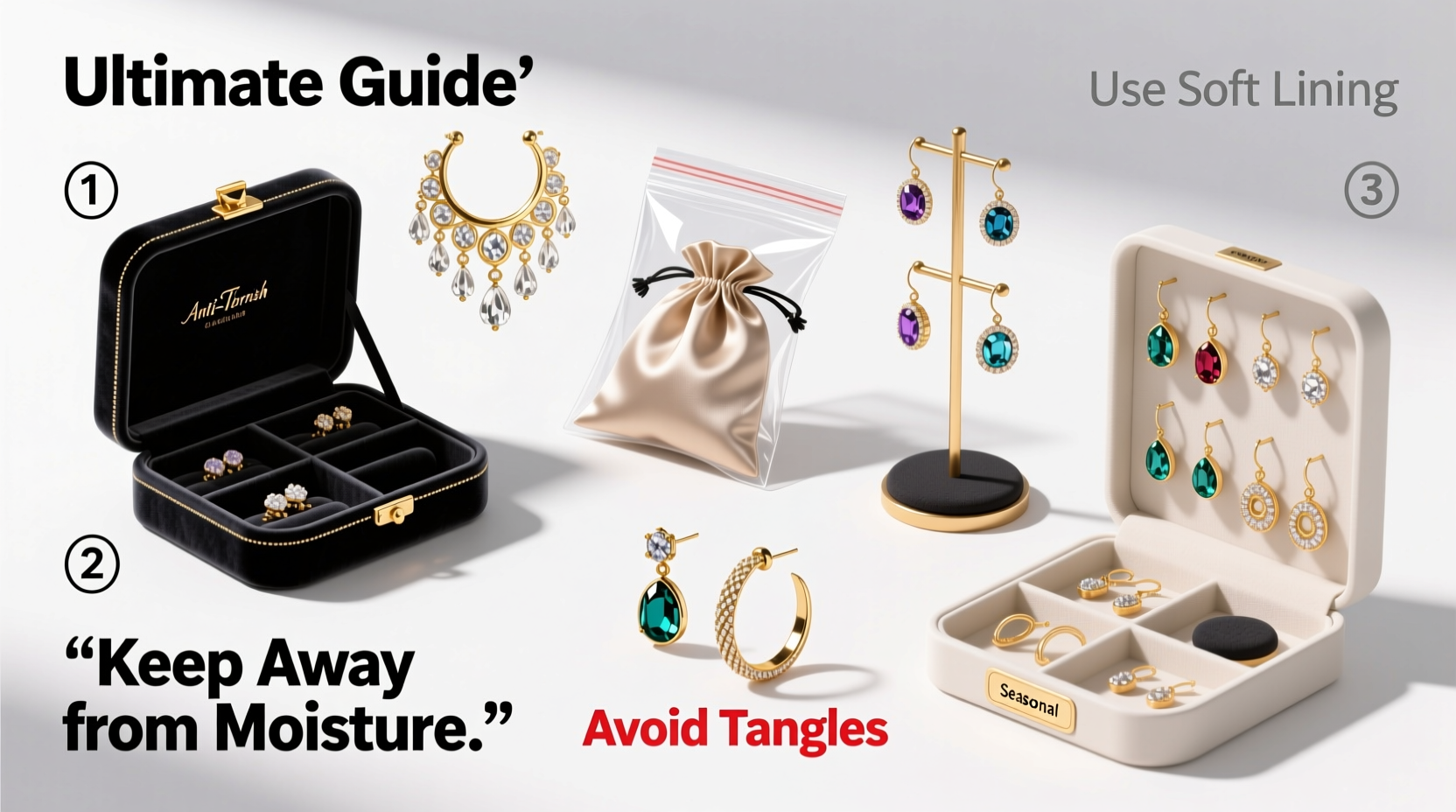
Delicate designer earrings often feature fine metals, fragile gemstones, intricate settings, and hand-finished details that react poorly to environmental stressors. Exposure to air, moisture, friction, and pressure can lead to tarnishing, scratching, bending, or breakage. Unlike sturdier jewelry like bracelets or rings, earrings are small, asymmetrical, and prone to getting lost or mismatched. Their size also makes them vulnerable to being crushed in cluttered drawers or damaged by contact with other pieces.
Improper storage doesn’t just affect appearance—it diminishes resale value and sentimental worth. A 2023 survey by the Jewelry Retailers Association found that nearly 60% of high-end jewelry owners reported visible wear within two years due to poor storage practices. This isn’t inevitable. With thoughtful organization, your earrings can remain pristine for decades.
“Proper storage is the silent guardian of jewelry longevity. For earrings, it’s about minimizing movement, maximizing airflow, and eliminating contact.” — Lena Moreau, Luxury Jewelry Conservator, Gemological Institute of America
The Right Materials: What Your Earring Storage Should Be Made Of
Not all storage solutions are created equal. The material of your earring case or tray plays a crucial role in protection. Below is a breakdown of recommended and discouraged materials:
| Material | Recommended? | Why |
|---|---|---|
| Felt-lined wood boxes | Yes | Soft surface prevents scratches; wood regulates humidity naturally |
| Satin or velvet inserts | Yes | Cushions delicate stones and prevents metal abrasion |
| Acrylic display cases | Yes (with caution) | Good visibility and dust protection, but ensure no sharp edges |
| Plastic organizers | No | Can contain PVC, which emits gases that tarnish silver and gold over time |
| Cardboard boxes | No | Absorbs moisture and breaks down, potentially damaging finishes |
| Unlined metal tins | No | Metal-on-metal contact causes scratches and accelerates oxidation |
Step-by-Step Guide to Organizing Your Earring Collection
Organization prevents chaos—and damage. Follow this six-step process to store your earrings safely and accessibly:
- Clean each pair before storing. Use a microfiber cloth to gently wipe metal surfaces. For gemstones, dampen the cloth slightly with distilled water. Never immerse earrings with glued elements (like some pearls or resins).
- Inspect for loose stones or weak posts. Repair any issues before storage. A loose stone in a crowded box can fall out or scratch other pieces.
- Group by type and fragility. Separate studs, hoops, dangles, and clip-ons. Store the most delicate items (e.g., enamel, filigree, or beaded designs) separately from heavier or sharper pieces.
- Use individual compartments. Choose a case with divided slots or soft pouches. If your earrings have matching backs, keep them attached or place backs in labeled bags to avoid loss.
- Store vertically when possible. For long dangle earrings, use a hanging organizer or insert foam with vertical slits to prevent bending.
- Label and rotate. Label sections by occasion (e.g., “Evening,” “Daily Wear”) and rotate earrings monthly to check condition and prevent long-term compression.
Common Mistakes That Damage Delicate Earrings
Even well-meaning owners make errors that compromise their jewelry. Avoid these pitfalls:
- Tossing earrings into a shared jewelry dish. Contact with other metals causes micro-scratches and accelerates tarnishing.
- Leaving earrings in bathrooms. Humidity from showers promotes oxidation, especially in silver and rose gold.
- Using earring cards or paper backing long-term. Paper yellows and becomes brittle; adhesive can degrade and leave residue.
- Storing earrings in direct sunlight. UV rays fade colored enamels and weaken adhesives used in some designer pieces.
- Ignoring climate conditions. Basements and attics experience temperature swings that expand and contract metal, loosening settings over time.
“I once restored a pair of $8,000 chandelier earrings that had been stored in a plastic bag in a bathroom cabinet. The humidity caused the silver plating to corrode and the silk threads to rot. Most damage was irreversible.” — Diego Reyes, Fine Jewelry Restorer, New York City
Mini Case Study: How One Collector Saved Her Heirloom Earrings
Sophia K., a collector from Chicago, inherited a set of 1950s Cartier-inspired drop earrings featuring emerald-cut cubic zirconias and milgrain detailing. She initially stored them in a velvet pouch inside her dresser drawer. After noticing one stone had become loose, she investigated further and discovered minor tarnishing on the white gold-plated posts.
She reorganized her collection using a cedar-lined jewelry box with individual felt pockets. She added silica gel packs to absorb moisture and began cleaning the earrings with a professional jewelry polishing cloth every three months. Two years later, the earrings show no signs of deterioration and were recently appraised at 15% above initial value due to their exceptional condition.
Her key insight? “I didn’t realize how much movement mattered. Just sliding around in a pouch caused more wear than wearing them occasionally.”
Essential Checklist for Safe Earring Storage
Keep this checklist handy when organizing or reviewing your current system:
- ✅ Clean earrings before placing in storage
- ✅ Use non-PVC, non-reactive materials (felt, satin, wood, acrylic)
- ✅ Store in a cool, dry, dark place (not the bathroom or near windows)
- ✅ Keep pairs together with secure backs or in labeled pouches
- ✅ Avoid stacking or overcrowding compartments
- ✅ Inspect every 4–6 weeks for damage or tarnish
- ✅ Include desiccants in enclosed cases to control humidity
- ✅ Remove earrings before applying perfume, lotion, or hairspray
Frequently Asked Questions
Can I store gold and silver earrings together?
It’s best to separate them. While contact won’t immediately damage either metal, silver tarnishes faster when exposed to compounds released by other metals. Over time, this can cause discoloration. Store them in different compartments or use anti-tarnish strips between layers.
How do I store clip-on earrings without damaging the mechanism?
Store clip-ons in open positions to relieve spring tension. Place them in wide, shallow compartments lined with soft fabric. Avoid pressing anything on top of them, as compressed springs lose elasticity and grip.
Are magnetic storage boards safe for delicate earrings?
Generally not recommended. Magnetic fields don’t harm most materials, but the force required to attach and detach earrings can bend thin wires or loosen soldered joints. Additionally, repeated pulling increases wear on delicate components.
Protect Your Investment, Preserve Your Style
Your designer earrings reflect taste, personality, and sometimes, generational legacy. Treating them with care during storage is not obsessive—it’s essential. The habits you build today determine how beautifully they age. From choosing inert materials to implementing regular inspections, each step reinforces their resilience and radiance.




 浙公网安备
33010002000092号
浙公网安备
33010002000092号 浙B2-20120091-4
Comments
No comments yet. Why don't you start the discussion?