
Mini Bluetooth speakers are compact, portable, and powerful—but their durability depends heavily on how they’re treated when not in use. Many users overlook the importance of proper storage, assuming these rugged devices can withstand any environment. In reality, exposure to moisture, extreme temperatures, dust, and physical stress during storage can degrade battery life, damage internal components, and diminish audio quality over time. Taking a few deliberate steps to store your speaker correctly ensures it remains reliable, performs optimally, and lasts significantly longer.
Why Proper Storage Matters More Than You Think
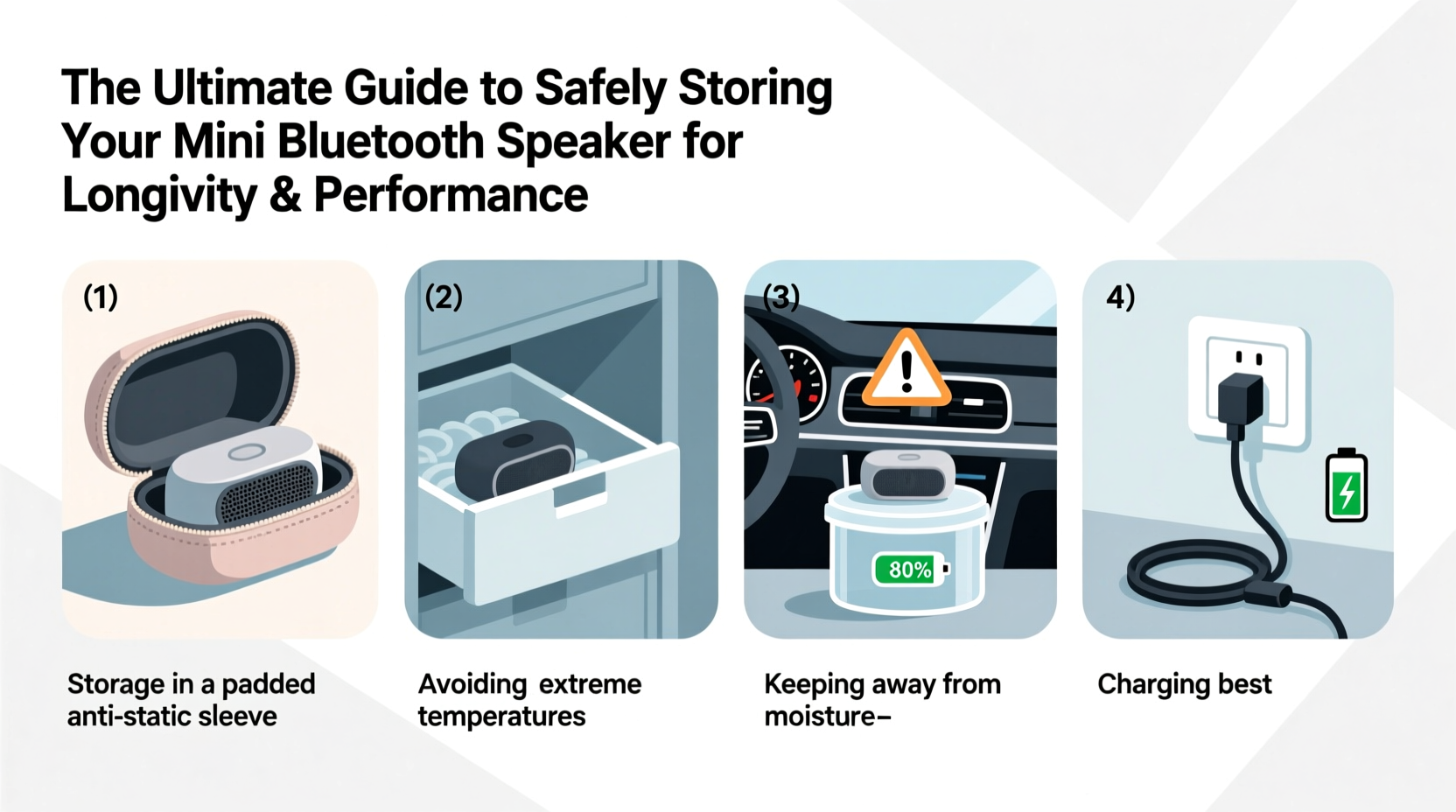
Despite their small size, mini Bluetooth speakers contain sensitive electronics: lithium-ion batteries, microphones, drivers, and circuit boards—all vulnerable to environmental factors. Unlike larger audio systems that stay in controlled environments, portable speakers often travel between cars, beaches, backpacks, and damp bathrooms. When not actively used, improper storage compounds these risks.
For example, leaving a speaker in a hot car trunk for weeks can permanently reduce battery capacity. Storing it in a humid basement may lead to corrosion on connectors or internal condensation. Even tightly packing it with keys or cables in a drawer can scratch the casing or press buttons unintentionally, draining power.
“Up to 60% of premature speaker failures stem from poor storage habits—not manufacturing defects.” — Dr. Lin Zhao, Consumer Electronics Durability Researcher at MIT Media Lab
The good news? Most of these issues are preventable with consistent, informed care.
Step-by-Step Guide to Safe Speaker Storage
Follow this five-step process every time you prepare your speaker for storage—whether for a week or several months.
- Power down completely. Don’t just disconnect; hold the power button until the LED turns off. Some models enter standby mode instead of shutting down, which slowly drains the battery.
- Clean the exterior gently. Use a dry or slightly damp microfiber cloth to wipe away dirt, sweat, or sand. Pay attention to speaker grilles and charging ports where debris accumulates.
- Charge to optimal level (50–70%). Lithium-ion batteries degrade fastest when stored fully charged or completely drained. Aim for around 60% before long-term storage.
- Seal in a protective case or breathable pouch. Avoid plastic bags that trap moisture. A padded neoprene sleeve or fabric-lined box works best.
- Store in a stable environment. Choose a location with consistent temperature (15–25°C / 59–77°F), low humidity, and no direct sunlight.
Do’s and Don’ts of Speaker Storage
| Do | Don’t |
|---|---|
| Store in a cool, dry place like a closet shelf | Leave in a car, garage, or attic |
| Use a soft pouch or original packaging | Toss loosely into a bag with sharp objects |
| Check on it every 4–6 weeks if unused | Forget about it for months without inspection |
| Keep firmware updated before storage | Store with outdated software prone to bugs |
| Label storage container if multiple devices | Mix speakers together without protection |
A Real-World Example: How One User Extended Speaker Life by 3 Years
Sophie, a hiking guide based in Colorado, uses her mini Bluetooth speaker daily during trail tours. After two years, she noticed reduced battery life and distorted bass. Instead of replacing it, she consulted a repair technician who pointed to inconsistent storage: the speaker spent nights in her damp tent, was often left fully charged, and lacked a protective case.
She implemented a new routine: after each trip, she powered down the device, wiped it clean, charged it to 60%, placed it in a ventilated mesh pouch, and stored it in a climate-controlled cabinet at home. She also began recharging it to 50% every six weeks during winter downtime.
Three years later, the speaker still delivers clear audio and holds 85% of its original battery capacity—far exceeding the typical 2-year decline seen in similar models under casual care.
Essential Checklist for Long-Term Speaker Preservation
- ✅ Power off completely (not just disconnected)
- ✅ Wipe down with a lint-free cloth
- ✅ Charge to 50–70% before extended storage
- ✅ Remove accessories (straps, stands) if applicable
- ✅ Place in a padded, breathable case or original box
- ✅ Store in a temperature-stable, dry area
- ✅ Avoid stacking heavy items on top
- ✅ Recharge to 50% every 2–3 months if unused
- ✅ Update firmware before long breaks
- ✅ Inspect for wear or swelling before reuse
Frequently Asked Questions
Can I store my Bluetooth speaker in the fridge to keep it cool?
No. While cool temperatures help, refrigerators introduce high humidity and drastic temperature shifts when removing the device. Condensation can form inside the speaker, leading to short circuits or corrosion. Stick to room-temperature indoor storage instead.
Is it safe to leave my speaker plugged in all the time?
No. Continuous charging stresses the battery and accelerates degradation. Once charged to 100%, unplug it. For storage, charge only to 60% and disconnect. Modern speakers have safeguards, but prolonged overcharging still reduces long-term battery health.
What should I do if my speaker gets wet before storage?
Never store a wet speaker. Turn it off immediately, dry the exterior with a towel, and let it air-dry in a warm (not hot) ventilated area for at least 24–48 hours. Avoid using hairdryers, as heat can damage seals and components. Only store once fully dry.
Final Thoughts: Small Habits, Lasting Results
Your mini Bluetooth speaker is designed for adventure, but that doesn’t mean it should endure neglect. The difference between a device that lasts two years versus five often comes down to what happens when it’s turned off. By treating storage as an essential part of maintenance—not an afterthought—you preserve both function and value.
These practices don’t require extra time or cost. They simply ask for consistency: powering down properly, wiping it clean, charging wisely, and choosing the right spot to rest. Over time, these actions compound into remarkable longevity and uninterrupted performance.




 浙公网安备
33010002000092号
浙公网安备
33010002000092号 浙B2-20120091-4
Comments
No comments yet. Why don't you start the discussion?