
A well-chosen leather handbag isn’t just an accessory—it’s an investment. Unlike fast-fashion alternatives that fray or crack within months, a truly high-quality leather bag can age gracefully, becoming more beautiful with time. Yet, with countless brands and price points flooding the market, how do you distinguish a lasting piece from a fleeting trend? The answer lies in understanding materials, construction, design intent, and long-term care. This guide walks through every critical factor to help you select a leather handbag built to endure both style shifts and daily wear.
Understand the Types of Leather and Their Longevity
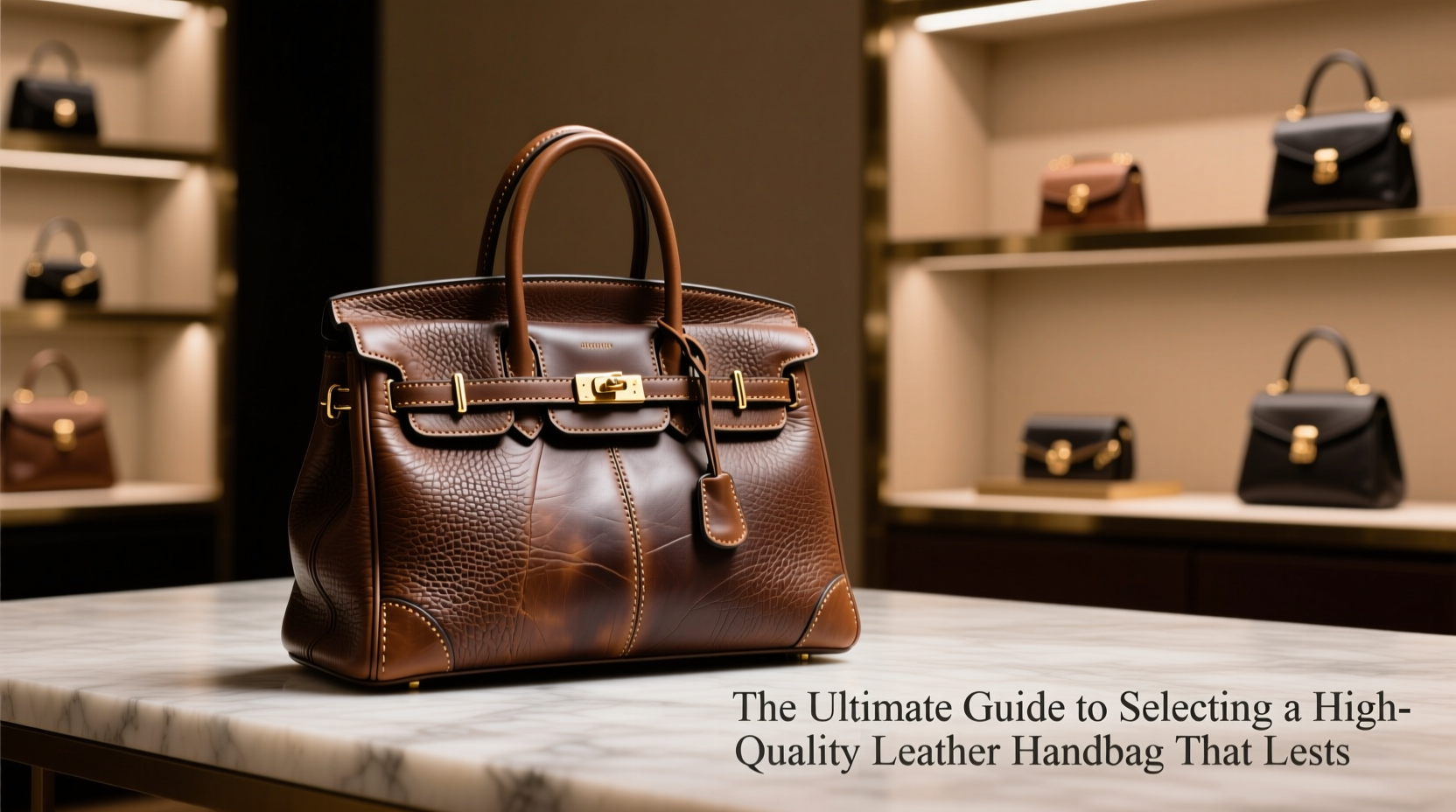
Not all leather is created equal. The grade, tanning method, and source animal significantly impact durability, texture, and aging characteristics. Knowing the differences ensures you’re paying for quality, not just branding.
- Full-Grain Leather: The highest quality available. It uses the entire top layer of hide, retaining natural grain and fibers. Resistant to tearing and develops a rich patina over time. Found in luxury and heritage brands like Filson or Lo & Sons.
- Top-Grain Leather: Slightly lower than full-grain, as it’s sanded to remove imperfections and often coated. More uniform in appearance but less breathable and less durable over decades.
- Corrected-Grain Leather: Heavily processed, with artificial grain pressed into the surface. Common in mid-range bags; shows wear faster and lacks depth in aging.
- Suede and Nubuck: Made from the underside (suede) or lightly sanded top layer (nubuck). Soft and stylish but highly susceptible to water damage and stains—best for occasional use.
Inspect Construction and Craftsmanship Details
Even the finest leather won’t last if the construction is poor. Handbags should be assembled with precision, using techniques designed for strength and longevity.
Stitching is one of the most telling indicators. Look for double or saddle stitching—where two parallel threads interlock—common in high-end bags. Unlike single stitching, which unravels if one thread breaks, saddle stitching holds even under stress. A good benchmark: 7–9 stitches per inch indicates careful handwork.
Lining matters too. Cheap polyester linings tear easily and trap moisture. Opt for cotton twill, canvas, or leather-lined interiors, which breathe better and resist fraying. Also, check seam alignment: misaligned panels or puckering suggest rushed production.
“Bag longevity starts at the seams. If the stitching looks uneven or loose, the structure will fail long before the leather wears out.” — Marcus Reed, Artisan Leatherworker
Hardware Quality: Small Components, Big Impact
Zippers, clasps, and buckles endure constant friction. Inferior metal plating wears off quickly, revealing base metals that tarnish or rust. To avoid this, examine the weight and finish of the hardware.
High-quality bags use solid brass, stainless steel, or aluminum components. They feel substantial in hand—not hollow or overly light. Test zippers: they should glide smoothly without catching. Brands like YKK are trusted for reliability, though some luxury houses use custom-developed mechanisms.
| Hardware Type | Pros | Cons |
|---|---|---|
| Brass | Durable, ages beautifully, corrosion-resistant | Can tarnish if untreated; heavier than alternatives |
| Stainless Steel | Lightweight, rust-proof, modern finish | Less warm aesthetic; can scratch visibly |
| Plated Zinc Alloy | Inexpensive, easy to mold into shapes | Prone to chipping and oxidation over time |
The Shape and Structure: Function Meets Durability
A bag’s silhouette influences its lifespan. Structured designs with internal frames or stiffened bases maintain shape and distribute weight evenly, reducing strain on straps and seams. Soft, slouchy styles may look relaxed but are more prone to sagging, especially when overstuffed.
Straps and handles must match intended use. Thin leather straps may break under heavy loads. For everyday carry, look for reinforced crossbody straps or dual stitching at stress points. Detachable straps offer versatility but ensure attachment hardware (D-rings, O-rings) is securely riveted, not merely stitched.
Consider interior organization. While minimalism is appealing, a few smart compartments reduce clutter and prevent sharp objects from scuffing the lining. However, excessive pockets add complexity and potential failure points.
Real Example: The Commuter’s Dilemma
Sophia, a graphic designer in Chicago, bought a sleek Italian tote marketed as “premium leather” for $500. Within eight months, the bottom corners cracked, the zipper pull broke, and the shoulder strap detached. Upon inspection, she realized the leather was corrected-grain, the stitching was single-threaded, and the base lacked reinforcement. She replaced it with a full-grain, saddle-stitched bag from a smaller atelier, paying slightly more—but three years later, it still performs flawlessly, developing a honey-toned patina she now treasures.
Step-by-Step Guide to Evaluating a Leather Handbag
Before purchasing, follow this practical checklist to assess true quality:
- Touch the leather: It should feel supple yet firm, with natural grain and slight variation in color.
- Check the edges: Painted or sealed edges should be smooth, even, and not peeling.
- Inspect the inside: Lining should be tightly sewn, with no loose threads or gaps.
- Test the closure: Zippers, snaps, or magnetic clasps should operate smoothly and hold securely.
- Examine the bottom: Look for feet or a rigid base to prevent abrasion when placed on surfaces.
- Feel the weight: A heavier bag isn’t always better, but extreme lightness may indicate thin leather or hollow hardware.
- Ask about sourcing: Reputable brands disclose leather origin and tanning methods—avoid those that don’t.
Do’s and Don’ts at a Glance
| Do | Don't |
|---|---|
| Choose full-grain or top-grain leather from reputable tanneries | Assume “genuine leather” means high quality—it’s a legal minimum standard |
| Look for reinforced stress points (straps, corners) | Overstuff your bag regularly; it strains seams and distorts shape |
| Opt for replaceable hardware and modular parts | Ignore care instructions—conditioning is essential for longevity |
Frequently Asked Questions
How can I tell if a leather bag is hand-stitched?
Hand-stitching often shows slight irregularities in stitch spacing and uses waxed thread. Machine stitching is perfectly uniform. Some brands advertise “hand-finished” details—ask for specifics if craftsmanship is a priority.
Does price always reflect quality?
Not necessarily. While extremely low prices often indicate compromised materials, some premium brands charge heavily for logos rather than construction. Research independent reviews and focus on tangible quality markers instead of labels.
How often should I condition my leather bag?
Twice a year is sufficient for most climates. In dry or humid environments, consider every 3–4 months. Use a pH-balanced conditioner suited to your leather type—never apply oils to suede or nubuck.
Final Thoughts: Choose Well, Carry Longer
Selecting a high-quality leather handbag isn’t about chasing trends or brand prestige. It’s about making a deliberate choice for craftsmanship, material integrity, and timeless design. When you invest in a bag built to last, you’re not just buying an accessory—you’re acquiring a companion for years of daily life. It will carry your essentials, adapt to your rhythm, and evolve in character, telling a story of where it’s been.
The next time you stand in a store or browse online, pause. Run your hands over the leather, inspect the stitching, test the zipper. Ask questions. Demand transparency. Your future self will thank you when, years from now, your bag still turns heads—not because it’s new, but because it’s become uniquely yours.




 浙公网安备
33010002000092号
浙公网安备
33010002000092号 浙B2-20120091-4
Comments
No comments yet. Why don't you start the discussion?