
Choosing the right pillowcase is about more than aesthetics—it directly affects your sleep quality, skin health, and long-term bedding investment. While many shoppers focus on thread count as a measure of luxury, the reality is far more nuanced. A high number doesn’t always mean better quality. Understanding how thread count interacts with fiber type, weave, and finishing processes helps you make informed decisions that balance comfort, breathability, and longevity.
Understanding Thread Count: What It Really Means
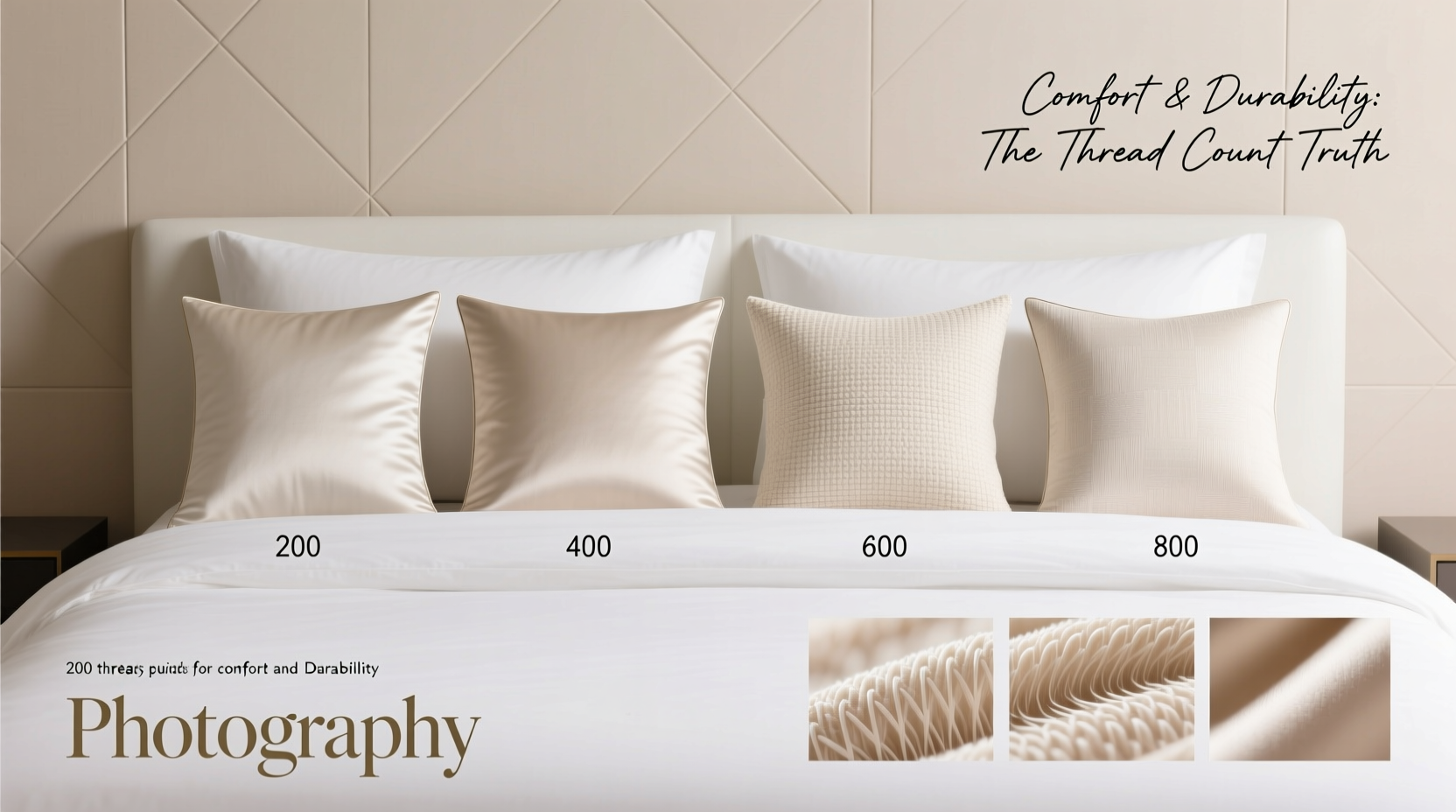
Thread count refers to the number of horizontal (weft) and vertical (warp) threads woven into one square inch of fabric. At first glance, it seems straightforward: higher numbers suggest denser, softer fabric. However, this metric can be misleading without context.
For example, a 600-thread-count percale made from single-ply Egyptian cotton may feel cooler and last longer than an 800-thread-count sateen made with multi-ply or heavily mercerized fibers. The key lies not just in quantity, but in quality—both of the raw materials and the craftsmanship behind the weave.
Manufacturers sometimes inflate thread counts by counting individual plies within a single thread. A two-ply yarn counted twice artificially boosts the total, making a 300-thread-count fabric appear as 600. This practice, while legal, misleads consumers seeking genuine softness and strength.
“Thread count alone tells only part of the story. Fiber origin, yarn construction, and weave matter just as much—if not more.” — Dr. Lena Peterson, Textile Scientist at the American Sleep Research Institute
The Ideal Thread Count Range for Different Needs
There is no universal “best” thread count. Instead, optimal ranges depend on personal preferences, sleeping habits, and climate. Below is a breakdown of recommended thread counts based on use case:
| Thread Count Range | Fabric Feel | Best For | Durability Outlook |
|---|---|---|---|
| 180–250 | Crisp, lightweight, breathable | Hot sleepers, summer use, budget-friendly basics | Good; especially with combed cotton |
| 250–400 | Smooth, balanced softness with airflow | All-season comfort, most sleepers | Excellent; ideal sweet spot |
| 400–600 | Luxuriously soft, slightly heavier | Skin-sensitive individuals, cooler climates | Very good if single-ply long-staple cotton |
| 600+ | Dense, silky, less breathable | Aesthetic luxury; caution advised | Risky; often overstated or multi-ply |
Fiber Type and Weave: Why They Matter More Than Thread Count
The foundation of a durable, comfortable pillowcase isn’t thread count—it’s the combination of fiber and weave. Two common weaves dominate the market: percale and sateen.
- Percale: A tight, plain weave with a matte finish. Known for crispness and breathability, percale typically performs best between 200–400 thread count. Ideal for those who sleep hot.
- Sateen: A satin-style weave using four-over-one-under threading. Creates a smooth, lustrous surface that feels silky. More prone to pilling if low-quality fibers are used, even at high thread counts.
Fiber selection further influences performance:
- Egyptian Cotton: Long-staple fibers produce strong, soft, and highly absorbent fabric. When properly processed, it ages well and resists fraying.
- Pima Cotton: Similar to Egyptian, often grown in the U.S. Offers excellent softness and color retention.
- Bamboo Rayon: Naturally moisture-wicking and hypoallergenic, though less durable than cotton. Often blended with cotton for added strength.
- TENCEL™ Lyocell: Eco-friendly, silky texture, resistant to bacteria and odors. Performs well at lower thread counts due to fiber smoothness.
Real Example: Sarah’s Pillowcase Dilemma
Sarah purchased a set of 1,000-thread-count sateen pillowcases online after reading rave reviews. Within three months, they began pilling and lost their sheen. Frustrated, she switched to a 300-thread-count percale set made from 100% Egyptian cotton. Despite the lower number, the new cases felt cooler, held up better after repeated washing, and didn’t irritate her sensitive skin. Her experience highlights that inflated thread counts often sacrifice practicality for marketing appeal.
Step-by-Step Guide to Choosing the Right Pillowcase
- Assess your sleep environment: Do you tend to sleep hot? Opt for percale (200–400 thread count). Prefer warmth and softness? Consider sateen or flannel (300–500).
- Check the fiber content: Look for 100% long-staple cotton, TENCEL™, or high-bamboo blends. Avoid synthetic mixes unless specifically needed.
- Verify single-ply construction: Reputable brands often state whether yarns are single- or multi-ply. Single-ply means each thread is one continuous strand—stronger and finer.
- Read care instructions: Machine washable is standard, but some high-end fabrics require gentle cycles or line drying to preserve integrity.
- Test for breathability: Hold the fabric up to light. If you can see small pinpoints of light through the weave, it will likely breathe well during sleep.
- Consider certifications: GOTS (Global Organic Textile Standard), OEKO-TEX®, or Fair Trade labels ensure ethical production and absence of harmful chemicals.
Debunking Common Myths About Thread Count
- Myth: Higher thread count = softer fabric. Not necessarily. Softness comes from fiber fineness and finishing. Overly dense weaves can feel stiff or trap heat.
- Myth: Anything under 300 is low quality. False. Many hotel-grade linens use 200–280 thread count percale for its durability and cooling effect.
- Myth: All 100% cotton is equal. No. Short-staple cotton pills easily and weakens over time. Long-staple varieties like Supima® or Giza 45 are superior in strength and softness.
FAQ: Your Top Questions Answered
Does thread count affect skin and hair health?
Indirectly, yes. Smoother, tightly woven fabrics (like high-quality sateen or silk alternatives) reduce friction, helping prevent facial creases and bedhead. Breathable weaves also minimize night sweating, which can contribute to clogged pores.
How often should I replace my pillowcases?
With proper care, premium pillowcases last 2–3 years. Signs it’s time to replace include thinning fabric, persistent yellowing, or loss of elasticity. Rotate between 2–3 sets to extend lifespan.
Are expensive pillowcases worth it?
When they’re made from transparently sourced materials and thoughtful design, yes. A $50 set that lasts three years costs less per use than replacing cheap sets every six months. Plus, better sleep has measurable health benefits.
Final Checklist Before You Buy
- ✅ Fiber Type Confirmed
- Long-staple cotton, TENCEL™, bamboo, or silk blend.
- ✅ Weave Style Matches Sleep Preference
- Percale for coolness, sateen for softness.
- ✅ Thread Count Between 250–400 (Ideal Range)
- Avoid anything above 600 unless verified by trusted brand.
- ✅ Single-Ply Yarns Used
- Check product details or contact customer service.
- ✅ Third-Party Certifications Listed
- GOTS, OEKO-TEX®, or Supima® certification adds trust.
- ✅ Care Instructions Are Practical
- Machine washable in cold water is ideal for regular upkeep.
Make the Right Choice for Better Rest
Your pillowcase plays a quiet but powerful role in your nightly routine. By shifting focus from marketing hype to material truth, you invest in comfort that lasts. The perfect pillowcase isn’t the one with the highest number on the tag—it’s the one that feels cool against your skin, survives wash after wash, and supports restful, uninterrupted sleep. Take the time to read labels, understand fabrics, and choose wisely. Your body—and your bedroom—will thank you.




 浙公网安备
33010002000092号
浙公网安备
33010002000092号 浙B2-20120091-4
Comments
No comments yet. Why don't you start the discussion?