
Selecting the ideal bangle bracelet isn’t just about aesthetics—it’s a delicate balance between personal style and physical comfort. A bangle that’s too tight can restrict circulation and cause discomfort, while one that’s too loose may slip off or clatter noisily with every movement. With styles ranging from delicate gold cuffs to bold statement pieces, getting the size right ensures your jewelry enhances your look without compromising wearability.
This comprehensive guide walks you through precise measurement techniques, material considerations, and real-world styling insights so you can confidently choose a bangle that fits flawlessly and feels effortless all day long.
Understanding Bangle Sizing: Inside Diameter vs. Circumference
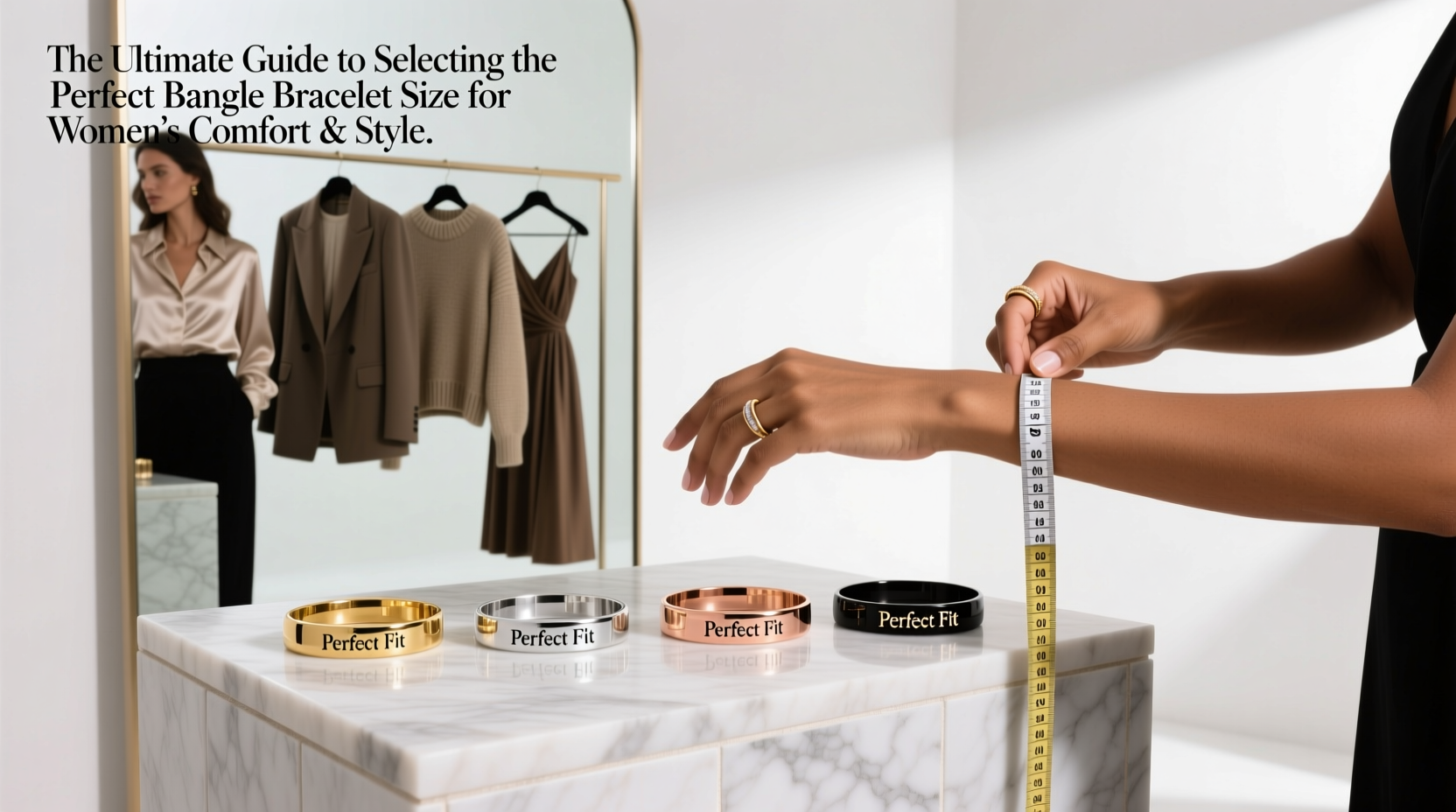
Unlike flexible bracelets, bangles are rigid or semi-rigid, which means they must slide over the hand to be worn. The key to a proper fit lies in two primary measurements: inside diameter and wrist-to-knuckle clearance.
The **inside diameter** (measured in inches or millimeters) determines how wide the bangle is across its inner circle. This is crucial because it must be large enough to pass over the knuckles but snug enough to stay comfortably on the wrist. Most standard bangles range from 2.25” to 2.75” (57–70 mm) in diameter.
However, relying solely on wrist circumference can lead to errors. For example, someone might have a 6.5-inch wrist but wide knuckles requiring a larger opening. That’s why measuring both wrist size and hand width is essential.
Step-by-Step Guide to Measuring for the Perfect Fit
- Gather Tools: Use a flexible tape measure or a strip of paper and a ruler.
- Measure Wrist Circumference: Wrap the tape around the narrowest part of your wrist, just below the wrist bone. Note the measurement in inches or centimeters.
- Measure Hand Width: Close your hand as if slipping a bangle on. Measure the widest part—from the tip of your thumb knuckle to the side of your pinky finger.
- Check Knuckle Size: Measure the circumference around your largest knuckle. This is often the tightest point when sliding a bangle on.
- Compare to Standard Sizing Charts: Match your measurements to manufacturer guidelines. When in doubt, opt for a slightly larger size if you plan to stack bangles.
If you're shopping online without trying on, add ½ inch (1.3 cm) to your wrist measurement for a comfortable fit. For tighter bangles, especially hinged styles, stick closer to your actual wrist size.
Bangle Fit by Material: How Metal, Wood, and Acrylic Change the Equation
Different materials behave differently when worn. Understanding these nuances helps refine your size selection.
| Material | Flexibility | Fitting Tip |
|---|---|---|
| Gold, Silver, Platinum | Low (rigid), some spring in open-ended cuffs | Ensure at least ¼ inch clearance over knuckles; consider hinged options for snug fits |
| Stainless Steel, Titanium | Very low flexibility | Size up slightly; avoid tight diameters due to lack of give |
| Wood, Resin, Acrylic | Minimal to none | Measure hand width carefully—these materials don’t compress |
| Elastic or Flex-Bangles | High stretch | Can go smaller; ensure elasticity lasts over time |
Solid metal bangles require more precision. A 2.5-inch diameter suits average wrists (6.5–7 inches), but those with petite hands may need 2.25”, while larger hands benefit from 2.75” or custom sizing.
“Many customers assume their ring size correlates to bangle size—but the hand’s widest point is usually the knuckle, not the wrist. Misjudging this leads to returns.” — Lena Torres, Jewelry Designer at Torra & Co.
Real Example: Sarah’s Search for the Ideal Stackable Set
Sarah, a 34-year-old teacher with slender wrists (6.2 inches), loved the look of stacked gold bangles but found most online purchases either too loose or impossible to get over her knuckles. After three failed orders, she measured properly: her knuckle circumference was 7.8 inches—much larger than her wrist.
She switched to hinged bangles with a 2.4-inch diameter and added one flexible wire bangle to her stack. The result? Secure fit, elegant layering, and no slippage during daily activities. Her experience underscores that wrist size alone isn't enough—hand anatomy matters.
Do’s and Don’ts of Bangle Sizing
| Do’s | Don’ts |
|---|---|
| Measure both wrist and hand width | Assume your bracelet size matches your ring size |
| Choose hinged bangles for a precise, secure fit | Purchase rigid bangles significantly smaller than your knuckle size |
| Consider seasonal swelling (hot weather increases wrist size) | Ignore material rigidity when estimating fit |
| Test fit with gloves on if you often wear them | Buy multiple unadjustable bangles without checking return policies |
Expert Recommendations for Comfort and Style
Style shouldn’t come at the cost of comfort. Here’s how to strike the right balance:
- For Everyday Wear: Opt for bangles between 2.4” and 2.6” in diameter made from lightweight metals like sterling silver or titanium.
- For Special Occasions: Statement bangles can be slightly looser for dramatic effect, but ensure they don’t rotate excessively.
- For Petite Wrists: Look for bangles labeled “small” or “petite,” typically under 2.3”. Avoid oversized designs that overwhelm the hand.
- For Larger Wrists: Seek brands offering extended sizes or customizable diameters. Cuffs with adjustable gaps offer flexibility.
Hinged bangles with safety clasps provide peace of mind and eliminate the struggle of stretching or forcing jewelry over sensitive skin or arthritis-affected joints.
FAQ: Common Questions About Bangle Sizing
How do I know if a bangle is too tight?
A bangle is too tight if it causes pinching, restricts blood flow, or leaves indentations on your skin after removal. You should be able to rotate it slightly and feel no pressure on the wrist bone.
Can I resize a bangle once purchased?
Most rigid bangles cannot be resized without damaging the integrity of the piece. However, some jewelers can adjust the gap on cuff-style bangles. Hinged bangles with removable links allow minor adjustments.
Are there universal bangle sizes?
No—while medium (2.5”) is common, true universal sizing doesn’t exist due to variations in hand structure. Always refer to detailed size charts and, when possible, try before buying.
Final Checklist Before You Buy
- ✅ Measured wrist circumference
- ✅ Measured widest knuckle or hand width
- ✅ Checked material flexibility and weight
- ✅ Considered whether you’ll stack or wear solo
- ✅ Verified return policy for online purchases
- ✅ Determined preference: rigid, hinged, or flex-fit
- ✅ Accounted for temperature-related swelling
Conclusion: Confidence Starts with the Right Fit
The perfect bangle bracelet blends elegance with ease. It catches the light with every gesture, complements your outfits, and never demands attention due to discomfort or insecurity. By understanding your unique measurements, respecting material differences, and prioritizing function alongside fashion, you transform a simple accessory into a signature element of your personal style.




 浙公网安备
33010002000092号
浙公网安备
33010002000092号 浙B2-20120091-4
Comments
No comments yet. Why don't you start the discussion?