
Fragrance is more than a personal accessory—it’s an extension of identity, mood, and environment. Yet many people wear the same scent year-round, unaware that seasonal shifts in temperature, humidity, and even clothing layers dramatically affect how perfumes behave on the skin. The right fragrance can elevate your presence in spring blossoms or anchor your confidence during winter nights. Choosing wisely means understanding not just your preferences, but how scent chemistry interacts with nature’s rhythm.
Why Season Matters in Perfume Selection
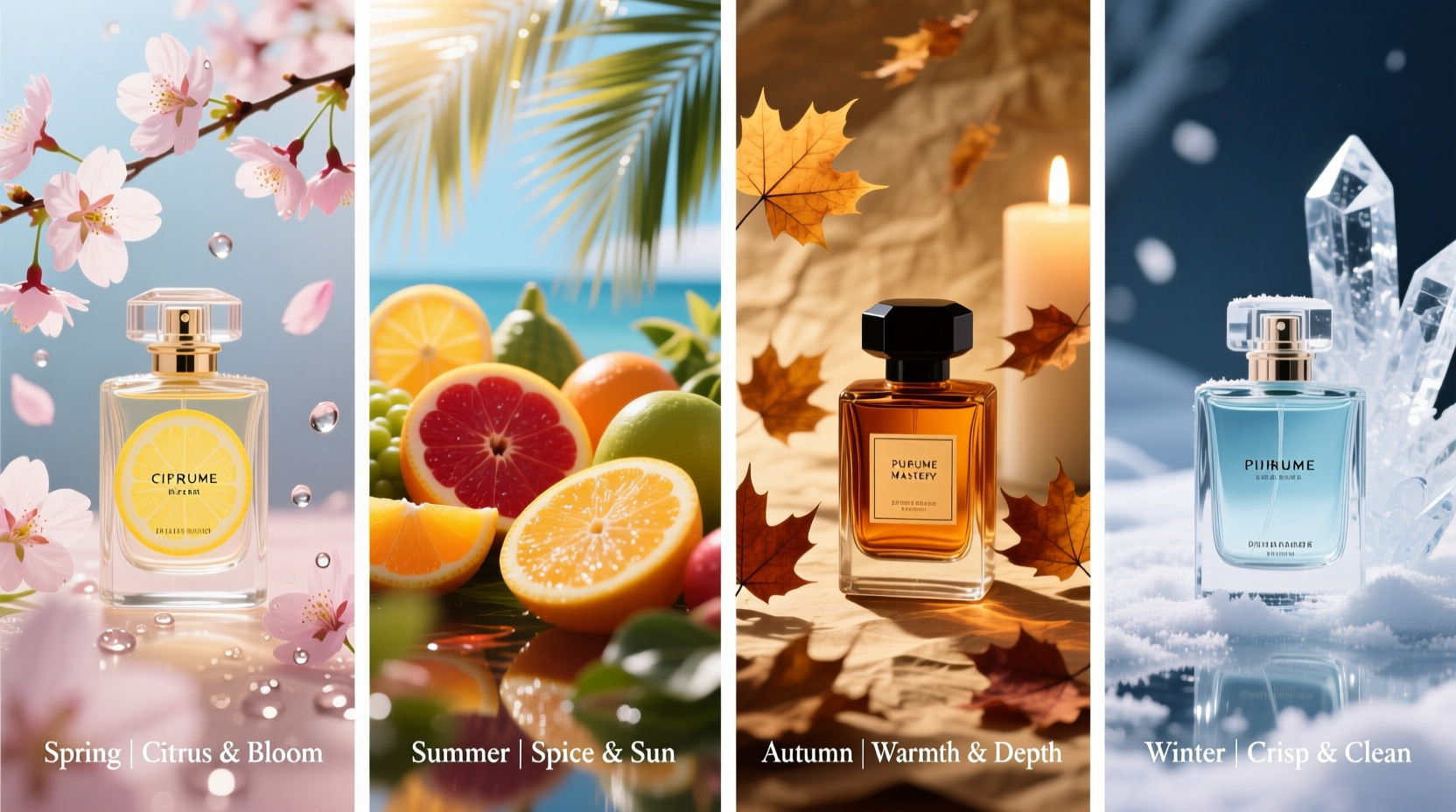
Perfumes are composed of volatile compounds that evaporate at different rates, releasing top, heart, and base notes over time. Heat accelerates evaporation, making lighter notes disappear faster and amplifying richer ones. In contrast, cold air slows diffusion, muting delicate florals while preserving depth. Humidity increases sillage—the trail a fragrance leaves—while dry climates may cause scents to fade prematurely.
Wearing a heavy oriental in summer can feel cloying; a crisp citrus in winter might vanish before it unfolds. Aligning your fragrance with the season ensures optimal performance, comfort, and impression.
“Fragrance is atmospheric. A scent that thrives in July will suffocate in January. Seasonal rotation isn’t indulgence—it’s olfactory intelligence.” — Clara Montaigne, Master Perfumer at Osmothèque Paris
Spring: Awakening with Freshness and Florals
As temperatures rise and nature blooms, spring calls for fragrances that mirror renewal. Light, airy compositions with green, floral, and aquatic accents capture the essence of this season. Think dew-kissed petals, fresh-cut grass, and morning breezes.
Top choices include:
- Floral bouquets – jasmine, peony, lilac, magnolia
- Green accords – galbanum, violet leaf, cucumber
- Citrus highlights – bergamot, mandarin, lemon verbena
- Aquatic notes – calone, ozonic elements for a clean, rain-like effect
Look for eau de toilette (EDT) or eau fraîche concentrations—they’re bright and fleeting, ideal for mild days when subtlety wins.
Summer: Embrace Citrus, Aquatics, and Cool Spices
High heat demands restraint. Overly rich or sweet perfumes turn syrupy under the sun. Instead, prioritize freshness, clarity, and cooling effects. Summer fragrances should feel like a splash of water—revitalizing without overwhelming.
Best note families for summer:
- Citrus – grapefruit, lime, blood orange
- Aquatic – marine, sea salt, ozonic
- Herbal – basil, mint, rosemary
- Light woods – sheer sandalwood, driftwood
- Cool spices – ginger, cardamom, pink pepper
Eau de citron or cologne-style scents work beautifully. Reapply throughout the day as needed—heat causes faster evaporation.
Mini Case Study: Beach Wedding Scent Choice
Sophia chose a heavy vanilla-amber perfume for her beachside wedding in August. By the ceremony, the scent had melded with sunscreen and sweat, creating a sticky, overpowering aura. Guests later commented they could “taste” the fragrance. A switch to a vetiver-and-lime eau de cologne would have cut through humidity with elegance. Lesson: match weight to weather.
Fall: Transition with Warmth and Depth
As leaves fall and air cools, perfumes gain complexity. This is the season of transition—light enough for daytime freshness, deep enough for evening warmth. It's where gourmands begin to emerge and florals deepen into spiced or honeyed variations.
Signature fall notes:
- Spices – cinnamon, clove, nutmeg
- Amber – resinous, slightly sweet warmth
- Leather & tobacco – smoky sophistication
- Rich florals – tuberose, osmanthus, ylang-ylang
- Fruits – plum, fig, quince
Opt for eau de parfum (EDP) concentration. It lingers longer on cooler skin and pairs well with wool and cashmere, which absorb and diffuse scent gradually.
Winter: Indulge in Richness and Longevity
Cold air locks in scent molecules, allowing dense, opulent fragrances to shine. Winter is the time for bold statements—oriental blends, balsamic resins, and creamy vanillas that radiate warmth like a cashmere wrap.
Top performers in winter:
- Oriental – vanilla, benzoin, incense
- Balsamic – myrrh, opoponax, styrax
- Woody – patchouli, oud, guaiac wood
- Gourmand – caramel, tonka bean, roasted chestnut
- Musk – animalic or clean musks for skin-like intimacy
Apply to pulse points and consider layering: use a scented body butter first, then spray. Cold weather reduces projection, so don’t shy from moderate application.
Fragrance Selection Checklist by Season
Use this checklist to evaluate whether a perfume suits the current season:
- Is the concentration appropriate? (EDT for warm months, EDP/parfum for cold)
- Do the dominant notes align with seasonal characteristics?
- How does it perform in current humidity and temperature?
- Does it complement my typical wardrobe (light cotton vs. heavy knits)?
- Have I tested it on skin, not just paper?
- Does it project well without being intrusive?
- Can I still smell it after 4–6 hours?
Seasonal Fragrance Comparison Table
| Season | Ideal Notes | Concentration | Avoid |
|---|---|---|---|
| Spring | Florals, greens, citrus, aquatics | Eau de Toilette | Heavy ambers, leather, oud |
| Summer | Citrus, marine, herbal, cool spices | Eau de Cologne / Fraîche | Sweet gourmands, thick musks |
| Fall | Spices, amber, honey, tobacco | Eau de Parfum | Overly sharp citruses, minimal scents |
| Winter | Orientals, balsams, vanilla, patchouli | Eau de Parfum / Parfum | Light colognes, watery accords |
Frequently Asked Questions
Can I wear the same perfume all year if I love it?
You can, but consider dilution or layering strategies. For example, apply a neutral unscented oil first in summer to mute intensity. In winter, layer with a matching scented balm to boost projection. Alternatively, keep beloved scents in travel sprays for occasional use rather than daily wear.
How many perfumes should I own for seasonal rotation?
Three core bottles—one light, one moderate, one rich—cover most needs. Add a fourth for special occasions. Rotate them based on weather trends, not strict calendar dates. If spring arrives early, adapt accordingly.
Do seasons affect unopened perfume bottles?
Yes. Store all perfumes away from sunlight, heat, and humidity. Ideal conditions are cool, dark, and stable—like a closet drawer. Avoid bathrooms (steam) and cars (temperature swings), which degrade fragrance over time.
The Art of Personal Adaptation
While guidelines help, personal chemistry reigns supreme. Some people naturally emit warmth, making even citrus scents last longer. Others have cooler skin that struggles to carry light fragrances. Test perfumes over full days, across changing environments. Note how they evolve from morning commute to evening dinner.
Also consider lifestyle. Office workers may need softer sillage than those in open-air jobs. Urban dwellers surrounded by pollution might prefer sharper openings to cut through ambient odors.
“Your skin is the final ingredient in any perfume. Two people wearing the same scent may smell entirely different—one floral, one woody. Always test on yourself.” — Dr. Lena Petrova, Cosmetic Chemist & Olfactory Researcher
Conclusion
Selecting the perfect perfume for every season isn’t about discarding favorites—it’s about curating a sensory wardrobe that moves with you through the year. With awareness of temperature, materials, and mood, you can craft an olfactory identity that feels intentional, balanced, and alive. Start building your seasonal collection today. Experiment, observe, and refine. Let your scent tell the story of where you are, not just who you are.




 浙公网安备
33010002000092号
浙公网安备
33010002000092号 浙B2-20120091-4
Comments
No comments yet. Why don't you start the discussion?