
Zircon bracelets have gained widespread popularity for their brilliance, affordability, and diamond-like appearance. But not all zircon jewelry is created equal. With a growing market flooded with imitations and low-grade materials, knowing how to distinguish a truly high-quality piece is essential. Whether you're purchasing as a gift or treating yourself, understanding the key markers of excellence ensures you invest in beauty that lasts.
Natural zircon—distinct from cubic zirconia—is a genuine gemstone with centuries of history across cultures. Its fire and sparkle rival even fine diamonds when properly cut and set. Yet its value varies dramatically based on quality indicators many buyers overlook. This guide breaks down exactly what to look for, from gem clarity to metal integrity, so you can shop with precision and confidence.
Understanding Zircon: Natural Gem vs. Common Confusions
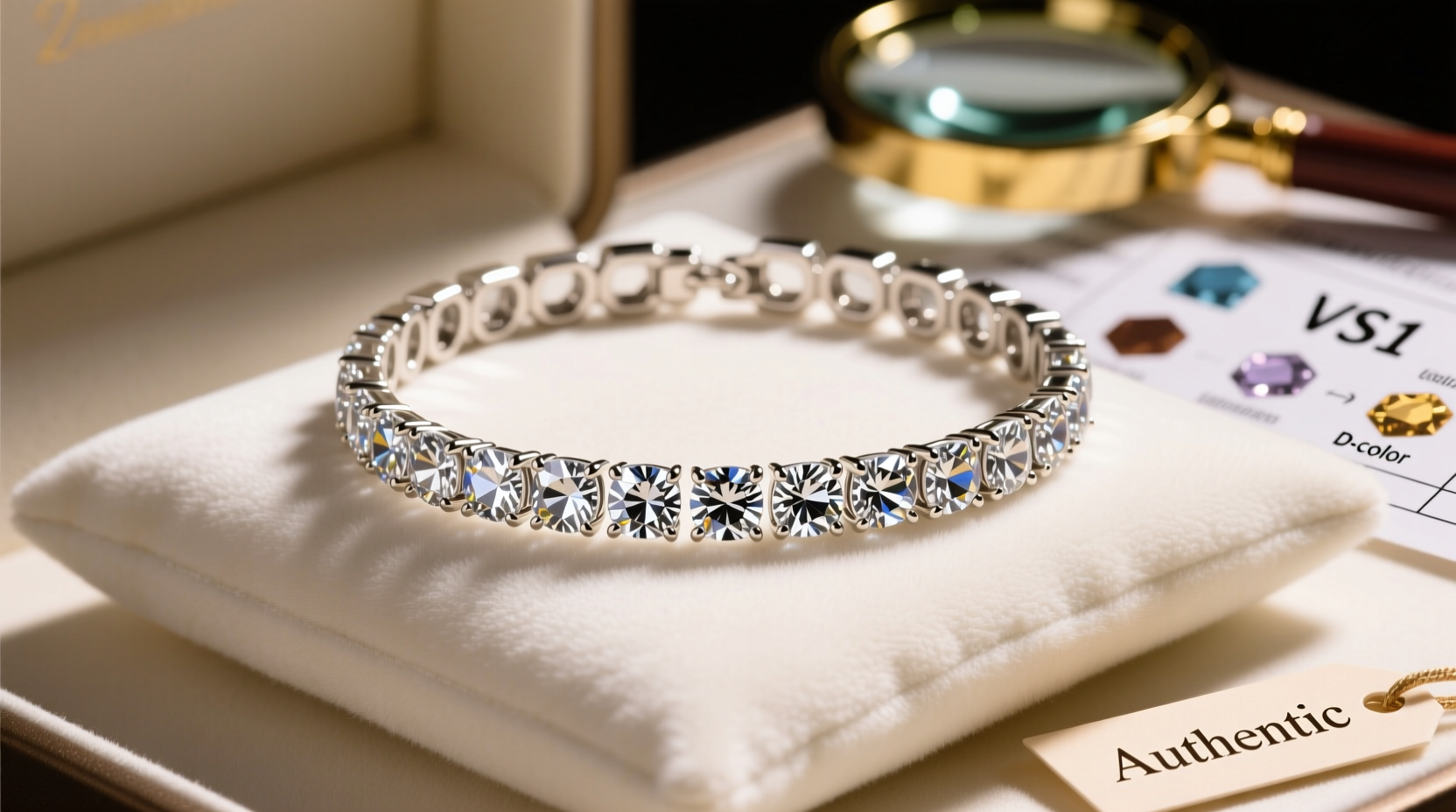
Before evaluating quality, it's crucial to clarify what zircon actually is. Zircon (zirconium silicate) is a naturally occurring mineral found in various colors, though colorless and blue varieties are most popular in jewelry. It’s often mistaken for cubic zirconia (CZ), a lab-created diamond simulant. Unlike CZ, natural zircon has unique optical properties, including strong dispersion (fire) and double refraction, which gives it a distinctive sparkle under light.
Because of this confusion, some sellers mislabel CZ as \"zircon,\" misleading buyers into thinking they’re getting a natural stone. Always confirm whether the bracelet features natural zircon or synthetic alternatives. A reputable jeweler will disclose this information clearly, often accompanied by certification for higher-value pieces.
“Natural zircon has a depth and luster that synthetics struggle to replicate. Look for subtle doubling in facet lines through a loupe—that’s a hallmark of genuine zircon.” — Dr. Lena Patel, Gemologist & GIA Instructor
5 Key Indicators of a High-Quality Zircon Bracelet
Spotting a superior zircon bracelet comes down to inspecting both the gemstones and craftsmanship. Here are the five non-negotiable elements to assess:
1. Cut Precision and Symmetry
The cut determines how well a zircon reflects light. A high-quality zircon should be meticulously faceted with symmetrical alignment. Poorly cut stones appear dull or glassy because light leaks out instead of reflecting back through the top (called brilliance).
Examine the facets under natural light. They should meet cleanly at sharp points, forming uniform patterns. Asymmetry, chipped edges, or uneven polish indicate mass production and lower standards.
2. Clarity and Inclusion Level
Like diamonds, zircons are graded on clarity. The best specimens are eye-clean—meaning no visible inclusions to the naked eye. Use a 10x jeweler’s loupe to check for internal fractures, clouds, or black spots, especially near the center of the stone.
While minor inclusions are normal in natural gems, excessive flaws compromise durability and brilliance. Avoid stones with visible cracks or dark imperfections that detract from transparency.
3. Color Consistency
Colorless zircons should appear white, not yellowish or gray. Hold the bracelet against a pure white background. Any tint suggests lower grade or poor heat treatment. Blue zircons, typically heat-treated, should exhibit even saturation without patchy areas.
Compare multiple stones on the bracelet. High-quality pieces maintain consistent hue and tone across all gems. Mismatched colors signal inconsistent sourcing or careless assembly.
4. Metal Quality and Hallmarks
The setting is just as important as the stone. Most quality zircon bracelets use sterling silver, 14k gold, or platinum. Check for hallmarks like “925” (sterling silver), “14K,” or “PT” stamped discreetly on the clasp or inner band.
Avoid pieces with vague markings like “SS” or no stamp at all. These may use base metals coated with thin plating that wears off quickly, exposing cheap alloys underneath.
5. Setting Security and Craftsmanship
Pave-set zircons should be held firmly in place by evenly sized prongs or bezels. Wiggle the bracelet gently—if any stone moves, the setting is flawed. Look for smooth metalwork without filing marks, rough edges, or solder blobs.
The clasp should feel sturdy and snap securely. Lobster clasps with safety chains are ideal for durability. Spring ring clasps on heavier designs may loosen over time.
Comparison Table: High-Quality vs. Low-Quality Zircon Bracelets
| Feature | High-Quality Bracelet | Low-Quality Bracelet |
|---|---|---|
| Stone Type | Natural zircon, well-documented | Cubic zirconia or unverified origin |
| Cut | Symmetrical, sharp facets, excellent polish | Uneven facets, rounded edges, poor symmetry |
| Clarity | Eye-clean, minimal inclusions | Visible flaws, cloudiness, or cracks |
| Color | Bright, consistent across all stones | Yellowish tint, uneven coloring |
| Metal | Hallmarked precious metal (e.g., 925, 14K) | No stamp or base metal plating |
| Setting | Firm prongs, smooth finish, secure stones | Loose stones, jagged metal, weak prongs |
Step-by-Step Guide: How to Inspect a Zircon Bracelet Before Buying
- Ask about the stone type – Confirm if it’s natural zircon or cubic zirconia. Request documentation if available.
- Examine under natural light – Rotate the bracelet to observe sparkle, fire, and color consistency.
- Use a magnifier – Inspect each stone for inclusions, scratches, and facet precision.
- Check metal stamps – Locate hallmarks on the clasp or inner surface to verify metal content.
- Test the clasp – Open and close it several times. It should operate smoothly and lock securely.
- Assess weight and feel – A quality piece feels substantial but balanced. Lightweight or flimsy construction suggests inferior materials.
- Review return policy – Ensure the seller offers returns or certifications, especially for online purchases.
Real Example: Sarah’s Smart Purchase
Sarah wanted a zircon bracelet for her anniversary but didn’t want to overspend on something that would tarnish or lose stones within months. She visited three jewelers before finding one who explained the difference between natural zircon and CZ. Using a loupe, the jeweler showed her two similar-looking bracelets—one with eye-clean, well-cut zircons in a 925 silver setting, the other with cloudy stones in an unstamped alloy.
Though only $30 more, the higher-quality piece had superior brilliance and craftsmanship. Two years later, Sarah’s bracelet still shines daily, while her friend’s cheaper version lost three stones and turned her wrist green. Her careful inspection paid off.
Essential Checklist Before You Buy
- ✅ Verified natural zircon (not cubic zirconia)
- ✅ Eye-clean stones with no visible flaws
- ✅ Precise, symmetrical cut with sharp facets
- ✅ Consistent color across all stones
- ✅ Hallmarked metal (925, 14K, etc.)
- ✅ Secure, well-finished setting with no loose stones
- ✅ Sturdy clasp with safety feature
- ✅ Reputable seller with return policy or certification
Frequently Asked Questions
Can I clean my zircon bracelet at home?
Yes, but carefully. Use warm water, mild dish soap, and a soft toothbrush. Avoid ultrasonic cleaners unless confirmed safe by a jeweler, as some zircons—especially heated blue ones—are brittle. Dry thoroughly with a lint-free cloth.
How do I tell if a zircon is real or fake?
Real zircon shows double refraction: look through the stone at a single line; if you see two lines, it’s likely genuine. Also, natural zircon is denser than glass or plastic imitations. A professional gem tester can measure refractive index for certainty.
Does zircon scratch easily?
Zircon ranks 6.5–7.5 on the Mohs hardness scale, making it fairly durable for occasional wear. However, it’s less scratch-resistant than sapphire or diamond. Remove your bracelet during physical activities to prevent abrasion.
Final Thoughts: Confidence Starts with Knowledge
Choosing a high-quality zircon bracelet doesn’t require a gemology degree—just attention to detail and informed decision-making. By focusing on cut, clarity, metal authenticity, and craftsmanship, you protect your investment and enjoy lasting elegance. Don’t let misleading labels or flashy displays distract you. Arm yourself with these insights, ask the right questions, and trust your eyes.




 浙公网安备
33010002000092号
浙公网安备
33010002000092号 浙B2-20120091-4
Comments
No comments yet. Why don't you start the discussion?