
Keeping your Google Account information up to date is essential for both security and accessibility. Your phone number plays a critical role in account recovery, two-factor authentication, and communication from Google services. Whether you've changed carriers, lost access to an old number, or simply want to ensure your details are current, updating your phone number should be done carefully and correctly. A misstep can lock you out of your account or expose it to unauthorized access.
This comprehensive guide walks you through the entire process—why it matters, how to do it securely across devices, what pitfalls to avoid, and how to verify everything worked as intended. By following these steps, you maintain control over your digital identity without compromising safety.
Why Updating Your Phone Number Matters
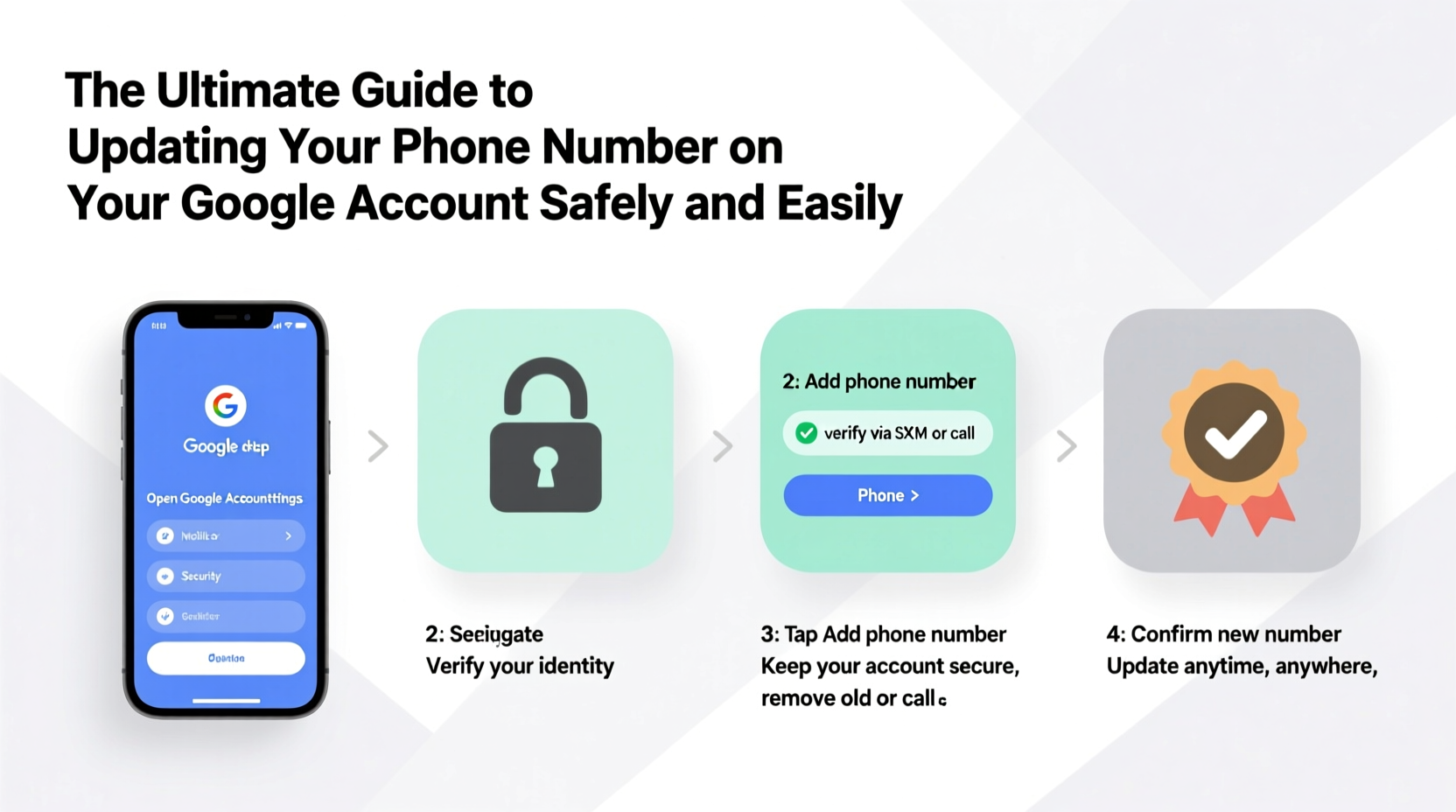
Your phone number is more than just a contact method—it’s a key layer in Google’s security infrastructure. When enabled, it helps confirm your identity during login attempts, enables SMS-based two-factor authentication (2FA), and allows Google to reach you about suspicious activity.
If you no longer have access to the number linked to your account, you risk being unable to recover your account if locked out. Additionally, someone else could potentially gain control if they acquire your old number and intercept verification codes. According to Google’s Transparency Report, accounts with up-to-date recovery options are 35% less likely to be permanently compromised after a breach attempt.
“An outdated recovery number is one of the most common reasons users fail to regain access to their accounts.” — Google Security Team, 2023 Annual Report
Step-by-Step: How to Update Your Phone Number
Updating your phone number on your Google Account is straightforward when you follow the correct procedure. Below is a detailed walkthrough applicable to desktop and mobile devices.
- Sign in to your Google Account: Go to myaccount.google.com and log in using your current credentials.
- Navigate to “Security”: In the left-hand menu, click on Security to access authentication and recovery settings.
- Locate “Recovery phone”: Under the “Ways we can verify it’s you” section, find “Recovery phone” and click EDIT.
- Enter your password again: For security, Google will prompt you to re-enter your password before allowing changes.
- Remove or replace the old number: You can either remove the existing number first or directly add a new one. It's safer to keep the old number until the new one is verified.
- Add your new number: Enter your current phone number, including country code, then click Next.
- Verify the new number: Google will send a text message or call with a 6-digit code. Enter it to confirm ownership of the device.
- Save changes: Once verified, click SAVE. The new number becomes active immediately for recovery and 2FA purposes.
Best Practices for Secure Updates
Changing sensitive account details requires caution. Follow these best practices to protect your account during and after the update:
- Do not remove the old number immediately: Keep it active until you’ve confirmed the new number works with all services, especially 2FA.
- Use a number you control long-term: Avoid temporary or shared numbers that may expire or be reassigned.
- Enable authenticator apps or security keys: Relying solely on SMS for 2FA is less secure due to SIM-swapping risks. Pair your phone number with an app like Google Authenticator or a physical security key.
- Review other recovery options: Ensure you also have a backup email address and recovery email set up.
- Monitor for unusual activity: After making changes, check your account activity page weekly for signs of unauthorized access.
Common Mistakes and How to Avoid Them
Even simple updates can go wrong if overlooked details aren’t addressed. The table below outlines frequent errors and how to prevent them.
| Mistake | Risk | Solution |
|---|---|---|
| Removing old number before verifying new one | Loss of account access if new number fails | Keep both numbers temporarily; verify new one first |
| Entering incorrect country code | Verification messages not delivered | Double-check international format (e.g., +1 for US) |
| Using a burner phone number | Future lockout when number expires | Use a personal, reliable number you’ll keep long-term |
| Ignoring post-update testing | Undetected delivery failures for 2FA | Test login flow and receive a real verification code |
Real-World Example: Recovering Access After a Number Change
Sarah, a freelance designer, switched mobile providers and got a new number. She forgot to update her Google Account and later lost her laptop. When trying to sign in from a friend’s computer, she couldn’t receive the verification code because it was sent to her old, disconnected number.
She spent three days going through Google’s account recovery form, uploading ID documents, and answering historical questions. Eventually, she regained access—but only after significant stress and downtime affecting her client work.
Afterward, Sarah updated her recovery info and added a backup email and Google Authenticator. She now reviews her account settings every six months. Her experience highlights how a five-minute update can prevent hours of frustration.
Checklist: Securely Update Your Google Phone Number
Before finalizing your change, run through this checklist to ensure everything is handled properly:
- ✅ Back up important data stored in Google Drive, Gmail, or Photos
- ✅ Confirm your new phone number is active and capable of receiving texts/calls
- ✅ Sign in to your Google Account on a trusted device and browser
- ✅ Re-enter your password when prompted during the update
- ✅ Verify the new number with the code sent by Google
- ✅ Test 2FA by signing out and logging back in
- ✅ Remove the old number only after confirming the new one works
- ✅ Review connected devices and sign out unfamiliar sessions
Frequently Asked Questions
Can I use a landline number for recovery?
Yes, Google allows landline numbers for account recovery, but they cannot receive SMS codes. You’ll only be able to receive automated voice calls for verification. For full functionality, especially with 2FA, a mobile number is recommended.
What if I don’t receive the verification code?
If you don’t get the code, wait a few minutes and check your spam folder or signal strength. Click “Resend code” or choose “Call me instead.” If issues persist, verify your number format and contact your carrier to ensure SMS isn’t blocked.
Is it safe to update my number on public Wi-Fi?
No. Public networks are vulnerable to eavesdropping. Always update sensitive account information like recovery options on a secure, private connection—preferably your home network or cellular data.
Final Thoughts and Next Steps
Updating your phone number on your Google Account is a small action with major implications for your online safety. Done correctly, it strengthens your defense against unauthorized access and ensures you remain in control of your digital life. Done hastily or incorrectly, it can lead to frustrating lockouts or even permanent loss of access.
Take a few minutes today to review your recovery options. Make sure your phone number is current, verified, and paired with additional security layers like app-based authentication. Treat your Google Account like the digital hub it is—protect it with consistent, proactive care.




 浙公网安备
33010002000092号
浙公网安备
33010002000092号 浙B2-20120091-4
Comments
No comments yet. Why don't you start the discussion?