
Shark clips have transformed from a simple hair accessory into a must-have styling tool for anyone seeking a quick, secure, and fashionable updo. Originally designed for holding large sections of hair during salon treatments, today’s sleek, reinforced versions offer both functionality and flair. But achieving a look that stays put from morning coffee to late-night errands requires more than just snapping a clip in place. The key lies in understanding your hair type, choosing the right clip, and mastering the technique. This guide breaks down everything you need to know to make shark clips work for you—without slipping, snagging, or sacrificing style.
The Science Behind a Secure Hold
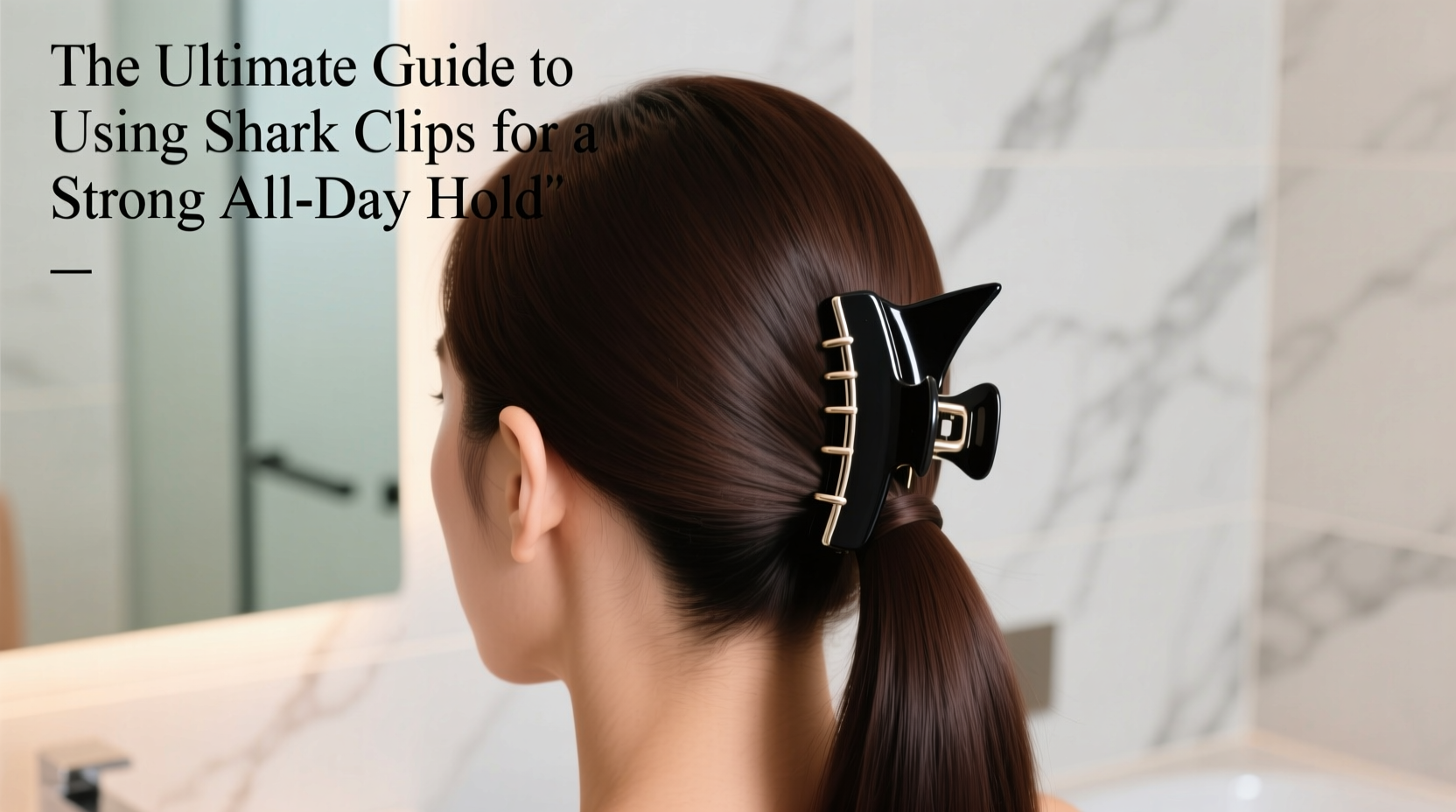
Not all shark clips are created equal. Their ability to grip and hold depends on three core factors: material, spring tension, and internal design. Most modern shark clips are made from acetate, metal-reinforced plastic, or stainless steel. Acetate offers a lightweight, stylish option but may lack grip on thick or coarse hair. Metal-reinforced clips provide superior tension and durability, making them ideal for heavy or slippery strands.
The interior teeth of the clip play a crucial role. Deep, staggered ridges dig gently into the hair, creating friction that prevents slippage. A well-designed clip should close with firm resistance—too loose, and it won’t hold; too tight, and it risks damaging hair or causing discomfort.
“Shark clips aren’t just about convenience—they’re an engineering solution to volume and movement. When matched correctly to hair density and texture, they outperform many traditional bobby pins.” — Lana Reyes, Celebrity Hairstylist & Product Developer
Choosing the Right Clip for Your Hair Type
Using the wrong size or style can lead to frustration and flyaways. Match your clip to your hair’s weight, length, and texture for maximum effectiveness.
| Hair Type | Recommended Clip Size | Material Preference | Key Tip |
|---|---|---|---|
| Fine, thin hair | Small to medium (1.5–2 inches) | Acetate with fine teeth | Use on slightly dirty hair for added grip |
| Medium, straight hair | Medium (2–2.5 inches) | Reinforced plastic or lightweight metal | Twist before clipping for extra hold |
| Thick, curly, or coily hair | Large (2.5–3+ inches) | Metal-core with wide grip | Section hair first to avoid overloading |
| Slippery or silky hair | Medium-large with textured interior | Rubber-coated or grooved interior | Backcomb lightly at the base |
Step-by-Step: Achieving an All-Day Hold
A flawless shark clip updo isn’t accidental—it’s strategic. Follow this timeline-tested method to ensure your style lasts through humidity, wind, and activity.
- Prep with texture: Clean hair is too slippery. If washing daily, use dry shampoo at the roots to add grit. For silky textures, spritz a light texturizing spray.
- Gather and twist: Pull hair into a low or mid ponytail, depending on desired height. Instead of pulling straight back, gather hair diagonally across the head to create natural tension.
- Loosely twist: Twist the ponytail two to three times. Do not wrap tightly—over-twisting reduces volume and makes the clip harder to secure.
- Slide and clamp: Open the clip and slide it up the twisted section from the ends toward the scalp. Let the teeth catch the bulk of the hair, then release the clip so it snaps shut.
- Lock in place: Gently tug upward on the clip to test security. If it slips, reposition slightly and ensure no loose sections are caught outside the grip.
- Final touch: Loosen a few face-framing pieces and smooth the crown with a boar bristle brush. Avoid touching the clip throughout the day to prevent weakening the hold.
Real-World Example: From Rush Hour to Rooftop Drinks
Sophia, a project manager in Chicago, relies on shark clips during her hectic days. She has thick, wavy hair that frizzes in the city’s summer humidity. Her old routine involved multiple pins and hairspray, only to find half her bun undone by noon.
After switching to a 2.75-inch metal-core shark clip with deep teeth, she adjusted her method: prepping with dry shampoo, twisting loosely, and positioning the clip slightly off-center for balance. The result? Her style stayed intact through a packed commute, two outdoor meetings, and an evening rooftop gathering. “I didn’t touch my hair once,” she said. “It looked as good at 8 p.m. as it did at 8 a.m.”
Common Mistakes That Break the Hold
Even the best clip fails when used incorrectly. Avoid these frequent errors:
- Overloading the clip: Stuffed clips lose tension. For thick hair, divide into two sections and use two medium clips instead of one oversized one.
- Using on soaking wet hair: Wet hair stretches and slips. Always towel-dry thoroughly before clipping.
- Ignoring placement: Clips positioned too high on the crown lack anchoring support. Aim for the occipital bone at the base of the skull for optimal balance.
- Skipping prep: Smooth, product-free hair slides easily. A light mist of sea salt spray or texturizer adds necessary friction.
Pro Checklist: Shark Clip Success in 5 Steps
Before you clip, run through this checklist to ensure lasting hold:
- ☑ Hair is dry or slightly damp—not wet
- ☑ Roots have texture (dry shampoo or light teasing applied)
- ☑ Correct clip size and strength chosen for hair type
- ☑ Hair is twisted loosely, not tightly wrapped
- ☑ Clip is snapped shut fully and seated against the scalp
Frequently Asked Questions
Can shark clips cause hair damage?
When used properly, high-quality shark clips are safe. Avoid pulling hair too tightly or wearing the same clip in the exact same spot daily, which can cause traction stress. Opt for wide-toothed, smooth-edged clips to minimize breakage.
How do I stop my shark clip from sliding out?
Slippage usually comes from improper prep or clip size. Use texturizing products, choose a clip with strong spring tension, and position it where your head curves inward—typically just above the nape. Backcombing the base lightly can also help anchor the style.
Are shark clips suitable for workouts or active days?
Yes—but with precautions. For intense movement, pair the clip with a light-hold gel or edge control to keep flyaways down. Consider a double-clip technique for thick hair, and avoid ultra-slippery formulas like silicon-heavy serums before styling.
Final Thoughts: Style Meets Stamina
Shark clips are more than a trend—they’re a functional evolution in hair management. With the right product and technique, they deliver elegance and endurance in equal measure. Whether you're dashing to a meeting, heading to the gym, or dressing up for dinner, a well-placed shark clip can be your most reliable ally. The secret isn’t in the clip alone, but in the details: preparation, placement, and precision.




 浙公网安备
33010002000092号
浙公网安备
33010002000092号 浙B2-20120091-4
Comments
No comments yet. Why don't you start the discussion?