
Purchasing luxury designer jewelry is more than a fashion statement—it’s an investment. Whether it’s a vintage Cartier ring, a Tiffany & Co. necklace, or a limited-edition Bvlgari bracelet, these pieces carry significant monetary and emotional value. But with the rise of counterfeit goods flooding both physical and digital marketplaces, ensuring authenticity has never been more critical. A 2023 report by the International AntiCounterfeiting Coalition estimated that counterfeit jewelry accounts for over $30 billion in global losses annually. This guide equips you with the tools, knowledge, and confidence to verify every detail of your high-end jewelry purchases—whether brand new or pre-owned.
Understanding the Hallmarks of Authenticity
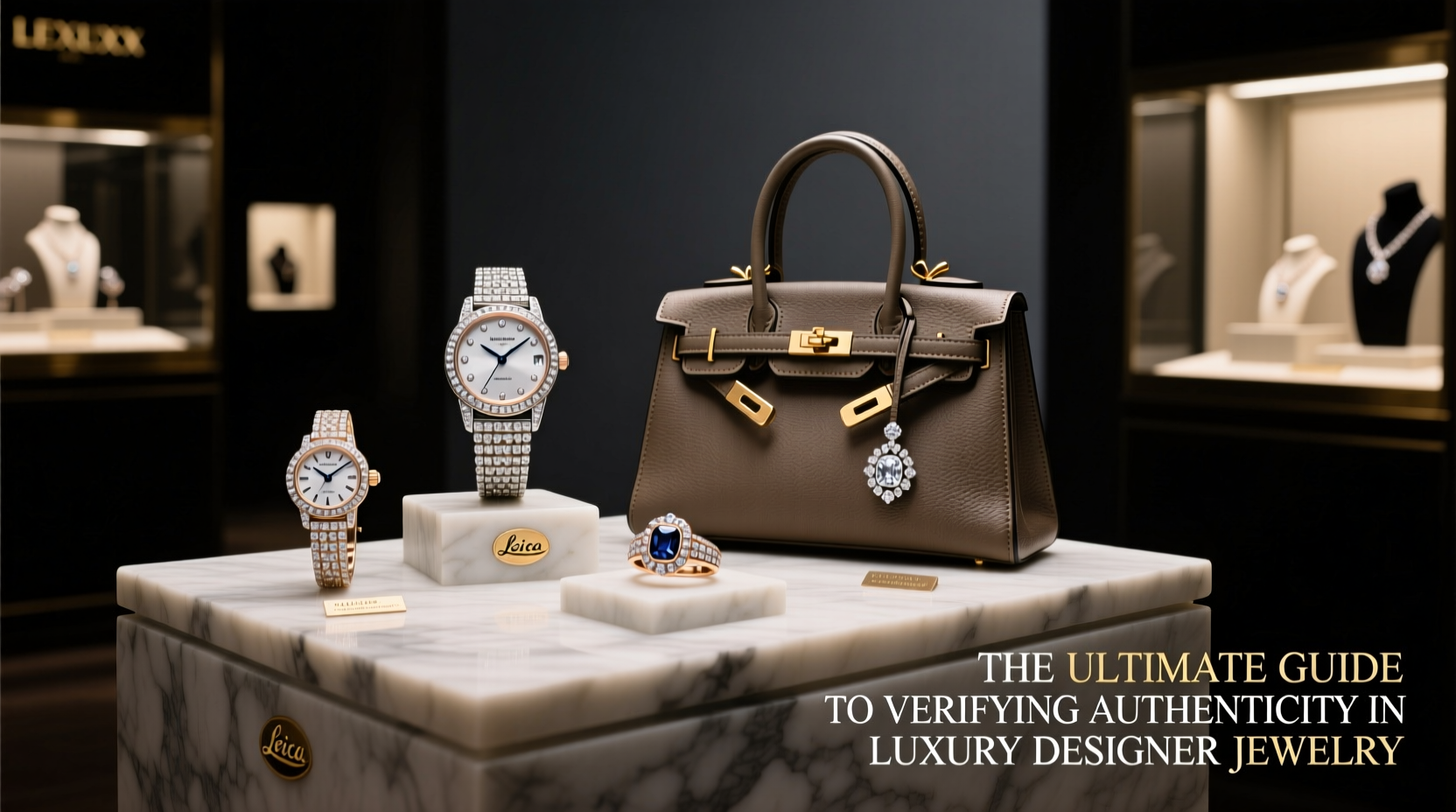
Luxury jewelry brands embed subtle yet definitive markers of authenticity into their designs. These include hallmarks, serial numbers, craftsmanship precision, and material quality. Unlike mass-market accessories, genuine designer pieces are made with exacting standards that reflect decades of heritage and technical mastery.
For example, Rolex watches feature micro-etched crown logos beneath the crystal—visible only under magnification—while Van Cleef & Arpels uses patented techniques like the “mystery setting” to conceal prongs in gemstone arrangements. These details are nearly impossible to replicate accurately without access to proprietary tools and materials.
Common indicators across most major houses include:
- Brand-specific logos or signatures (e.g., “Tiffany & Co.” on clasps)
- Material stamps (e.g., “750” for 18k gold, “PT950” for platinum)
- Unique serial or inventory numbers, often laser-inscribed
- Consistent font styles and alignment across all engravings
Step-by-Step Guide to Verifying Your Jewelry
Authenticating luxury jewelry should follow a methodical process. Rushing can lead to costly mistakes. Follow this five-step verification timeline before finalizing any purchase:
- Visual Inspection: Examine the piece under bright light and magnification. Look for irregularities in symmetry, stone settings, and metal finish.
- Hallmark Verification: Cross-reference visible stamps with official brand documentation. Some brands publish hallmark guides online.
- Weight & Density Check: Compare the item’s weight to manufacturer specifications. Counterfeit items often use lighter base metals.
- Professional Appraisal: Schedule an evaluation with a certified gemologist (GIA or AGS accredited) for stone grading and structural analysis.
- Provenance Review: Request original receipts, certificates of authenticity, warranty cards, and packaging. Missing paperwork raises red flags.
This process applies whether buying from a boutique, auction house, or private seller. Skipping even one step increases risk.
Checklist: What to Verify Before Buying Designer Jewelry
Use this checklist as a quick reference when evaluating any luxury jewelry item:
- ✅ Brand logo is correctly spelled and positioned
- ✅ Metal purity stamp matches claimed material (e.g., 14K, 18K, PT950)
- ✅ Serial number present and traceable (if applicable)
- ✅ Gemstones are securely set with no chipping or misalignment
- ✅ Clasps, hinges, and moving parts function smoothly
- ✅ Original box, certificate, and warranty card included
- ✅ Weight corresponds to expected range for design and size
- ✅ No signs of re-plating, soldering, or amateur repairs
- ✅ Seller provides full return policy and authentication guarantee
Common Red Flags and How to Spot Them
Fake luxury jewelry often mimics appearance but fails under scrutiny. Be wary of the following warning signs:
| Red Flag | Why It Matters | What to Do |
|---|---|---|
| Misaligned or blurry engravings | Indicates low-quality stamping tools used in counterfeits | Compare with official product images or visit a retailer for side-by-side inspection |
| Overly low price compared to market value | Designer pieces rarely sell significantly below retail, especially new ones | Research recent sale prices on trusted platforms like Christie’s or Sotheby’s |
| No serial number or inconsistent numbering format | Many brands (e.g., Chopard, Graff) assign unique IDs per piece | Contact brand customer service to verify number legitimacy |
| Non-matching components (e.g., clasp doesn’t fit chain) | Suggests replacement parts or assembly from multiple fakes | Request detailed photos of all elements before purchase |
“Even slight deviations in engraving depth or font kerning can signal a replica. We’ve seen fakes pass casual inspection but fail under 20x magnification.” — Dr. Lena Moreau, Certified Gemologist and Director of Authentication at JewelGuard Labs
Real Example: The Case of the Fake Patek Philippe Pendant
In 2022, a collector in Geneva purchased what appeared to be a rare Patek Philippe diamond pendant from an online marketplace for €28,000—roughly 40% below market value. The listing included high-resolution photos, a certificate, and a velvet box bearing the brand’s logo. However, upon delivery, a local appraiser noticed the platinum stamp “PT950” was slightly italicized, which deviates from Patek’s standard block font. Further inspection revealed microscopic gaps between the setting and shank, indicating poor casting. The stones, while brilliant, were lab-grown diamonds without proper certification.
The buyer contacted Patek Philippe directly, who confirmed the serial number did not exist in their database. The item was a sophisticated replica. Thanks to the platform’s buyer protection, the transaction was reversed. This case underscores why third-party verification is non-negotiable—even when documentation appears legitimate.
Frequently Asked Questions
Can I trust online sellers who provide authenticity certificates?
Not always. Certificates can be forged. Always verify the issuing authority. GIA, IGI, or brand-issued documents carry weight; generic PDFs from unknown labs do not. When in doubt, request independent appraisal.
Do luxury brands authenticate secondhand pieces?
Some do, but policies vary. Cartier and Bulgari offer limited authentication services for vintage items with complete provenance. Rolex only authenticates watches serviced through authorized dealers. Most brands will not authenticate items purchased outside their network due to liability concerns.
Is there a way to check a serial number myself?
Direct public databases don’t exist for security reasons, but you can contact the brand’s client service with the number and model reference. They may confirm if it aligns with production records, though they won’t disclose ownership history.
Protecting Your Investment Long-Term
Once authenticity is confirmed, maintain your jewelry’s integrity through regular care. Store pieces separately in soft-lined cases to prevent scratching. Avoid exposure to chlorine, perfume, and harsh cleaners. Have prongs checked annually by a professional jeweler to prevent stone loss.
Consider insuring high-value items with a specialty provider like Jeweler’s Mutual or Chubb Fine Art. These insurers understand the nuances of designer valuation and can replace or restore pieces based on current market rates, not just original cost.
Final Thoughts: Confidence Starts with Knowledge
Verifying luxury designer jewelry isn’t about suspicion—it’s about respect for the craft and protection of your assets. Armed with the right tools, attention to detail, and access to expert resources, you can navigate the world of high-end jewelry with confidence. Whether you’re building a collection or buying a meaningful gift, take the time to validate every element. Authenticity isn’t just a label; it’s the foundation of lasting value.




 浙公网安备
33010002000092号
浙公网安备
33010002000092号 浙B2-20120091-4
Comments
No comments yet. Why don't you start the discussion?