
The X-Men film series spans over two decades, encompassing multiple timelines, reboots, character arcs, and overlapping narratives. With 14 official films released between 2000 and 2023—ranging from origin stories to apocalyptic showdowns—viewers often struggle to determine the ideal way to watch them. Whether you're a longtime fan revisiting the saga or a newcomer eager to explore mutantkind’s cinematic journey, the viewing order dramatically affects your understanding and emotional investment. This guide delivers a comprehensive, optimized path through every X-Men movie, balancing release chronology, narrative cohesion, and thematic depth.
Understanding the X-Men Cinematic Universe
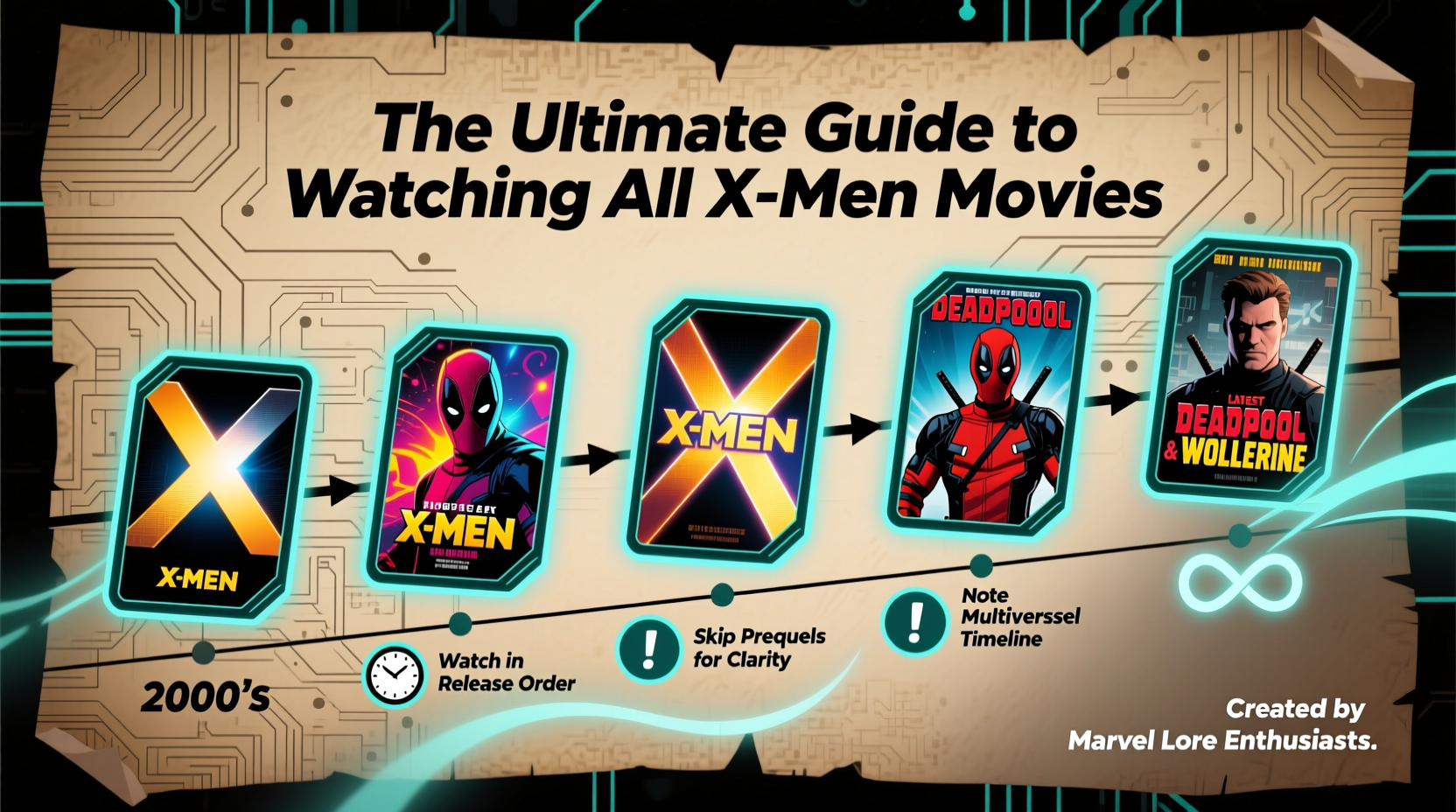
The X-Men franchise, produced by 20th Century Fox (now under Disney), began with *X-Men* (2000) and evolved into one of the longest-running superhero series in film history. Unlike tightly serialized universes such as the MCU, the X-Men films follow a more fragmented structure. They include:
- Original trilogy (2000–2006)
- Prequel series beginning with *X-Men: First Class* (2011)
- Wolverine-focused spin-offs
- A soft reboot with *Dark Phoenix* (2019)
- Crossovers like *Deadpool* and *Logan*, which exist on the fringes
This complexity stems from shifting creative directions, studio decisions, and real-world production delays. As a result, chronological release order doesn’t always align with story logic. The key to an optimal viewing experience lies in blending timeline coherence with character development arcs, particularly for central figures like Professor Xavier, Magneto, and Wolverine.
Recommended Viewing Order: Narrative-First Approach
While watching the films in release order offers historical context, a narrative-first approach enhances continuity and emotional payoff. This sequence prioritizes story flow, minimizes spoilers, and connects past and future timelines effectively.
- X-Men: First Class (2011) – Origins of Xavier and Magneto’s friendship
- X-Men: Days of Future Past (1973 segment) – Expanded flashback era
- X-Men (2000) – Present-day mutant conflict begins
- X2: X-Men United (2003) – Escalation of threats and alliances
- X-Men: The Last Stand (2006) – Fractured conclusions and consequences
- The Wolverine (2013) – Post-apocalyptic guilt and redemption
- Deadpool (2016) – Breaks the fourth wall but fits post-*Last Stand*
- Deadpool 2 (2018) – Expands universe with time-travel elements
- Logan (2017) – Final chapter set in a dystopian future
- X-Men: Apocalypse (2016) – Sequel to *Days of Future Past*
- Dark Phoenix (2019) – Final installment of the prequel series
Timeline Comparison: Release vs. Chronological vs. Thematic
| Approach | Pros | Cons |
|---|---|---|
| Release Order | Shows evolution of filmmaking and storytelling; avoids spoilers | Narrative gaps; confusing timeline jumps; weak ending with Dark Phoenix |
| Chronological Order | Follows in-universe timeline from 1962 onward | Reveals major spoilers early (e.g., Mystique’s fate); diminishes surprise in original trilogy |
| Thematic/Narrative Order | Maximizes emotional arcs; preserves mystery; builds toward Logan as climax | Requires skipping around; may confuse purists |
For most viewers, the thematic-narrative order provides the richest experience. It allows younger versions of characters introduced in prequels to grow meaningfully, while preserving pivotal twists like Jean Grey’s transformation or the fate of the original X-Men team.
Essential Tips for Maximum Enjoyment
To fully appreciate the depth and nuance of the X-Men saga, consider these practical strategies before and during your viewing marathon.
- Take breaks between films. The series deals with heavy themes—genocide, identity, trauma—and benefits from reflection.
- Watch in high definition with subtitles. Dialogue is often dense and delivered quickly, especially in action scenes.
- Supplement with short background research. A five-minute read on the comics’ Dark Phoenix Saga or the Brotherhood of Mutants enriches context.
- Avoid bingeing more than two films per day. Fatigue dulls emotional resonance.
- Include the Deadpool films—but know they’re tonally different. They acknowledge past events but play with meta-humor.
“X-Men was never just about powers. It’s about belonging, fear of the ‘other,’ and choosing hope over vengeance.” — Simon Kinberg, Producer and Writer of *X-Men: Apocalypse* and *Dark Phoenix*
Real Viewer Experience: A Case Study
Sarah, a 28-year-old film student, decided to introduce her partner to the X-Men universe before the release of *Deadpool & Wolverine*. She initially chose release order but noticed confusion during *First Class*, where young Magneto and Xavier contradicted established backstories from earlier films. After pausing the series, she switched to the narrative-first sequence outlined above. By the time they reached *Logan*, her partner—who had been indifferent to superhero films—was emotionally moved by the final scene. “I didn’t expect to cry over a Wolverine movie,” he said. “But watching his entire journey unfold made it feel earned.”
This illustrates how viewing order shapes perception. When character arcs are preserved and payoffs are built gradually, even skeptical viewers can become invested.
Frequently Asked Questions
Do I need to watch the Wolverine solo films?
Yes, especially The Wolverine and Logan. The former explores his guilt after World War II and sets up his isolation; the latter delivers a definitive conclusion to his 17-film arc across the franchise. Skipping them leaves a major character thread unresolved.
Where does Deadpool fit in the timeline?
Deadpool (2016) takes place after *X-Men: The Last Stand* but ignores much of the subsequent continuity. It exists in a semi-canonical space, referencing past events with comedic exaggeration. Deadpool 2 includes time travel that nods to *Days of Future Past*, making it best viewed after that film.
Is Dark Phoenix worth watching?
Critically panned and narratively condensed, *Dark Phoenix* struggles to deliver on its source material. However, it concludes the prequel storyline of Jean Grey and is thematically linked to earlier films. Watch it once for closure, but don’t expect a satisfying climax.
Final Checklist: Preparing for Your X-Men Marathon
- Choose your preferred viewing order (narrative-first recommended)
- Gather all films—streaming platforms vary by region; check Disney+ and Hulu availability
- Clear your schedule: Allocate 35–40 hours total viewing time
- Prepare notes or a journal to track character evolution and themes
- Invite a friend or fellow fan to discuss key moments after each film
- End with Logan—allow time to reflect afterward
Conclusion: Embrace the Journey, Not Just the Powers
The X-Men saga is less about superhuman abilities and more about what it means to be human in an unforgiving world. Watching the films in a way that honors character growth, moral complexity, and emotional truth transforms a simple movie marathon into a profound narrative experience. From the Cold War allegories of *First Class* to the elegiac farewell of *Logan*, this series challenges viewers to consider tolerance, sacrifice, and legacy. By following this guide, you’re not just watching superheroes—you’re witnessing a decades-spanning meditation on identity and resistance.




 浙公网安备
33010002000092号
浙公网安备
33010002000092号 浙B2-20120091-4
Comments
No comments yet. Why don't you start the discussion?