
Batman: The Animated Series remains one of the most influential superhero shows ever produced. Debuting in 1992 as part of Fox Kids’ programming block, it redefined how animated adaptations could balance mature storytelling with visual sophistication. Whether you're discovering Gotham City for the first time or revisiting its noir-styled alleys after years away, this guide provides everything needed to fully appreciate the legacy, structure, and emotional depth of the series.
The show’s enduring appeal lies not just in its iconic characters, but in its cohesive tone—a blend of film noir, psychological drama, and classic comic book action. It introduced pivotal elements now embedded in Batman lore, including Mark Hamill’s legendary portrayal of the Joker and the origin of Harley Quinn. For both casual viewers and longtime enthusiasts, understanding how to approach the series enhances the experience significantly.
Understanding the Series’ Structure and Evolution
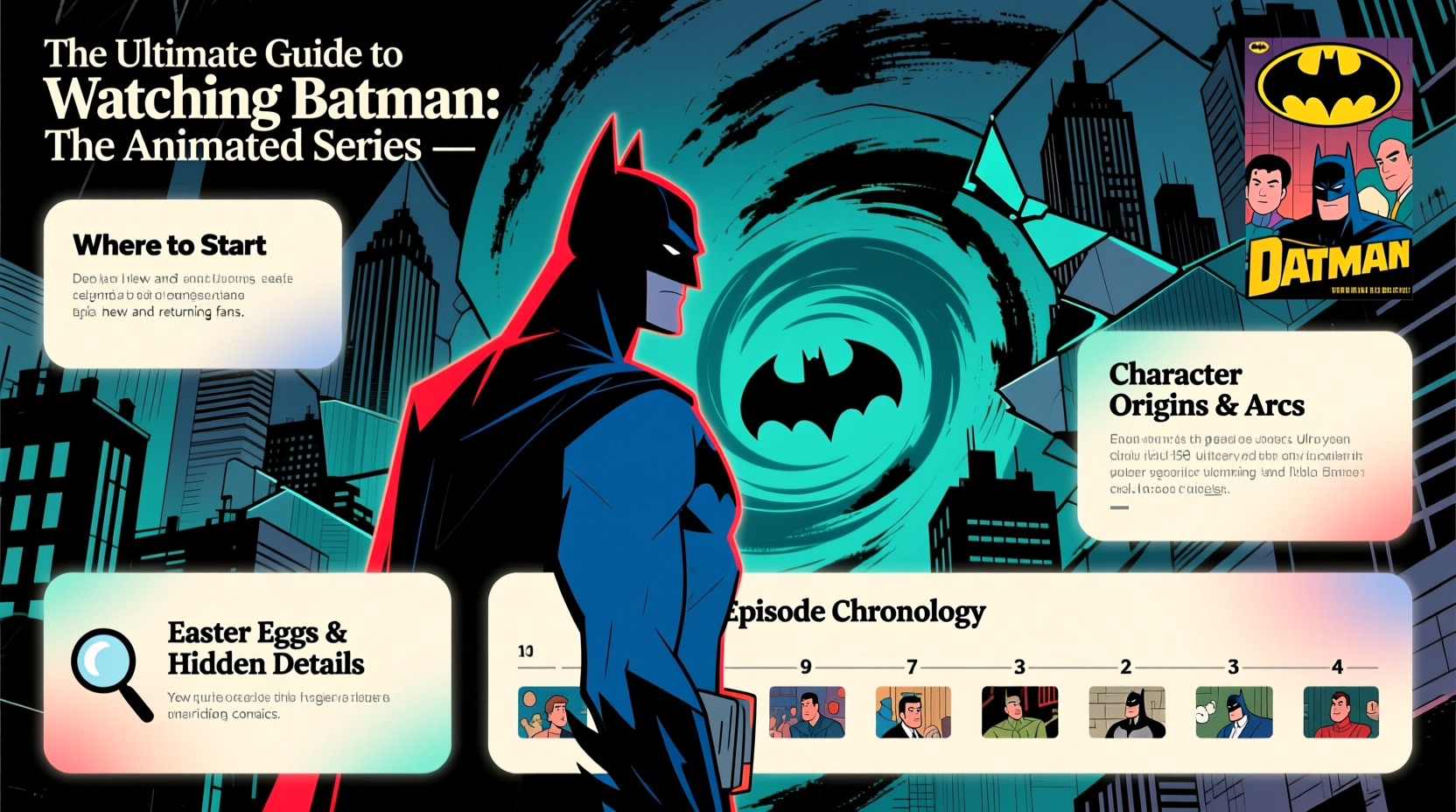
Batman: The Animated Series originally aired from 1992 to 1995, spanning two distinct production phases often referred to by fans as \"Season 1\" (produced by Warner Bros. Animation under the “DC Animated Universe” banner) and \"The Adventures of Batman & Robin\" (a rebranded second phase with slight design changes). Despite these shifts, the core identity of the show remained consistent: atmospheric storytelling, morally complex villains, and a grounded take on Bruce Wayne’s dual life.
The series was initially released out of production order, which affected narrative continuity—especially in early episodes featuring recurring characters like Harvey Dent/Two-Face. To truly grasp character arcs and thematic progression, it's best to follow the intended production sequence rather than original air dates.
Recommended Viewing Order and Timeline
For a seamless experience, follow this step-by-step timeline based on production codes—the method used by creators and later adopted by streaming platforms like HBO Max:
- On Leather Wings – Introduces Batman’s world and Detective Bullock.
- Christmas with the Joker – A holiday-themed two-parter establishing the Joker’s chaotic presence.
- Nothing to Fear – First appearance of the Scarecrow and deeper exploration of fear.
- The Last Laugh – Continues Joker’s arc with a prison breakout storyline.
- The Mechanic – Focuses on non-supervillain crime, grounding Gotham’s realism.
- See No Evil – Features Catwoman’s debut and moral ambiguity.
- Feat of Clay Parts I & II – The definitive origin of Clayface, with strong emotional stakes.
- Heart of Ice – Redefines Mr. Freeze’s backstory, earning critical acclaim.
- Harley and Ivy – Expands Harley Quinn’s role beyond sidekick.
- Almost Got ‘Im – A fan-favorite episode showcasing villain camaraderie through flashback.
This order ensures that key character origins unfold logically and thematically connected stories are experienced together. Later episodes like Perchance to Dream, which questions the reality of Bruce Wayne’s life, gain greater impact when viewed after foundational entries.
Essential Episodes Every Fan Should Watch
While the entire run maintains high quality, certain episodes stand out for their storytelling, emotional weight, or influence on future Batman media. These should be prioritized even in a condensed viewing:
| Episode | Significance | Why It Matters |
|---|---|---|
| Heart of Ice | Mr. Freeze’s origin | Revolutionized the character from joke to tragic figure; inspired comics and films. |
| Mad Love | Harley Quinn’s origin | Officially canonized her backstory; written by Paul Dini and Bruce Timm. |
| Perchance to Dream | Psychological thriller | Explores Bruce’s subconscious desire to escape his mission. |
| Two-Face Parts I & II | Harvey Dent’s transformation | Cohesive tragedy showing duality and loss of control. |
| Almost Got ‘Im | Villain roundtable | Lighthearted yet insightful look at Gotham’s rogues gallery dynamics. |
“ Heart of Ice wasn’t just a great episode—it changed how we tell villain stories in animation. Suddenly, they had depth, motivation, pain.” — Paul Dini, Co-Creator of Batman: The Animated Series
Maximizing Your Viewing Experience: Tips and Tools
To get the most out of the series, consider the following checklist before starting:
- ✅ Use a platform that offers the remastered versions (e.g., HBO Max) for improved picture and sound.
- ✅ Enable subtitles if available—nuanced dialogue can be missed without them.
- ✅ Watch in a dark room with surround audio to immerse yourself in the jazz-infused score by Shirley Walker.
- ✅ Pair viewings with companion material like *The Art of Batman: The Animated Series* book.
- ✅ Take notes on character evolutions, especially secondary villains who return across seasons.
A Real Viewer’s Journey: Rediscovering Batman After 20 Years
Sarah M., a graphic designer from Portland, grew up watching reruns after school but returned to the series during the 2020 lockdowns. “I remembered the action, but I didn’t expect how emotional it would feel,” she said. Starting with Heart of Ice, she was struck by Mr. Freeze’s grief. “It made me cry. This wasn’t just kids’ TV—it was about trauma, justice, and what happens when systems fail.”
She followed the production order found on fan forums and noticed subtle callbacks she’d missed as a child. “When Two-Face reappears in later episodes, there’s this quiet sadness. You realize Batman can’t save everyone—even his oldest friends.” Her experience underscores how the series deepens with age and intentionality.
Frequently Asked Questions
Is Batman: The Animated Series suitable for children?
The show is rated TV-Y7-FV, but many episodes deal with mature themes like corruption, loss, and mental illness. Younger viewers may enjoy the action, but parental guidance is recommended for full understanding and emotional context.
Do I need to watch other DC Animated Universe shows to understand this one?
No. Batman: The Animated Series stands alone narratively. However, spin-offs like The New Batman Adventures and Justice League Unlimited expand on characters introduced here, so they’re excellent follow-ups.
What makes this version of Batman different from others?
This iteration emphasizes psychological depth and moral complexity over brute strength. Bruce Wayne is portrayed as a detective first, vigilante second. The art deco-inspired Gotham architecture and jazz-noir soundtrack further distinguish its unique aesthetic.
Final Thoughts and How to Keep the Legacy Alive
Batman: The Animated Series isn’t merely a nostalgic relic—it’s a masterclass in character-driven storytelling within the superhero genre. Its influence echoes in modern interpretations, from Robert Pattinson’s *The Batman* to acclaimed video games like the Arkham series. By approaching the series with attention to order, theme, and context, new fans gain access to a richer, more rewarding experience.
Return viewers, meanwhile, often discover new layers upon rewatch: a line of dialogue foreshadowing future events, a villain’s motive mirroring Bruce’s own inner conflict, or the quiet humanity beneath the cape and cowl. The show invites contemplation as much as excitement.




 浙公网安备
33010002000092号
浙公网安备
33010002000092号 浙B2-20120091-4
Comments
No comments yet. Why don't you start the discussion?