
Berserk is more than an anime—it’s a cultural phenomenon. With its dark fantasy themes, complex characters, and philosophical depth, it has earned a devoted global following. But for newcomers, diving into Berserk can be overwhelming. Multiple adaptations, varying animation quality, and non-linear storytelling create confusion about where and how to start. This guide cuts through the noise, offering a clear path through every major version of Berserk, explaining their strengths and weaknesses, and providing practical tips to maximize your viewing experience.
The Core Timeline: Understanding Berserk’s Story Arcs
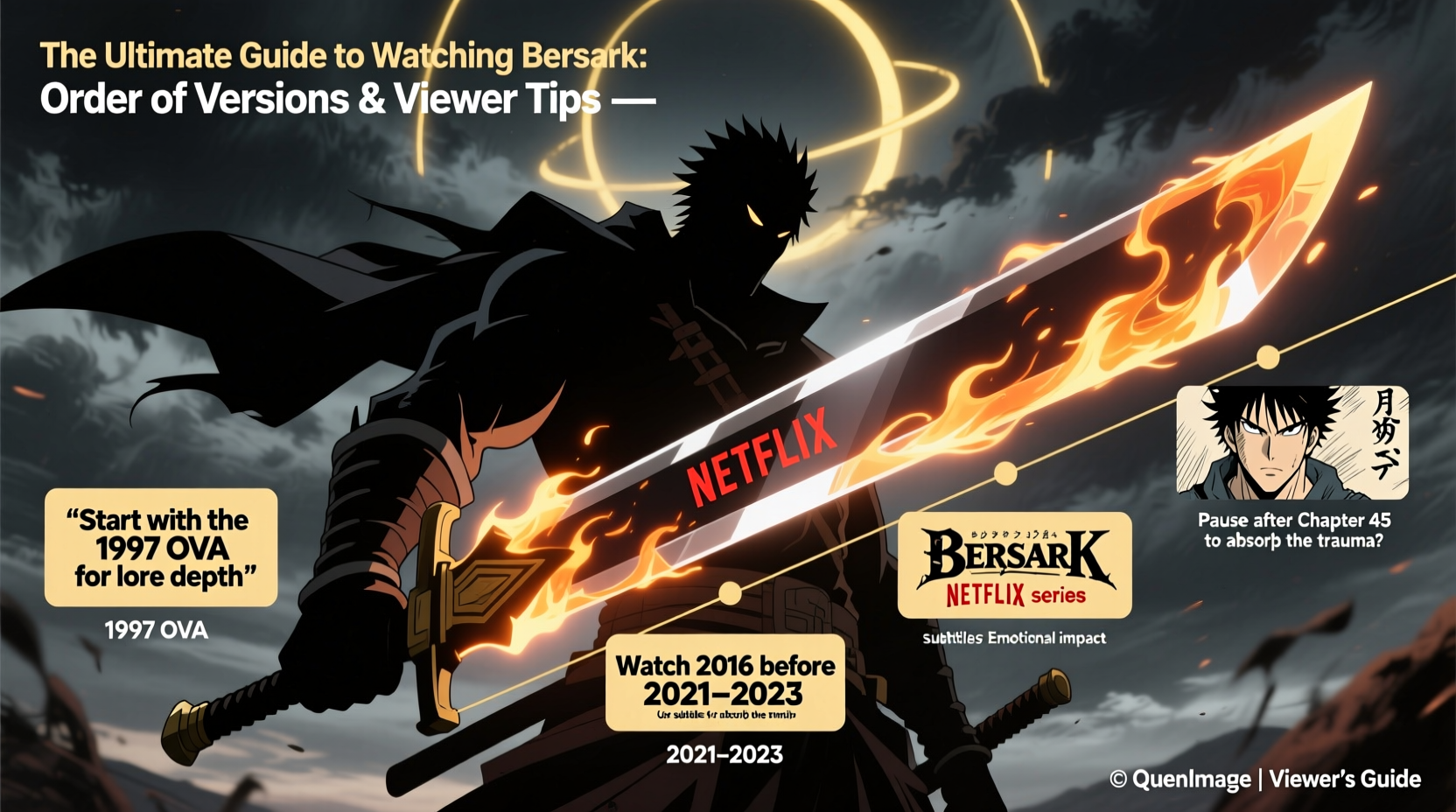
Berserk’s narrative unfolds across several major arcs, each building on the last. The original manga by Kentaro Miura, which began in 1989, remains the definitive source. All anime adaptations draw from this material but differ significantly in scope and faithfulness.
The key story arcs include:
- The Black Swordsman Arc – Guts’ early journey as the lone mercenary wielding a massive sword.
- The Golden Age Arc – A tragic, epic tale of ambition, friendship, and betrayal within the Band of the Hawk.
- The Conviction Arc – Guts confronts his trauma and faces new supernatural threats.
- The Millennium Falcon Arc – Ongoing in the manga, involving deeper mysteries and evolving allies.
Understanding these arcs helps contextualize each adaptation. Some cover only parts of the story, while others attempt broader coverage—often at the cost of pacing or detail.
Available Anime Versions: A Comparative Breakdown
Three primary anime adaptations exist, each representing a different era and approach to bringing Berserk to life. Here's a detailed comparison:
| Version | Year | Episodes | Coverage | Pros | Cons |
|---|---|---|---|---|---|
| 1997 Series | 1997–1998 | 25 | Golden Age + early Conviction | Faithful tone, strong voice acting, emotional depth | Ends abruptly; rushed final episodes |
| 2012–2013 Films / HD Remake | 2012–2013 (films), 2016–2017 (TV) | 12 films split into 24 TV episodes | Golden Age retelling with CGI | Updated visuals, full arc completion | Poor CGI integration, inconsistent animation, weak voice direction |
| 2016–2017 Series | 2016–2017 | 24 | Manga chapters post-Golden Age | Covers under-animated material | Heavy reliance on still frames and narration; jarring transition after film trilogy |
The 1997 series remains the most critically acclaimed. Despite its abrupt ending due to the manga not being far enough along at the time, it captures the emotional weight and gothic atmosphere essential to Berserk. The 2012 film trilogy attempted to complete the Golden Age Arc with modern production values but was widely criticized for its overuse of stiff CGI and lack of emotional resonance.
Recommended Viewing Order
To experience Berserk cohesively, follow this step-by-step sequence:
- Start with the 1997 Anime (Episodes 1–24) – This covers the buildup to and execution of the Eclipse with unmatched dramatic tension. Episode 25, while filler-heavy, provides brief closure.
- Read the \"Conviction\" Manga Arc (Optional but Recommended) – Chapters 185–211 bridge the gap between the Golden Age and later events. If reading isn’t feasible, watch summaries from trusted sources.
- Watch the 2016–2017 Series (Episodes 1–12 and 13–24) – These episodes adapt the immediate aftermath of the Eclipse and Guts’ early struggles with the Brand and Apostles. Be prepared for heavy use of narration and static scenes.
- Continue Directly with the Manga – After episode 24 of the 2016 series, no official anime adaptation exists. To follow the full story, switch to the manga from Chapter 261 onward.
Avoid starting with the 2012 films unless you’re already familiar with the story. Their visual style disrupts immersion, and they spoil key moments without delivering the same emotional payoff.
“Berserk demands patience. The 1997 series isn’t perfect, but it respects the source’s soul. Later adaptations prioritize spectacle over substance.” — Akira Tanaka, Anime Historian and Critic
Viewer Tips for Maximum Impact
Berserk deals with intense themes: trauma, existential dread, divine indifference, and human frailty. Approach it with intention to fully appreciate its depth.
- Take breaks between heavy arcs. The Eclipse and its aftermath are emotionally taxing. Allow time to process before continuing.
- Use subtitles, not dubs, for the 1997 series. While both have merit, the original Japanese voice acting carries a gravitas that many English dubs fail to replicate, especially in older productions.
- Supplement with creator commentary or analysis videos. Kentaro Miura’s artistry and philosophical influences deepen appreciation. Look for deep dives on Miura’s use of symbolism and medieval European aesthetics.
- Keep a notebook if analyzing themes. Track motifs like fate vs. free will, the nature of evil, and Guts’ evolution from vengeance-driven warrior to reluctant protector.
Checklist: How to Begin Watching Berserk the Right Way
- ☐ Choose a reliable streaming platform (e.g., Crunchyroll, Hulu) with the 1997 series available
- ☐ Set aside uninterrupted time for the first five episodes—they establish critical character dynamics
- ☐ Disable distractions; consider using headphones for immersive audio
- ☐ Read a brief primer on medieval mercenary culture (optional but enriching)
- ☐ Commit to finishing the 1997 series before jumping to other versions
Real Example: A New Fan’s Journey
Jess, a college student new to dark fantasy anime, decided to try Berserk after hearing repeated praise online. She started with the 2012 film trilogy based on a YouTube recommendation. Within 20 minutes, she was confused by the clunky CGI and detached from the characters. “It looked like a video game cutscene,” she said. “I didn’t care about Guts or Griffith.”
After pausing for weeks, she returned and began the 1997 series from the beginning. The hand-drawn animation, moody soundtrack, and gradual character development changed her perspective. “Suddenly, I understood why people were so passionate. When the Eclipse happened, I was stunned into silence.” Jess now recommends the 1997 version to every friend interested in the series.
Her experience underscores a common pitfall: starting with technically newer but artistically weaker adaptations. The right entry point matters.
Frequently Asked Questions
Is the 2016–2017 Berserk series worth watching?
Yes, but with caveats. It adapts crucial post-Eclipse material not covered in earlier anime. However, its reliance on still images and narration makes it feel more like a visual recap than a dynamic series. Best approached as a companion to the manga rather than a standalone experience.
Can I skip the anime and just read the manga?
Absolutely. The manga is the definitive version. If you prefer reading, begin with Volume 3 (which collects the Golden Age Arc) and work forward. Many fans argue the manga delivers the story with greater emotional precision and visual detail.
Why is the 1997 series considered superior despite outdated animation?
Because it prioritizes storytelling and emotional authenticity. The music, voice performances, and deliberate pacing allow viewers to bond with the characters. Modern animations may look better, but they often sacrifice soul for spectacle—a fatal flaw in a series as thematically dense as Berserk.
Final Thoughts: Embrace the Darkness, Respect the Craft
Berserk is not entertainment in the conventional sense. It’s a harrowing exploration of human suffering, resilience, and the search for meaning in a cruel world. How you engage with it shapes your experience. Starting with the right version—ideally the 1997 series—and approaching it with mindfulness transforms passive viewing into a profound narrative journey.
Whether you’re drawn to its mythic battles, psychological depth, or artistic legacy, Berserk rewards those who invest in it thoughtfully. Let the haunting score of Susumu Hirasawa carry you through the shadows. Let Guts’ struggle remind you of endurance. And when you finish, consider revisiting the beginning—you’ll likely see it differently the second time.




 浙公网安备
33010002000092号
浙公网安备
33010002000092号 浙B2-20120091-4
Comments
No comments yet. Why don't you start the discussion?