
Political debates shape public perception and often influence voter decisions in critical moments. Whether you're a dedicated political follower or tuning in for the first time this election cycle, knowing how to access tonight’s debate with minimal hassle is essential. With multiple broadcast networks, digital platforms, and regional variations, finding the right channel and optimal streaming setup can be overwhelming. This guide breaks down everything you need: exact air times, network coverage, free and paid streaming options, troubleshooting tips, and strategies to get the most out of the event.
Broadcast Channels and Start Times
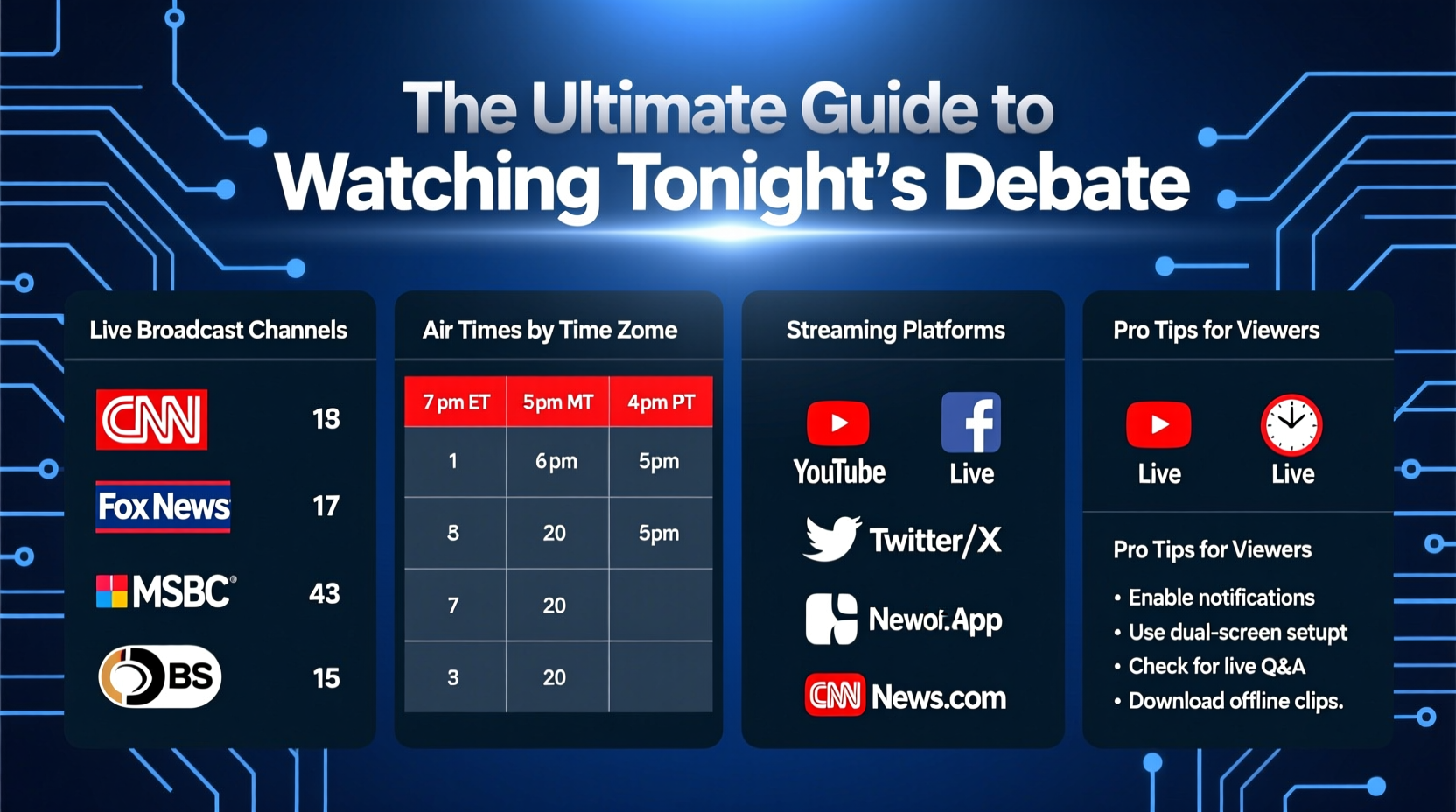
The major U.S. networks typically carry presidential and primary debates live during election season. For tonight’s debate, the following broadcasters have confirmed national coverage:
| Network | Air Time (ET) | Time Zone Variations | Host Platform |
|---|---|---|---|
| C-SPAN | 9:00 PM | 6:00 PM PT / 8:00 PM CT / 7:00 PM MT | Free-to-air, no login required |
| CNN | 9:00 PM | Same as above | Cable subscription or CNN app with provider login |
| Fox News | 9:00 PM | Same as above | Cable or Fox Now app (authentication needed) |
| NBC | 9:00 PM | Same as above | Peacock (free with ads), local NBC affiliate |
| ABC | 9:00 PM | Same as above | ABC app or website with TV provider login |
All major networks begin pre-debate analysis starting at 7:30 PM ET, offering context on key policy positions, historical performance comparisons, and expert commentary. The formal debate segment runs from 9:00 PM to 10:30 PM ET, followed by immediate post-debate breakdowns.
Streaming Options: Free vs. Paid
If you don’t have cable, you’re not locked out. Multiple legal, high-quality streaming services offer live debate access—some free, others requiring subscriptions.
- YouTube Live: C-SPAN, PBS NewsHour, and some independent journalist collectives stream the debate in full HD with real-time fact-checking overlays.
- Peacock: NBC’s platform streams the debate live and offers replay within minutes after it ends. Free tier includes ads; Premium removes interruptions.
- Hulu + Live TV: Includes ABC, CNN, Fox News, and MSNBC—ideal if you want access to all post-debate panels across networks.
- fuboTV & YouTube TV: Both offer free trials (usually 7 days) and include every major news channel. Sign up a day early to avoid last-minute verification delays.
- Reddit Streams: Some subreddits like r/PoliticalDebate may host live text commentary or link to official broadcasts, but avoid unofficial rebroadcasts due to potential takedowns.
“Streaming has leveled the playing field—voters in rural areas or without cable now have equal access to unfiltered political discourse.” — Dr. Lena Torres, Media Studies Professor at Columbia University
Step-by-Step Guide to Seamless Viewing
Follow this timeline to ensure you're set up well in advance:
- 48 Hours Before: Confirm the debate date and participants via official campaign websites or reputable news outlets like AP or Reuters.
- 24 Hours Before: Test your preferred streaming platform. Log into apps, check internet speed, and verify device compatibility.
- 3 Hours Before: Charge your devices. If using a smart TV, reboot it to clear cache and improve streaming stability.
- 1 Hour Before: Open your chosen stream, mute autoplay on other tabs, and close bandwidth-heavy apps (e.g., cloud backups).
- 15 Minutes Before: Switch to a secondary backup stream in another browser tab (e.g., C-SPAN’s site) in case of outage.
- During the Debate: Use split-screen mode on tablets or computers to follow live fact-checking from PolitiFact or The Washington Post.
Troubleshooting Common Streaming Issues
Even with preparation, technical problems arise. Here’s how to handle them quickly:
- Buffering or Lag: Lower video quality settings in the player menu. Switch from 1080p to 720p or auto-mode.
- Login Failures: Cable authentication errors are common. Call your provider’s support line or use “Forgot Password” to reset access.
- No Audio: Check device volume, app-specific sound settings, and whether headphones are properly connected.
- Site Crash During Peak Traffic: Avoid relying solely on one network’s website. Have C-SPAN or PBS News’ stable streams as fallbacks.
What Viewers Get Wrong About Debate Watching
Many people focus only on dramatic moments or viral quotes while missing deeper policy implications. A common mistake is multitasking—scrolling social media or texting during key exchanges. Research from the Pew Center shows viewers who watch uninterrupted retain 68% more factual content than those distracted by second screens.
Another misconception is that live reactions reflect consensus. Social media sentiment skews younger and more polarized. Real-time polls from sources like Ipsos or YouGov, released shortly after the debate, provide more balanced audience assessments.
Mini Case Study: How One Viewer Maximized Engagement
Sarah M., a teacher from Ohio, prepared for the previous primary debate by printing a two-column chart: one side for each candidate. She listed claims made in real time and later cross-referenced them with VoteSmart.org and campaign white papers. Using a tablet with the PBS stream on one side and a fact-checking browser on the other, she took structured notes. “I wasn’t swayed by tone or delivery,” she said. “I could see which promises aligned with past voting records.” Her method helped her confidently discuss the debate with students the next day and refine her own ballot choices.
Essential Pre-Debate Checklist
Ensure nothing disrupts your viewing experience. Complete this checklist the day before:
- ✅ Confirm debate date, time, and participating candidates
- ✅ Choose primary and backup streaming platforms
- ✅ Test login credentials on apps and websites
- ✅ Check internet speed (minimum 10 Mbps for HD streaming)
- ✅ Charge phones, tablets, and streaming devices
- ✅ Close unnecessary background applications
- ✅ Prepare note-taking tools or discussion points if hosting a watch party
- ✅ Bookmark fact-checking sites: PolitiFact, FactCheck.org, AP News
Frequently Asked Questions
Can I watch the debate later if I miss it live?
Yes. Full recordings are typically available on network websites and YouTube within two hours. C-SPAN archives all debates indefinitely on its site and app.
Is there a way to watch without commercials?
Subscribers to ad-free tiers on Peacock Premium or YouTube TV can avoid most interruptions. Alternatively, record the stream using a DVR-compatible service like Hulu + Live TV.
Are closed captions available during streaming?
All major platforms provide closed captioning. Enable them in the video player settings. C-SPAN and PBS are particularly reliable for accurate, real-time subtitles.
Final Thoughts: Make Your Viewing Count
Tonight’s debate isn’t just television—it’s a direct window into leadership styles, policy priorities, and crisis response under pressure. With the right preparation, you can move beyond surface-level soundbites and engage critically with what’s being said. By choosing reliable channels, setting up smooth streaming, and watching with intention, you transform passive viewing into active civic participation.




 浙公网安备
33010002000092号
浙公网安备
33010002000092号 浙B2-20120091-4
Comments
No comments yet. Why don't you start the discussion?