
When winter rolls around, one question echoes through every outdoor gear conversation: Is a thin jacket or a thick coat warmer? On the surface, it seems obvious—bulkier must mean warmer. But modern materials and design have turned that assumption on its head. The real answer depends not just on thickness, but on insulation type, fit, weather conditions, and how you layer your clothing. Understanding these factors can make the difference between enduring the cold and thriving in it.
The Science of Warmth: It’s About Trapped Air, Not Thickness
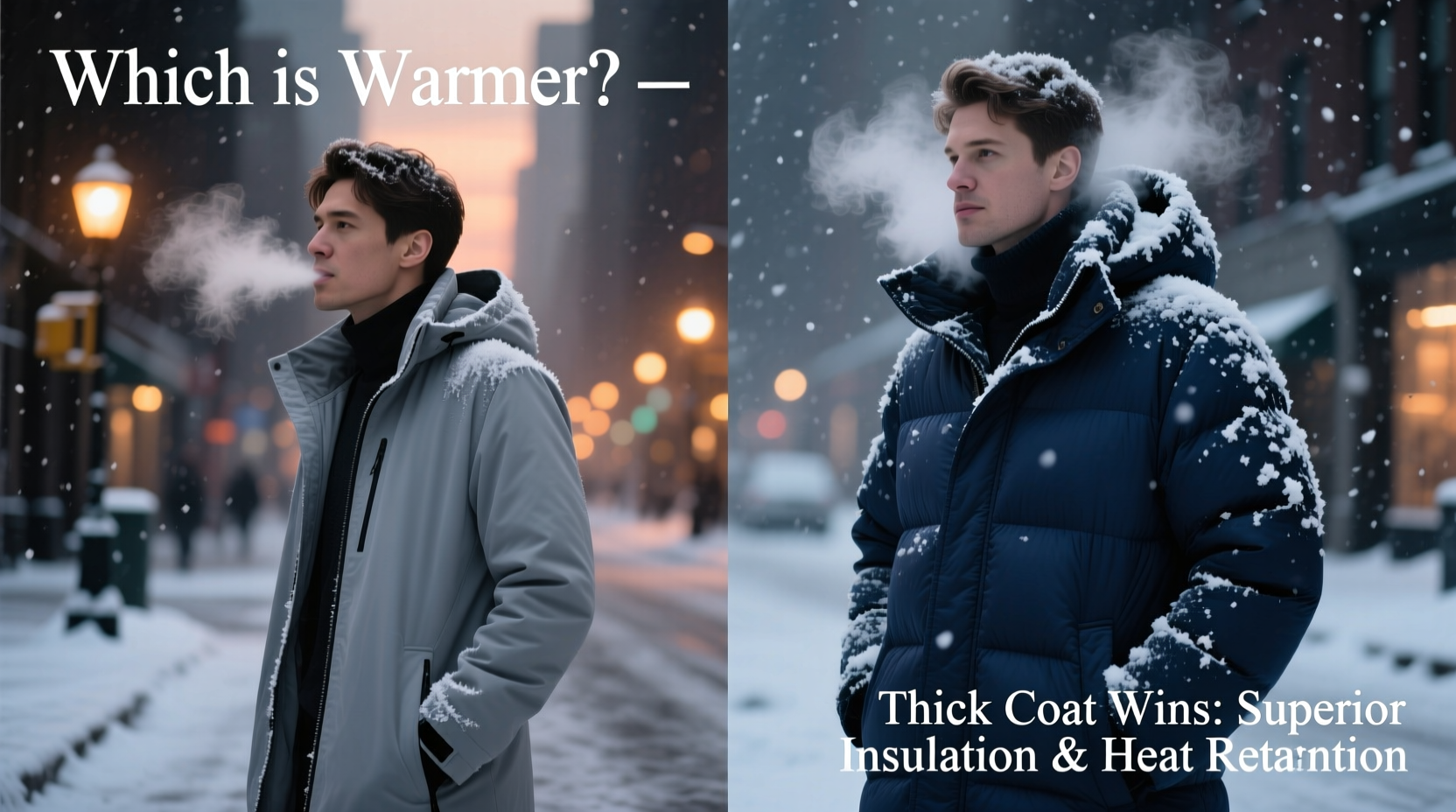
Warmth in outerwear isn’t determined by fabric weight alone—it’s about how well the garment traps body heat. Heat retention happens when layers of still air are held close to the skin. Insulation works by creating tiny pockets that prevent warm air from escaping and block cold air from entering.
A thick wool coat may look imposing, but if it’s poorly insulated or allows wind penetration, it won’t keep you as warm as a sleek, high-tech down jacket with superior loft and thermal efficiency. Materials like goose down, synthetic fibers (such as PrimaLoft), and advanced aerogels excel at trapping heat with minimal bulk.
“Warmth-to-weight ratio is the true measure of effective winter wear. A thin jacket with high-loft down can outperform a heavy canvas coat in sub-zero temperatures.” — Dr. Lena Patel, Textile Scientist & Outdoor Gear Consultant
Comparing Insulation Types: What Makes the Difference?
Different materials offer varying levels of warmth, breathability, and moisture resistance. Here's how common insulations stack up:
| Insulation Type | Warmth Level | Bulk | Water Resistance | Best For |
|---|---|---|---|---|
| Goose Down (800+ fill power) | ★★★★★ | Low | Poor (unless treated) | Dry, extreme cold |
| Synthetic Down (e.g., PrimaLoft Gold) | ★★★★☆ | Medium | Good | Wet or humid winters |
| Wool Blend Coat | ★★★☆☆ | High | Good (natural moisture wicking) | Urban commutes, light snow |
| Fleece Lining (uninsulated shell) | ★★☆☆☆ | Low-Medium | Excellent | Active use, layering base |
| Thinsulate (80g–200g) | ★★★☆☆ | Low | Very Good | Daily wear, wet conditions |
This comparison shows that thinner jackets using advanced synthetics or high-fill down often provide more warmth per ounce than traditional heavy coats.
When Thin Jackets Outperform Thick Coats
There are specific scenarios where a lightweight, technical jacket beats a bulky overcoat:
- Active Winter Sports: Skiing, snowshoeing, or shoveling snow generates body heat. A thick coat can cause overheating and sweat, leading to dampness and chilling. A breathable, thin insulated jacket regulates temperature better.
- Urban Commuting: Public transit, walking, and indoor transitions favor versatility. A slim jacket fits under doorways, doesn’t get caught in train doors, and layers easily over sweaters without restricting movement.
- Wind and Dry Cold: In dry, windy climates (like mountain towns or northern plains), a thin jacket with a windproof shell and high-loft down blocks convective heat loss more efficiently than a loosely woven thick coat.
- Layering Systems: Outdoor experts often use a three-layer system: base (moisture-wicking), mid (fleece or vest), and outer (weather-resistant shell). A thin insulated jacket serves perfectly as a mid or outer layer, offering flexibility.
Real Example: The Hiker’s Dilemma
Mark, an experienced hiker in Colorado, used to rely on his grandfather’s heavy wool overcoat for winter trails. After a near-hypothermia scare during a sudden blizzard, he switched to a 3-layer system: merino base, fleece mid, and a thin 850-fill down jacket with a waterproof shell. Despite being half the bulk, he stayed warmer, drier, and more mobile—even at -15°F. The key was trapped air and moisture management, not sheer thickness.
When You Actually Need a Thick Coat
Despite advances in materials, there are situations where mass and coverage matter most:
- Standing Still in Extreme Cold: If you’re waiting for a bus, attending an outdoor event, or working in a frozen yard, your body produces less heat. A thick coat with dense insulation provides passive warmth that compensates for low activity.
- Humid or Wet Cold (Without Layering): In places like coastal New England or Pacific Northwest winters, moisture saps heat quickly. A thick wool or parka with deep pile lining retains warmth even when damp—especially if you're not changing clothes frequently.
- Style and Tradition: Some thick coats, like trench coats or tailored woolens, aren’t designed for peak thermal performance but serve social or professional needs. They work best when paired with thermal layers underneath.
Step-by-Step: Choosing the Right Outerwear for Your Winter
- Assess Your Environment: Is it dry and frigid, or damp and windy? Check average winter temps and precipitation patterns in your area.
- Evaluate Your Activity Level: Will you be moving constantly (walking, biking) or standing still (commuting, outdoor events)? High activity favors thinner, breathable options.
- Plan Your Layers: Build a system. Start with a moisture-wicking base, add a mid-layer (fleece, sweater), then select an outer layer based on weather protection needs.
- Test the Fit: A jacket should allow full arm movement without gaps at the neck or hem. Too tight compresses insulation; too loose creates drafts.
- Check Real-World Performance: Read user reviews focused on warmth, not just style. Look for comments like “warm at -10°C” or “no sweating while walking.”
Frequently Asked Questions
Can a thin jacket really be warmer than a thick coat?
Yes—if it uses high-performance insulation like 800-fill-power down or advanced synthetic fibers. These materials trap more heat in less space and are often combined with windproof shells for added efficiency.
What should I wear under a thin jacket for extra warmth?
Use a thermal base layer (merino wool or synthetic) and a mid-layer like a fleece vest or lightweight down shirt. Avoid cotton, which retains moisture and reduces insulation.
Is down better than synthetic insulation?
Down has a superior warmth-to-weight ratio and lasts longer if kept dry. However, synthetic insulation performs better when wet, dries faster, and is often more affordable. Choose based on your climate and usage.
Action Plan: How to Stay Warm This Winter
- Invest in one high-quality thin insulated jacket (down or premium synthetic) for active days.
- Keep a thick wool or parka-style coat for stationary use in extreme cold.
- Build a modular layering system instead of relying on a single “warmest” piece.
- Always protect extremities—hat, gloves, and insulated boots are critical, regardless of jacket choice.
“The best winter outfit isn’t the bulkiest—it’s the smartest. Matching your outerwear to your lifestyle beats brute-force insulation every time.” — Erik Nilsen, Outdoor Educator & Guide
Final Thoughts
The debate between thin jackets and thick coats isn’t about which is universally warmer—it’s about context. Modern technology has redefined warmth, shifting the focus from volume to efficiency. A feather-light down jacket can outperform a heavy overcoat in the right conditions, while a thick wool blend remains indispensable in others.
Instead of choosing based on appearance or tradition, prioritize function: insulation quality, fit, breathability, and compatibility with your daily routine. By understanding how heat is retained and lost, you can dress smarter, move more freely, and stay comfortably warm all winter long—without unnecessary bulk.




 浙公网安备
33010002000092号
浙公网安备
33010002000092号 浙B2-20120091-4
Comments
No comments yet. Why don't you start the discussion?