
Walk into any department store or browse online for bed linens, and you’ll quickly notice one number dominating the packaging: thread count. Often marketed as the ultimate indicator of luxury, softness, and quality, thread count has become a shorthand for premium bedding. But here’s the truth—higher thread counts don’t automatically mean softer or better sheets. In fact, focusing solely on this number can lead you to overpay for underperforming bedding. Understanding what thread count really means—and what factors matter more—can transform your sleep experience.
What Is Thread Count—And What It Isn’t
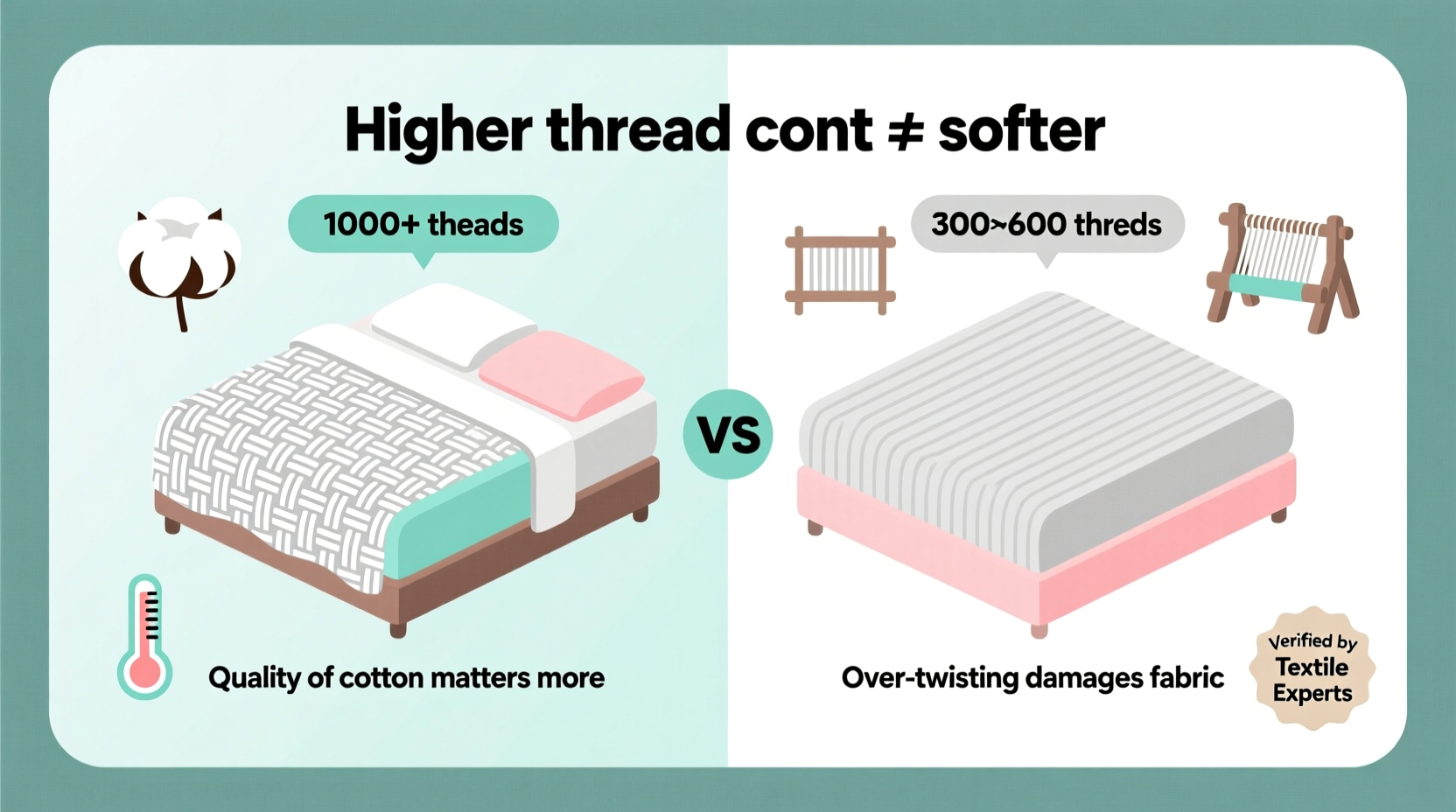
Thread count refers to the total number of horizontal (weft) and vertical (warp) threads woven into one square inch of fabric. A sheet with 300 horizontal threads and 300 vertical threads per inch would have a thread count of 600. On the surface, this seems straightforward. Higher counts suggest denser weaving, which marketers equate with softness and durability.
But the reality is far more complex. The textile industry lacks a universal standard for measuring thread count. Some manufacturers inflate their numbers by counting individual plies in multi-ply yarns—meaning a single twisted thread counted as two or more. For example, a sheet made from two-ply yarn at 400 threads per inch might be advertised as 800 thread count, despite offering no real increase in density or quality.
“Thread count is just one piece of the puzzle. Focusing on it alone is like judging a car only by its speedometer.” — Lydia Chen, Textile Engineer and Home Linens Consultant
The Real Determinants of Softness and Quality
If thread count isn’t the final word, what actually makes sheets feel soft, breathable, and long-lasting? Several interrelated factors play a more decisive role:
Fiber Type
The material used in the sheets has a profound impact on texture, breathability, and durability. Common options include:
- Cotton: Breathable and durable, especially when high-grade (e.g., Egyptian, Pima, Supima).
- Linen: Naturally moisture-wicking and cooling, softens over time.
- Bamboo: Silky feel, eco-friendly, but sometimes blended with synthetics.
- TENCEL™ (Lyocell): Smooth, hypoallergenic, and sustainably produced.
Natural fibers typically outperform synthetic blends in comfort and longevity, regardless of thread count.
Weave Style
The way threads are woven together influences both hand-feel and performance. Two common weaves are:
- Percale: Crisp, cool, and lightweight with a matte finish. Ideal for hot sleepers.
- Sateen: Smoother and slightly lustrous due to a four-over-one-under weave. Feels silkier but may trap heat.
A 300-thread-count percale sheet made from long-staple cotton often feels more luxurious than an 800-thread-count sateen made from short-staple, multi-ply yarn.
Yarn Quality and Staple Length
This is where many consumers get misled. Not all cotton is created equal. The length of the cotton fibers (staples) determines strength and softness:
- Short-staple cotton: Rougher, weaker, prone to pilling.
- Long-staple cotton: Stronger, smoother, more resilient (e.g., Egyptian, Pima).
High-quality long-staple cotton produces stronger, finer yarns that can be woven into soft, durable fabrics—even at lower thread counts.
The Marketing Trap: How Brands Inflate Numbers
Because there’s no regulated oversight, brands exploit consumer trust in thread count. Some tactics include:
- Multi-ply inflation: Counting each ply in a twisted yarn as a separate thread.
- Blended fibers: Mixing cotton with polyester to achieve higher counts without improving softness.
- Vague labeling: Using terms like “luxury” or “premium” without specifying fiber origin or weave.
A telling example: In 2007, the U.S. Federal Trade Commission (FTC) took action against several major retailers for falsely advertising thread counts above 800, noting that such claims were physically implausible with standard weaving techniques.
Even today, sheets advertised at 1200 or 1500 thread count are almost certainly using multi-ply yarns or misleading math. Experts agree that beyond 600–800, additional threads per inch offer diminishing returns—and may even compromise breathability and softness due to excessive density.
Mini Case Study: Sarah’s Bedding Upgrade
Sarah, a nurse working night shifts, struggled with overheating and scratchy sheets. She bought a set of “1200 thread count” cotton sheets online, expecting hotel-level luxury. Instead, she found them stiff, warm, and prone to pilling after three washes. Confused, she consulted a bedding specialist who explained the sheets were made from two-ply yarn and blended with short-staple cotton.
She replaced them with 300-thread-count Supima cotton percale sheets. Though the number was lower, the fabric felt cooler, smoother, and more breathable. After six months, they remained intact and soft. Her sleep quality improved—not because of a big number, but because of better materials and construction.
What to Look for When Buying Sheets
Instead of fixating on thread count, shift your attention to these key indicators of quality:
Checklist: Smart Sheet Shopping Guide
- ✅ Prioritize fiber type: Choose 100% long-staple cotton, linen, TENCEL™, or certified bamboo.
- ✅ Check the weave: Percale for crispness, sateen for softness—match to your climate and preference.
- ✅ Verify ply: Opt for single-ply yarns; avoid inflated counts from multi-ply twisting.
- ✅ Read labels carefully: Beware of “microfiber,” “poly-cotton blend,” or undefined “cotton” without origin.
- ✅ Consider weight and feel: Heavier doesn’t mean better; balance between softness and airflow matters.
- ✅ Research the brand: Reputable companies disclose fiber source, weave, and manufacturing standards.
“The sweet spot for most sleepers is between 200 and 400 thread count, provided the cotton is long-staple and single-ply.” — Marco Alvarez, Founder of SleepWell Textiles
Comparison Table: Thread Count vs. Real-World Performance
| Thread Count | Typical Fiber/Weave | Feel & Performance | Value Assessment |
|---|---|---|---|
| 180–250 | Short-staple cotton, basic percale | Rough, less durable, good for budget or kids’ beds | Low cost, low longevity |
| 300–400 | Long-staple cotton, percale or sateen | Soft, breathable, balanced drape and strength | Best value for most adults |
| 500–600 | Single-ply long-staple, tight sateen | Silky, dense, may retain heat | Premium feel, moderate breathability |
| 800+ | Multi-ply, blended fibers, inflated count | Heavy, stiff, poor airflow, prone to pilling | Overpriced, misleading marketing |
Step-by-Step: Choosing the Right Sheets for Your Needs
Follow this practical guide to make a confident, informed purchase:
- Determine your sleep environment: Do you sleep hot? Live in a humid climate? Opt for breathable percale or natural fibers like linen.
- Identify your texture preference: Crisp and cool? Try percale. Want silky smoothness? Go for sateen—but ensure it’s not trapping heat.
- Check the label for fiber content: Avoid anything labeled “microfiber” or “poly-cotton” if you want natural breathability.
- Look beyond thread count: Find brands that specify long-staple cotton, single-ply yarns, and ethical sourcing.
- Read independent reviews: Focus on feedback about softness after washing, durability, and temperature regulation.
- Test before committing: If possible, order a sample or buy from retailers with generous return policies.
Frequently Asked Questions
Is 100% cotton always better than blends?
Generally, yes—especially for comfort and breathability. Pure cotton allows better airflow and moisture absorption than polyester blends. However, some high-quality blends (like cotton-TENCEL™) can enhance durability and drape without sacrificing comfort. Always check the ratio and purpose of the blend.
Do higher thread counts last longer?
Not necessarily. Durability depends more on fiber quality and weave integrity than thread density. A tightly woven 300-thread-count sheet from long-staple cotton will outlast a flimsy 1000-thread-count sheet made from short-staple, multi-ply yarn. Overly dense fabrics can also wear down faster due to internal friction.
Are organic sheets worth the extra cost?
For many, yes. Organic certification ensures cotton is grown without synthetic pesticides and processed without harmful dyes or chemicals. While not directly related to softness, organic sheets are better for sensitive skin and the environment. Just ensure the certification is legitimate (e.g., GOTS—Global Organic Textile Standard).
Conclusion: Rethink the Number, Reclaim Comfort
The obsession with thread count has distracted consumers from what truly matters in bedding: material integrity, craftsmanship, and personal comfort. A lower-numbered sheet made from superior cotton, thoughtfully woven, will always outperform a bloated, misleading high-count alternative. The next time you shop for sheets, look past the bold font on the package. Investigate the fiber, respect the weave, and prioritize transparency over hype.
Your bed is where you recharge, heal, and begin each day. It deserves more than marketing gimmicks. Choose sheets that support restful sleep—not just impressive numbers. Make informed decisions, invest in quality, and experience the difference real craftsmanship makes.




 浙公网安备
33010002000092号
浙公网安备
33010002000092号 浙B2-20120091-4
Comments
No comments yet. Why don't you start the discussion?