
Choosing the right crossbody bag isn’t just about style—it’s about function, comfort, and long-term usability. With so many designs on the market, one of the most overlooked yet critical decisions is internal structure: should you go for a multi-layered, compartmentalized model or stick with a simple single-compartment design? At first glance, multiple layers seem like an organizational win. But do they truly improve your daily experience, or do they simply add unnecessary thickness and complexity?
This article breaks down the real-world trade-offs between three-layer and single-compartment crossbody bags, drawing from ergonomic research, user feedback, and design principles to help you make an informed choice based on how you actually use your bag.
The Anatomy of a Crossbody Bag: Structure Matters
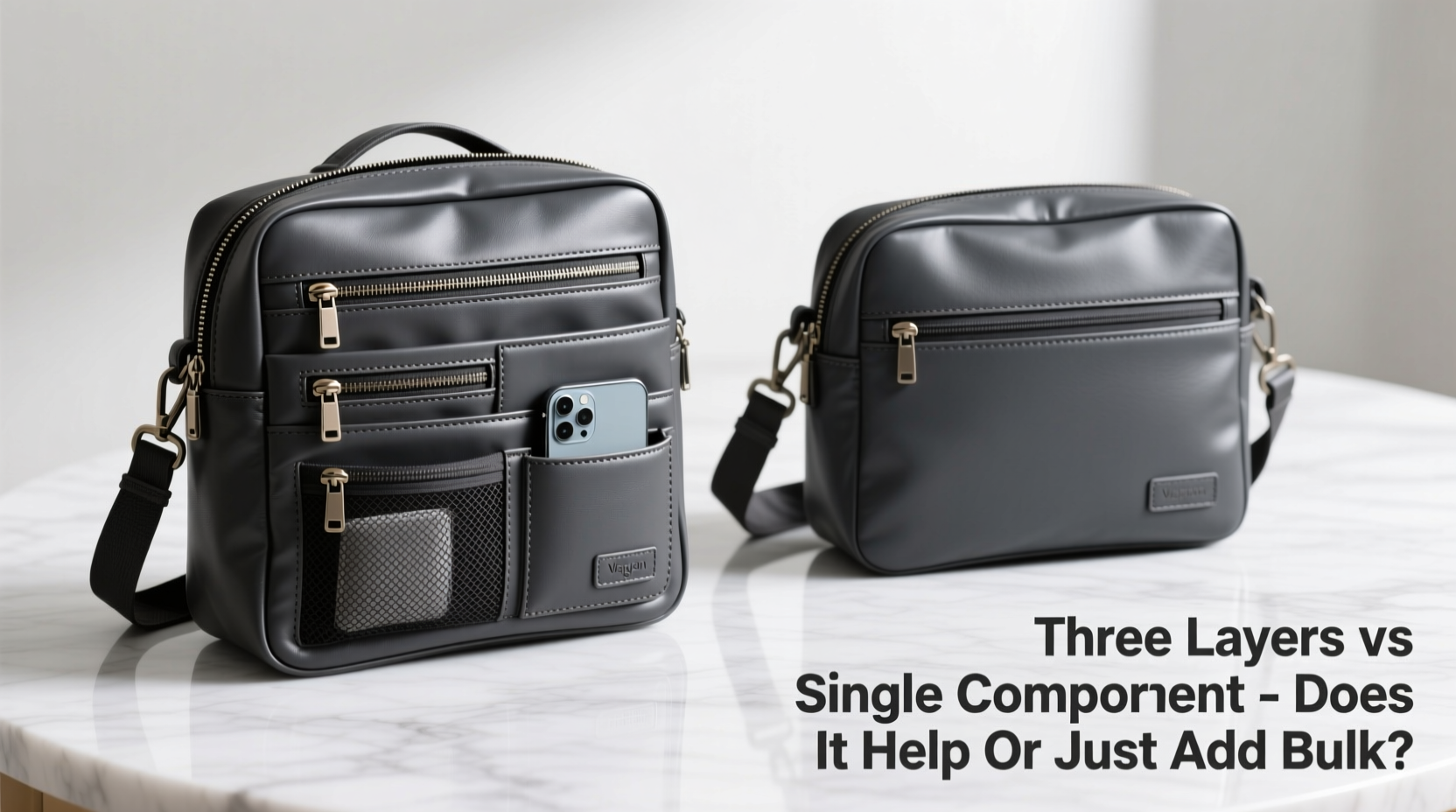
Crossbody bags are designed for mobility and convenience. Their compact size makes them ideal for urban commutes, quick errands, or travel where minimalism is key. However, their internal layout significantly impacts accessibility, weight distribution, and durability.
A “three-layer” bag typically features:
- An outer front pocket (often zippered)
- A main central compartment
- A rear slip or zippered pocket
In contrast, a single-compartment crossbody has one open cavity—sometimes with a single closure like a flap or zipper—with no internal dividers or external pockets.
The assumption is that more layers equal better organization. But in practice, added compartments can lead to clutter if not used intentionally. Over time, users report that small pockets become catch-alls for receipts, old gum wrappers, and forgotten items, defeating the purpose of organization.
Pros and Cons: Three-Layer vs Single Compartment
| Feature | Three-Layer Design | Single Compartment |
|---|---|---|
| Organization | High – dedicated spaces for phone, wallet, keys | Low – requires personal system (e.g., pouches) |
| Accessibility | Moderate – may require digging through layers | High – everything visible at a glance |
| Bulk & Profile | Higher – thicker due to padding and seams | Lower – sleeker, lies flatter against body |
| Durability | Moderate – more stitching points = more failure risk | Higher – fewer stress points |
| Security | Higher – zippers on multiple sides deter theft | Variable – depends on closure type |
| Weight | Heavier – additional materials and hardware | Lighter – minimalist construction |
The data suggests a clear pattern: three-layer designs prioritize security and categorization, while single-compartment models favor simplicity and comfort. The best choice depends on your lifestyle—not marketing claims.
Real-World Use Case: Commuter vs Minimalist Traveler
Consider two common scenarios:
Case 1: Urban Commuter
Sarah lives in Chicago and walks 30 minutes to work daily. She carries her phone, AirPods, lip balm, metro card, and a compact umbrella. She values quick access and theft resistance. Her three-layer crossbody keeps her phone in the front pocket, wallet in the back, and everything else in the main compartment. Despite the added bulk, she finds the separation prevents fumbling during transit checks.
Case 2: Weekend Traveler
James uses his crossbody for short trips and city exploration. He only carries phone, wallet, and sunglasses. He prefers a single-compartment nylon bag because it’s lightweight, folds flat when not in use, and doesn’t create pressure points across his chest. He uses a small fabric pouch inside to separate essentials—his own system, on his terms.
Both users are satisfied—but for opposite reasons. Sarah benefits from enforced organization. James values flexibility and low profile. There’s no universal winner—only what aligns with your routine.
“Design should serve behavior, not dictate it. A well-organized bag fails if it doesn’t match how you move through your day.” — Lena Torres, Product Designer at Urban Carry Co.
When Multiple Layers Help (And When They Don’t)
Multiple layers are beneficial under specific conditions:
- You carry more than five daily items regularly
- You’re in high-theft environments (crowded cities, festivals)
- You need frequent access to specific items (e.g., tickets, ID)
- You prefer a structured look and don’t mind slight bulk
Conversely, avoid layered designs if:
- You carry only 2–3 essentials
- You frequently switch contents (e.g., gym vs work mode)
- Comfort and low profile are top priorities
- You dislike managing multiple zippers or flaps
Many users overestimate their need for segmentation. A 2023 consumer survey by BagLab Insights found that 68% of people with multi-pocket crossbodies admitted using only one or two sections regularly. The rest became “black holes” for expired coupons and dried pens.
Step-by-Step: Choosing Your Ideal Crossbody Layout
- Inventory your daily carry: List every item you bring daily. Count them.
- Assess access frequency: Which items do you retrieve more than twice a day?
- Evaluate your environment: Are you in crowded areas? Do you ride public transit?
- Test for comfort: Wear a similarly sized bag for a full day. Note pressure points.
- Decide on organization: Would pre-defined pockets help, or would a single space with a small organizer suffice?
This method shifts focus from aesthetics to actual utility. It prevents buying a “smartly organized” bag that ends up being a nuisance.
Frequently Asked Questions
Does a three-layer bag offer better theft protection?
Yes, in many cases. External zippers on front and back pockets make casual pickpocketing harder. Some models also feature RFID-blocking linings in designated slots. However, a single-compartment bag with a secure magnetic snap or hidden zipper can be equally safe if worn correctly (across the front, not behind).
Can I organize a single-compartment bag effectively?
Absolutely. Many minimalist enthusiasts use small fabric or neoprene organizers inside their bags. This approach offers customization—you decide the layout, and you can remove the pouch when not needed. It’s a flexible alternative to built-in rigidity.
Do layered bags wear out faster?
Potentially. Each seam, zipper, and divider introduces a potential failure point. Over time, frequent opening of multiple compartments increases stress on stitching. Single-compartment bags generally have fewer moving parts, which can enhance longevity—especially with high-quality materials.
Final Verdict: Simplicity Often Wins
While three-layer crossbody bags promise superior organization, they often deliver added complexity without proportional benefits. For the average user carrying fewer than four essentials, a well-designed single-compartment bag provides quicker access, reduced weight, and a sleeker silhouette. It avoids the “compartment fatigue” that leads to disuse and clutter.
That said, layered designs excel for those with dynamic carry needs or security concerns. The key is alignment: your bag should reflect your habits, not force new ones.
Ultimately, more layers don’t automatically mean better function. In fact, they can hinder it. The most effective crossbody isn’t the most divided—it’s the one that disappears into your routine, making your day easier without demanding attention.




 浙公网安备
33010002000092号
浙公网安备
33010002000092号 浙B2-20120091-4
Comments
No comments yet. Why don't you start the discussion?