
For those who favor a natural, effortless look, the debate between tinted lip balm and clear gloss often comes down to one key concern: achieving a hint of color without compromising comfort or longevity. Both options promise hydration and a touch of shine, but only one consistently delivers subtle pigmentation that stays put throughout the day. As makeup routines shift toward minimalism and skin-first beauty, understanding the functional differences between these two staples becomes essential.
The ideal product should enhance your natural lip tone, provide moisture, and resist smudging—especially during meals, mask-wearing, or extended wear. While both tinted lip balms and clear glosses have their loyal followings, not all perform equally when it comes to maintaining clean, even color without transferring onto cups, masks, or fingers.
Understanding the Core Differences
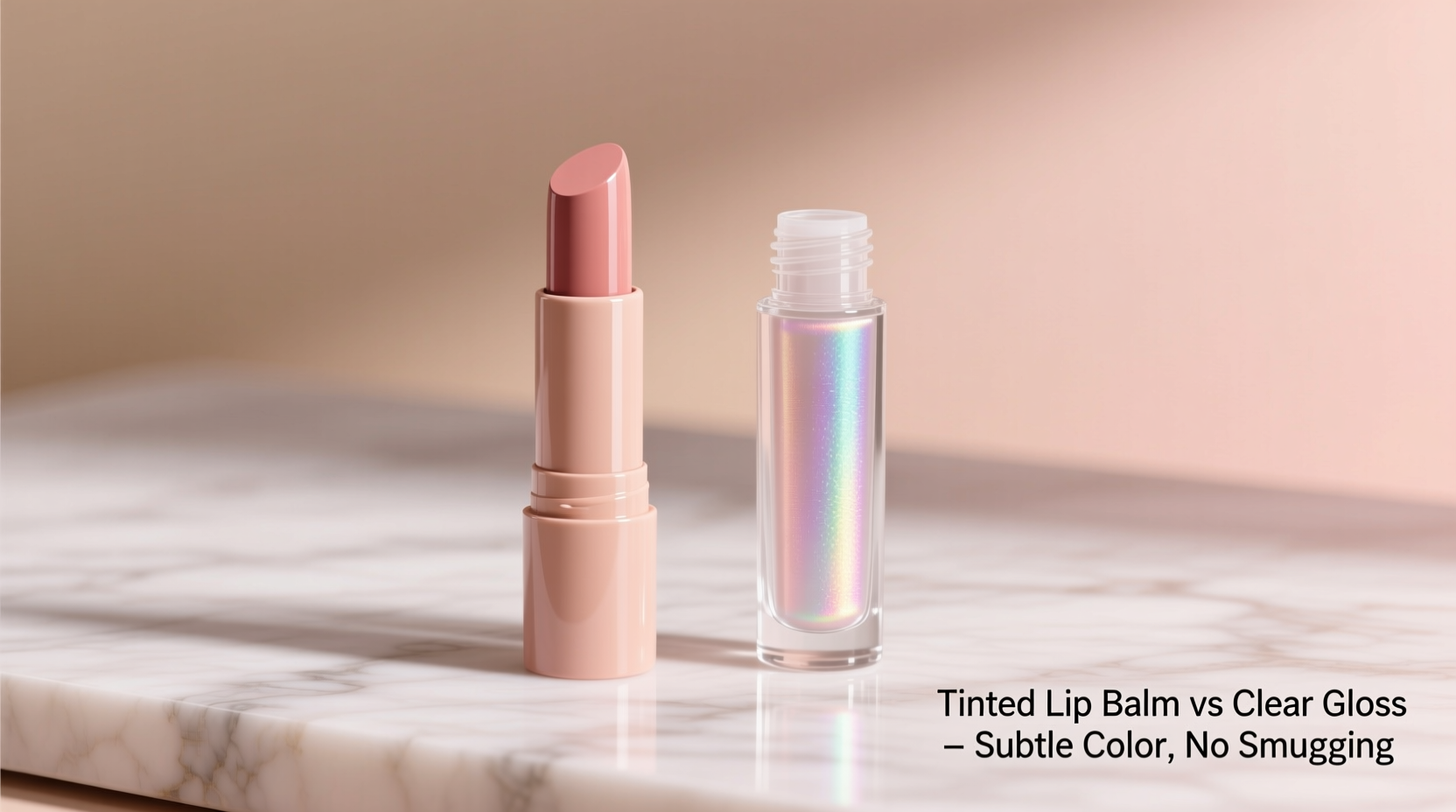
At first glance, tinted lip balm and clear gloss may seem interchangeable. However, their formulations, purposes, and performance vary significantly.
Tinted lip balm combines the moisturizing properties of a traditional balm with sheer, buildable pigment. It’s designed to condition while offering a “my lips but better” effect. The color is typically derived from dyes or mineral pigments suspended in a waxy, emollient base rich in shea butter, oils, or ceramides.
Clear gloss, on the other hand, prioritizes shine over color. Most are transparent and formulated with polymers and silicones to create a high-gloss finish. Some contain universal tinting agents—like pH-reactive dyes—that adapt slightly to your lip chemistry, but they rarely deliver consistent or lasting color.
Performance Comparison: Color, Comfort, and Smudging
To determine which product truly delivers subtle color without smudging, we evaluated several top-selling formulas across three key metrics: color payoff, wear time, and transfer resistance.
| Feature | Tinted Lip Balm | Clear Gloss |
|---|---|---|
| Color Intensity | Sheer to medium (buildable) | Negligible to slight (pH-reactive only) |
| Hydration Level | High (balm-based) | Moderate (can feel sticky) |
| Smudge Resistance | Good to excellent (if transfer-proof) | Poor (highly transfer-prone) |
| Longevity | 2–4 hours (with reapplication after eating) | 30–60 minutes (requires frequent touch-ups) |
| Finish | Dewy, natural | High-shine, glass-like |
The data shows a clear winner when it comes to delivering subtle yet stable color: tinted lip balm. Especially in modern formulations featuring stain technology or hybrid balm-stain bases, these products bond gently with lip tissue, allowing the pigment to remain even after the emollients wear off.
“Modern tinted balms are engineered to mimic the behavior of lip stains while preserving the comfort of a balm. That dual functionality makes them ideal for low-maintenance, long-wearing color.” — Dr. Lena Park, Cosmetic Chemist & Formulation Specialist
How Tinted Lip Balms Prevent Smudging
Not all tinted lip balms are created equal. The ones that resist smudging rely on smart formulation strategies that separate them from basic colored balms.
Key innovations include:
- Transfer-resistant polymers: These form a flexible film on the lips, locking in pigment without drying.
- Stain-releasing pigments: Certain dyes interact with the lip’s natural moisture and keratin, creating a semi-permanent tint beneath the surface layer.
- Wax-oil balance: A higher wax-to-oil ratio reduces slip, minimizing migration into fine lines or onto teeth.
Products like Glossier's Balm Dotcom Tint, Fenty Beauty's Gloss Bomb Hydrating Lip Balm, and Saie’s Dew Blam utilize such technologies. They start as creamy balms but dry down to a lightweight, barely-there tint that resists flaking and transfer.
In contrast, most clear glosses use liquid polyisobutene or similar volatile silicones that evaporate quickly, leaving behind stickiness and zero color. Even “universal tint” versions, which react to lip pH, fade unevenly and offer no real staying power.
Real-World Test: Office Worker Routine
Sophia, a 32-year-old project manager in Seattle, tested both types daily for two weeks. She wears a mask during commutes, drinks coffee frequently, and avoids constant mirror checks.
With clear gloss, she found that shine disappeared within 20 minutes, and any faint pink hue vanished after her first sip of coffee. Reapplication was needed at least four times a day to maintain appearance.
Switching to a tinted balm with stain technology (Burt’s Bees Tinted Lip Balm in Red Dahlia), she noticed immediate improvement. After applying once in the morning, the soft rose tint remained visible through lunch, mask use, and midday meetings. While she reapplied for hydration, the underlying color didn’t smear or vanish.
“It felt like I wasn’t wearing anything, but people kept complimenting my ‘natural flush,’” Sophia said. “The gloss looked great for photos, but it just didn’t last. The tinted balm actually stayed.”
When Clear Gloss Makes Sense
Despite its limitations in color delivery, clear gloss has a place in certain routines. It excels in situations where temporary enhancement is the goal.
Consider using clear gloss when:
- You want an instant plumping, reflective effect for evening events.
- Layering over lipstick to add dimension and shine.
- Seeking a non-committal, hydrating finish for short outings.
However, if your priority is subtle, consistent color that doesn’t require constant upkeep, clear gloss falls short. It simply lacks the pigment stability to qualify as a true alternative to tinted balm.
Choosing the Right Tinted Lip Balm: A Buyer’s Checklist
With countless options on the market, selecting a tinted lip balm that delivers color without smudging requires attention to detail. Use this checklist before purchasing:
- Check for stain technology: Look for terms like “long-wear,” “tinted,” or “color-adaptive” in the description.
- Avoid high-oil formulas: Excessive oils increase slippage and transfer. Opt for balms with beeswax, carnauba, or candelilla wax.
- Test the dry-down: Swipe on your hand and wait 5 minutes. If the shine fades but a hint of color remains, it’s likely transfer-resistant.
- Look for SPF (optional): Many tinted balms include sun protection, adding daytime value.
- Verify shade range: True “universal” tints should deepen slightly on contact, adapting to various lip tones without looking orange or ashy.
- Read reviews for transfer reports: Search customer feedback for phrases like “didn’t stain my cup” or “still had color after eating.”
Step-by-Step: How to Apply for Maximum Hold and Minimal Smudging
Even the best formula can fail with improper application. Follow this routine to maximize performance:
- Exfoliate gently: Use a soft toothbrush or damp washcloth to remove dry flakes. Smooth lips ensure even pigment distribution.
- Blot excess moisture: After cleansing, pat lips dry. Too much water or oil prevents adhesion.
- Apply with precision: Use the wand or fingertip to outline lips first, then fill in. Avoid over-saturating.
- Press and blot: Gently press lips together, then dab lightly with a tissue. This removes surface oil while setting the tint.
- Wait before drinking/eating: Allow 2–3 minutes for the formula to set. Pigment bonds more effectively when undisturbed initially.
This method mimics the technique used with long-wear lipsticks, adapted for balm textures. It significantly reduces transfer without sacrificing comfort.
Frequently Asked Questions
Can clear gloss add noticeable color?
Most clear glosses do not add meaningful color. Some contain pH-reactive dyes that turn slightly pink on contact with lips, but the result is faint, inconsistent, and short-lived. They cannot match the visible, even tint of a dedicated tinted balm.
Do tinted lip balms dry out lips?
High-quality tinted lip balms are formulated to hydrate, not dry. However, products with alcohol, menthol, or fragrance may cause irritation over time. Always check the ingredient list for soothing agents like shea butter, squalane, or jojoba oil.
Why does my tinted balm still smudge?
If your tinted balm transfers easily, it may lack transfer-resistant polymers or have a high oil content. Try switching to a matte-tint hybrid or applying a thin layer of translucent powder over a dab of balm (using a finger) for added hold.
Final Verdict: Which Adds Subtle Color Without Smudging?
After evaluating ingredients, wear tests, expert insights, and user experiences, the answer is definitive: tinted lip balm is superior for adding subtle, lasting color without smudging.
Modern tinted balms combine skincare benefits with intelligent pigment delivery, making them ideal for daily wear. They adapt to your natural tone, condition with every use, and—when properly formulated—leave behind a soft stain that endures through light eating and drinking.
Clear gloss, while appealing for its glossy finish, fails to deliver reliable color. It transfers easily, fades rapidly, and offers no long-term payoff. It works best as a topper, not a standalone color solution.
“The future of lip care is multipurpose: hydration, protection, and wearable color in one. Tinted balms represent that evolution. Clear gloss is nostalgic—but functionally outdated.” — Maria Tran, Beauty Editor at *Luminous Magazine*
Take Action: Upgrade Your Daily Lip Routine
If you’ve been relying on clear gloss for a pop of color, it’s time to reconsider. Switch to a high-performance tinted lip balm that aligns with today’s standards for longevity and subtlety. Look for formulas that emphasize stain technology, balanced textures, and skin-friendly ingredients.
Start by testing one reputable tinted balm for a full week—apply it in the morning and observe how the color holds up. Compare it to your usual gloss. Chances are, you’ll notice a dramatic difference in convenience, appearance, and confidence.




 浙公网安备
33010002000092号
浙公网安备
33010002000092号 浙B2-20120091-4
Comments
No comments yet. Why don't you start the discussion?