
When it comes to daytime skin protection, many people rely on makeup products labeled with SPF, assuming they offer adequate defense against harmful UV rays. Others opt for tinted sunscreens, drawn by their promise of coverage and protection in one step. But when push comes to shove, which option truly delivers superior sun defense? The answer isn’t as straightforward as marketing might suggest. Understanding the science behind both tinted sunscreen and foundation with SPF is essential to making an informed choice that protects your skin effectively—without compromising on coverage or convenience.
Understanding Sun Protection Basics
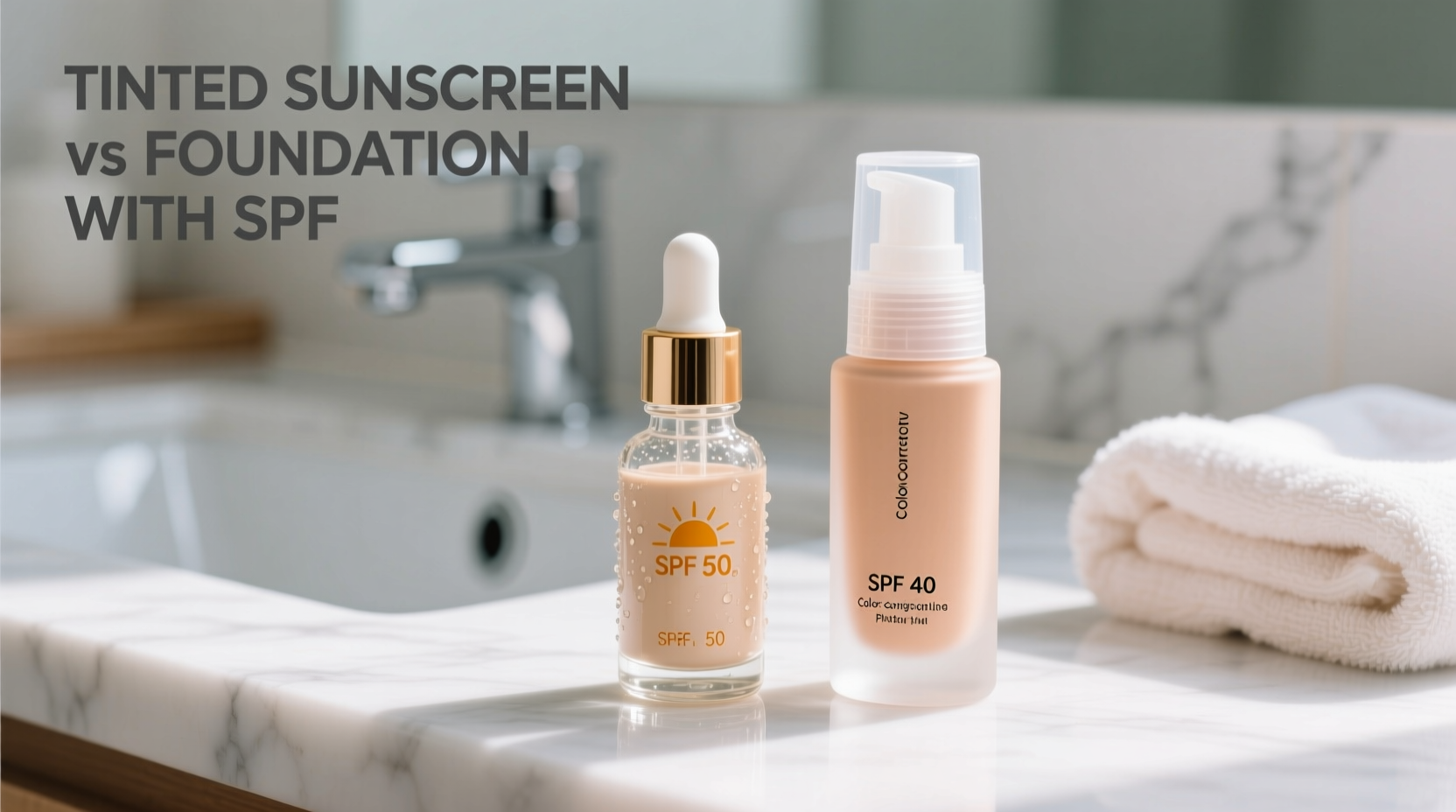
Sunscreen works by either absorbing (chemical filters) or reflecting (mineral filters) ultraviolet (UV) radiation before it damages the skin. The two main types of UV rays we must guard against are UVA and UVB. UVA rays penetrate deeply, contributing to premature aging and long-term skin damage, while UVB rays cause sunburn and play a key role in skin cancer development. A broad-spectrum sunscreen protects against both.
The SPF (Sun Protection Factor) number indicates how well a product protects against UVB rays. SPF 30 blocks about 97% of UVB radiation, while SPF 50 blocks around 98%. However, these numbers assume proper application—approximately 1/4 teaspoon for the face alone. Most people apply far less than this, drastically reducing real-world protection.
This gap between ideal and actual use is where the debate between tinted sunscreen and SPF-infused foundation becomes critical. One is designed primarily for protection; the other, for aesthetics—with protection as a secondary benefit.
Tinted Sunscreen: Coverage Meets Protection
Tinted sunscreens combine mineral UV filters—typically zinc oxide and/or titanium dioxide—with iron oxides that provide color and additional protection against visible light. These pigments help shield the skin from high-energy visible (HEV) light, which can contribute to hyperpigmentation, especially in individuals with darker skin tones.
Because tinted sunscreens are formulated first and foremost as sun protectants, they’re held to higher standards in terms of active ingredient concentration and even dispersion. They’re also tested under standardized conditions to ensure their SPF claims are accurate. Many dermatologists recommend tinted sunscreens for daily wear because they offer reliable protection along with subtle coverage that evens out skin tone without clogging pores.
One of the biggest advantages of tinted sunscreen is consistency. Since users expect some level of pigment, brands invest in blending technology to minimize white cast, a common issue with mineral sunscreens. Additionally, tinted formulas often include antioxidants like niacinamide or vitamin E, offering added defense against environmental stressors.
Foundation with SPF: Cosmetic First, Protector Second?
Foundations with SPF sound like a convenient two-in-one solution: coverage and sun protection in a single product. However, there’s a significant catch. Most foundations are not applied in sufficient quantity to deliver the labeled SPF. Studies show that people typically apply only 25–50% of the amount needed to achieve the advertised protection.
For example, if your foundation claims SPF 30 but you're applying half the necessary amount, you're likely getting closer to SPF 10–15 of actual protection—far below the minimum recommended SPF 30. This false sense of security can lead to increased UV exposure over time, accelerating photoaging and raising skin cancer risk.
Moreover, foundation is often reapplied unevenly throughout the day—touch-ups focus on oily areas or spots needing more coverage, not uniform UV defense. Unlike sunscreen, foundation is rarely reapplied every two hours, which is necessary for continued protection during prolonged sun exposure.
“Foundation with SPF is better than nothing, but it should never be your primary source of sun protection.” — Dr. Lindsey Zubritsky, Board-Certified Dermatologist
Comparing Key Factors: A Side-by-Side Analysis
| Factor | Tinted Sunscreen | Foundation with SPF |
|---|---|---|
| SPF Accuracy | High – tested under lab conditions with proper application | Low – SPF based on full application, rarely achieved in practice |
| Coverage Level | Light to medium – evens tone, minimizes redness | Light to full – customizable, often preferred for blemishes |
| Reapplication Feasibility | Moderate – available in sprays, powders, sticks for touch-ups | High – easy to reapply over makeup |
| Protection Against HEV Light | Yes – iron oxides block blue light and visible spectrum | Limited – unless specifically formulated with iron oxides |
| Skin Type Suitability | Broad – especially good for sensitive, acne-prone skin | Varies – some formulas may clog pores or feel heavy |
| Long-Term Skin Benefits | High – prevents photoaging, reduces pigmentation | Low to moderate – depends on ingredients beyond SPF |
Real-World Scenario: Morning Routine Under the Microscope
Consider Sarah, a 34-year-old office worker who commutes 30 minutes each way and spends most of her day indoors near a window. She wears foundation with SPF 20 every morning, believing she’s protected. However, she applies just enough foundation to cover blemishes—about half the amount used in SPF testing. Her actual protection is closer to SPF 8. She doesn’t reapply anything during the day, even though UVA rays penetrate glass and contribute to cumulative damage.
In contrast, her colleague Maya uses a tinted mineral sunscreen with SPF 40 every morning. She applies the recommended amount and keeps a mineral powder with SPF 30 in her bag for midday touch-ups. Though she sometimes skips makeup, her skin tone appears more even over time, and she reports fewer dark spots despite similar sun exposure.
After a year, Sarah notices increased melasma around her cheeks, while Maya’s complexion remains stable. A dermatologist confirms that inconsistent UV protection likely contributed to Sarah’s pigmentation issues—even indoor exposure adds up.
This scenario illustrates a crucial point: perceived convenience can come at the cost of long-term skin health. Relying solely on SPF foundation creates a vulnerability that tinted sunscreen, used correctly, can prevent.
Best Practices for Optimal Daytime Protection
The ideal approach combines the strengths of both products—without falling into the trap of inadequate coverage. Here’s how to structure a protective yet polished daytime routine:
- Start with a dedicated sunscreen: Apply a broad-spectrum SPF 30 or higher as the final step in your skincare regimen. If you prefer tinted options, choose one that matches your skin tone and feels comfortable.
- Wait before applying makeup: Allow the sunscreen to absorb for 1–2 minutes, especially if it’s chemical-based, to avoid pilling or reduced efficacy.
- Layer foundation if desired: Use your favorite foundation for extra coverage, knowing it enhances appearance—not protection.
- Reapply sunscreen strategically: Use a translucent SPF powder, cushion compact, or spray formulation every two hours if outdoors. For indoor settings, reapplying once midday is sufficient.
- Don’t forget vulnerable areas: Ears, neck, décolletage, and hands are often missed but equally susceptible to sun damage.
Common Misconceptions Debunked
- Myth: “I’m indoors all day, so I don’t need sunscreen.”
Reality: UVA rays pass through windows and contribute to skin aging. Daily protection is non-negotiable. - Myth: “Dark skin doesn’t burn, so SPF isn’t necessary.”
Reality: While melanin offers some natural protection, all skin tones are vulnerable to DNA damage, hyperpigmentation, and skin cancer. - Myth: “Makeup with SPF replaces the need for sunscreen.”
Reality: Unless you apply enough product—and reapply—it doesn’t provide adequate protection.
Expert Recommendations and Industry Insights
Dermatologists consistently emphasize that sun protection should be the foundation of any skincare routine—literally and figuratively. According to the American Academy of Dermatology, daily use of SPF 30 reduces the risk of developing squamous cell carcinoma by about 40% and melanoma by 50%.
“The best sunscreen is the one you’ll use every day. For many, that’s a tinted formula—they’re more likely to stick with it because they see an immediate cosmetic benefit.” — Dr. Ranella Hirsch, Clinical Assistant Professor of Dermatology
Beauty brands are responding to this insight by improving the texture, finish, and shade ranges of tinted sunscreens. Innovations like fluid textures, matte finishes, and inclusive color matching make them viable alternatives to traditional makeup for those prioritizing skin health.
Frequently Asked Questions
Can I use tinted sunscreen under foundation?
Yes, absolutely. In fact, this is the recommended method for maximizing protection. Apply tinted sunscreen after moisturizer and before foundation. Choose a lightweight formula to prevent pilling.
Do I need to reapply SPF if I’m wearing makeup?
Yes. Reapplication is essential every two hours during sun exposure. Use SPF-setting sprays, powders, or cushion compacts designed to layer over makeup without smudging.
Is tinted sunscreen better for acne-prone skin?
Often, yes. Many tinted sunscreens are non-comedogenic and formulated with soothing ingredients like zinc oxide, which has anti-inflammatory properties. Avoid heavy, oil-based foundations that may clog pores.
Final Verdict: What Offers Better Daytime Protection?
When comparing tinted sunscreen and foundation with SPF purely on sun protection efficacy, tinted sunscreen wins decisively. It’s formulated to meet rigorous standards, applied in effective amounts, and provides consistent defense against UVA, UVB, and visible light. Foundation with SPF, while convenient, falls short due to insufficient application and lack of reapplication.
That said, the best strategy isn’t choosing one over the other—it’s layering them wisely. Start with a reliable tinted sunscreen as your primary shield, then enhance your look with foundation if desired. This hybrid approach ensures you get both the protection your skin needs and the aesthetic finish you want.
Remember: Sun damage is cumulative and often invisible until it manifests as wrinkles, dark spots, or worse. Investing in true protection today pays dividends in skin health for decades to come.




 浙公网安备
33010002000092号
浙公网安备
33010002000092号 浙B2-20120091-4
Comments
No comments yet. Why don't you start the discussion?